
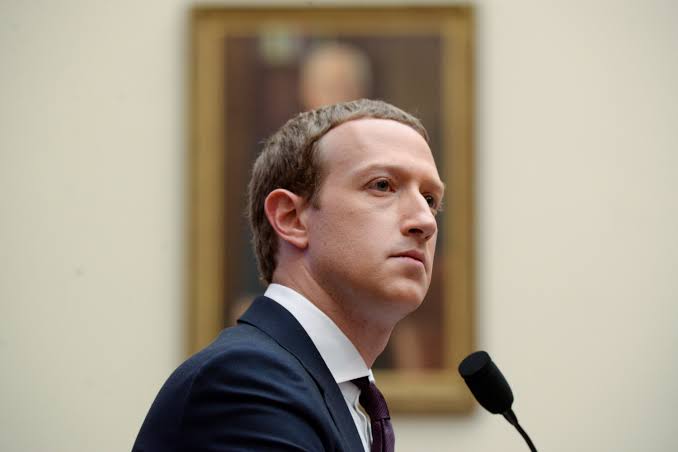
CEO Mark Zuckerberg denied claims that he had misled U.S. lawmakers on how his company had designed its social media platforms, as he testified in a civil trial that is closely watching whether social media products had harmed the mental health of young users.
Zuckerberg testified in federal court in Los Angeles, where he was questioned by attorneys for a plaintiff who claims that his prolonged use of Meta’s platforms as a child caused psychological damage.
This lawsuit is part of a growing number of cases in which plaintiffs are seeking to hold technology companies accountable for the impact of social media on children, a topic that courts have only recently begun to examine in detail.
In his testimony, plaintiff attorney Mark Lanier questioned Zuckerberg about his testimony to Congress in 2024, in which he claimed that his company had not told its product teams to maximize the time users spent on its platforms.
Lanier introduced company emails from 2014 and 2015 in which Zuckerberg set targets to double the user engagement levels.
Zuckerberg admitted that the previous corporate strategies did involve goals related to the level of activity of users but that the company’s approach had changed substantially over the years.
“If you are trying to say my testimony was not accurate, I strongly disagree with that,” he told the court, insisting that his previous testimony before Congress had accurately reflected the company’s more recent practices, not its previous ones.
This is the first time that Zuckerberg has testified before a jury regarding claims specifically related to the effect of Instagram on the mental health of young people.
He has previously testified before Congress regarding online safety, but the present case has different legal implications because jurors could award damages if they find the company liable.
The case is against Meta Platforms, the parent company of Instagram and Facebook, alleging that the company’s design decisions contributed to prolonged engagement of minors on the platforms despite knowledge of potential risks.
Read Also: Social Media Harm Trial Puts Meta, Google in Spotlight
Meta has rejected the allegations and asserts that it has made significant efforts to ensure the safety of minors on the platforms.
From court documents available during the trial, it appears that the plaintiff alleges that her mental health issues were exacerbated by her exposure to design elements of the platforms that were intended to encourage prolonged use.
Meta’s lawyers argue that the plaintiff’s allegations are simplistic and that the blame lies with the users and their guardians.
According to legal experts, this case may challenge the long-held legal safeguards that technology firms have used to ward off lawsuits involving the effects of their platforms.
Although U.S. courts have repeatedly thrown out similar lawsuits at an early stage, some recent lawsuits have progressed further, reflecting a change in judicial sentiment and growing public concern about youth safety online.
These developments are taking place against the backdrop of growing pressure on social media firms globally.
Governments in different parts of the world have begun to regulate social media firms more strictly in a bid to reduce children’s interaction with online platforms.
Read Also: Russia Blocks WhatsApp Nationwide Over Regulatory Dispute
Australia has recently introduced a new set of rules that will restrict access to social media platforms for users under the age of 16.
Policymakers in Spain are also considering a similar set of rules, while lawmakers in other parts of Europe and Asia have proposed tougher rules on age verification and platform accountability.
In the United States, the regulation has been primarily state-driven.
Florida passed a law prohibiting social media companies from allowing children under 14 to create an account, although this has been contested by trade associations of the industry in court, claiming that it violates constitutional rights and is difficult to comply with.
The result of this litigation may determine the extent to which regulators can regulate the issue of youth access.
In Wednesday’s questioning, Zuckerberg reiterated that Meta’s current product strategy is centered on meaningful interactions and not on maximizing engagement.
He also stated that his company’s definition of success has expanded to include a variety of metrics, including user satisfaction and safety. Attorneys representing the plaintiff attempted to juxtapose this with previous internal discussions, claiming that the company was previously aware of engagement-based incentives.
The lawsuit is part of a larger trend of litigation filed by families and former young users who believe that social media sites contributed to anxiety, depression, and other mental health issues.
Other lawsuits of this type have been consolidated in courts across the U.S., although results have been mixed, and many cases are still pending.
Analysts believe that the outcome of the lawsuit in Los Angeles may have an impact on future cases as it will help to determine what must be proven in order to establish a causal link between platform design and individual harm.