
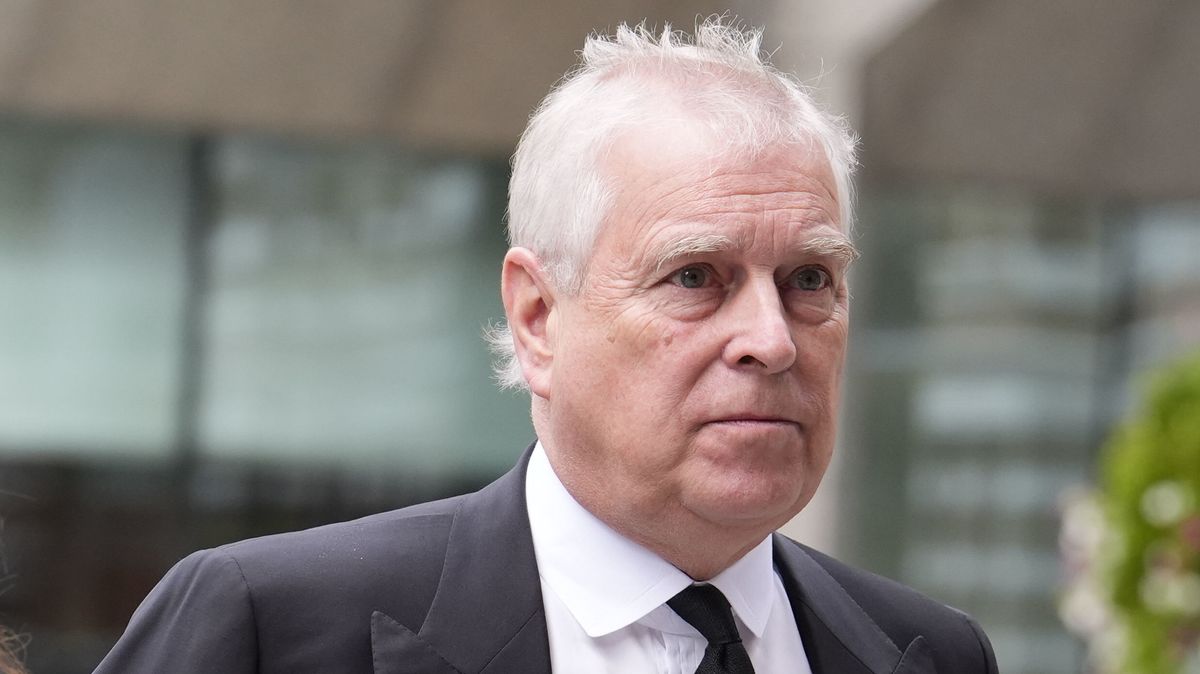
The British government is quietly examining one of the most constitutionally sensitive questions in modern royal history: whether Andrew Mountbatten-Windsor, formerly known as Prince Andrew, should remain in the line of succession to the throne. The review comes as police scrutiny of his past association with the late financier and convicted sex offender Jeffrey Epstein intensifies, placing renewed institutional pressure on both the monarchy and the government of Prime Minister Keir Starmer.
Officials speaking anonymously to the BBC confirmed that legislative options are being considered, though no formal proposal has yet been introduced. Any move to alter the line of succession would follow the conclusion of the Metropolitan Police investigation now underway. The Press Association similarly reported that Starmer’s government would assess whether to bring forward legislation once law enforcement completes its work.
Andrew Mountbatten-Windsor, currently eighth in line to the British throne, was arrested on Thursday—his 66th birthday—on suspicion of misconduct in public office connected to his relationship with Epstein. He was held for 11 hours before being released under investigation. The arrest marks a significant escalation in a long-running controversy that has shadowed the Duke for years.
The investigation has widened in scope. On Friday, police officers continued searching a former residence linked to Mountbatten-Windsor. Attention has also shifted toward individuals who served in his close protection unit. The Metropolitan Police confirmed it is identifying and contacting both former and current security personnel who worked with him during the relevant period.
In a public statement, police said those officers had been asked to reflect carefully on whether anything they saw or heard during their service could assist the inquiry. Authorities emphasized that all new or relevant information would be assessed and that allegations would be taken seriously. The statement stopped short of suggesting any confirmed wrongdoing by protection officers, noting that previous examinations had not identified misconduct on their part.
Read Also: Rocket Trouble Forces NASA To Postpone Moon Mission
Earlier inquiries had explored claims that security personnel may have overlooked or failed to question Mountbatten-Windsor’s visits to Epstein’s private Caribbean island. Investigators at the time concluded that no evidence substantiated allegations against the officers. Nonetheless, renewed scrutiny indicates that police are reassessing the broader circumstances surrounding the former prince’s movements and contacts.
Mountbatten-Windsor has consistently denied wrongdoing in relation to Epstein. The financier, who was convicted of sex offenses, died by suicide in a New York jail in 2019 while awaiting trial on federal trafficking charges.
The former prince’s legal and reputational difficulties are not new. In 2022, he reached an out-of-court settlement—reported at approximately £12 million ($16.2 million)—in a civil lawsuit filed in the United States by Virginia Giuffre. Giuffre alleged that she had been sexually abused as a teenager at properties associated with Epstein. Mountbatten-Windsor did not admit liability in the settlement agreement. Giuffre died by suicide last year.
The political dimension of the current moment is unmistakable. Any legislative attempt to remove an individual from the line of succession would require parliamentary approval and would mark a rare intervention in royal matters. The British constitution, though uncodified, rests on statutes and conventions that define the monarchy’s framework. Altering the succession is not unprecedented—the Succession to the Crown Act 2013 modified rules related to gender and marriage—but such changes are typically consensus-driven and coordinated across Commonwealth realms.
Public opinion appears strongly aligned against Mountbatten-Windsor. A YouGov poll conducted following his arrest indicated that 82 percent of respondents believed he should be removed from the line of succession. That level of public disapproval adds weight to parliamentary deliberations, particularly for a government seeking to maintain institutional credibility.
King Charles III has already taken decisive internal measures. He stripped his younger brother of royal titles and removed him from residence at the Royal Lodge in Windsor, Berkshire. The King has also stated that the law must take its course, offering public support for police investigations and affirming cooperation from royal households.
For the monarchy, the stakes are substantial. The institution’s stability depends heavily on public trust. Since the reign of Queen Elizabeth II, the royal family has navigated periods of strain through careful management of controversy and adherence to constitutional boundaries. The present episode tests that model.
The broader implications extend beyond domestic politics. The British monarchy remains a symbolic head of state in several Commonwealth countries, including many in Africa and the Caribbean. Any legislative action affecting succession resonates internationally, requiring coordination with other realms that recognize the British sovereign as their monarch. While Andrew Mountbatten-Windsor’s position as eighth in line makes his immediate accession unlikely, the symbolic dimension of removal carries constitutional weight.
The investigation also touches on governance standards. Allegations that confidential information may have been shared with Epstein during Mountbatten-Windsor’s tenure as UK trade envoy between 2001 and 2011 have contributed to police interest. Misconduct in public office, the offense under examination, is a serious charge in British law, potentially implicating breaches of public trust.
At this stage, no formal charges have been announced. Being released under investigation does not equate to guilt, but it keeps legal exposure active. The Metropolitan Police have made clear that inquiries are ongoing and that further evidence may shape next steps.
For Prime Minister Starmer’s government, caution is evident. Officials have indicated that no legislative initiative will be advanced until police proceedings conclude. That approach avoids prejudicing the investigation and reflects the constitutional principle that executive action should not interfere with judicial process.
Read Also: Trump Raises Global US Tariff Rate To 15% Across the Board
Yet the pressure to act will not diminish easily. Public anger has intensified in recent months amid continued disclosures about Mountbatten-Windsor’s relationship with Epstein. The convergence of legal inquiry, parliamentary authority, and public opinion creates a moment of institutional reckoning.
Whether Parliament ultimately moves to amend the line of succession will depend on both legal outcomes and political calculations. What is clear is that the episode represents one of the most serious constitutional challenges to the British monarchy in recent memory. The interplay between criminal investigation and constitutional reform now places the government at a delicate intersection of law, politics, and tradition.
As the police inquiry advances, the monarchy’s response—and Parliament’s restraint or resolve—will shape not only Andrew Mountbatten-Windsor’s future but also the evolving relationship between Britain’s ancient institution and the democratic state that frames it.