
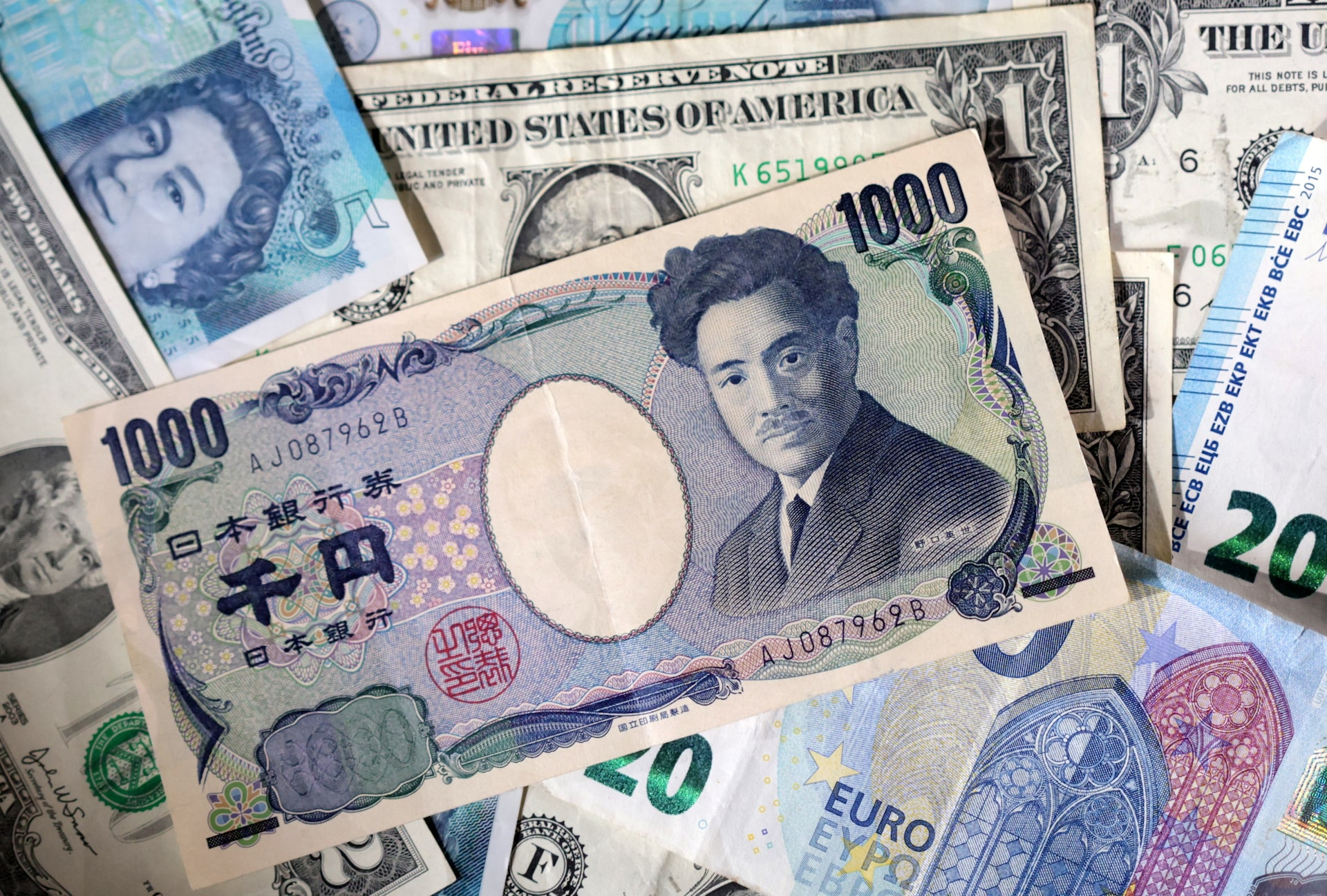
Central banks in Europe and Japan confronted the possibility Tuesday that widening conflict across the Middle East could force them to reconsider interest rate plans as energy import costs threaten to reignite inflation pressures they had only recently begun to contain.
European Central Bank Chief Economist Philip Lane told the Financial Times that a prolonged war would produce a “substantial spike” in energy-driven inflation and a “sharp drop” in output, according to sensitivity analyses the bank has conducted.
His warning came as crude prices climbed for a third consecutive day and Qatar halted liquefied natural gas production, prompting precautionary shutdowns at oil and gas facilities across the region.
Japan’s Finance Minister Satsuki Katayama said officials were monitoring markets with an “extremely strong sense of urgency” and suggested currency intervention remained an option to defend the yen. She cited a common understanding reached with the United States last year, though she did not specify what that agreement entailed.
The yen traded at 157.4 per dollar Tuesday after falling 0.8 percent the previous day. The euro slid 0.21 percent to $1.1662 following Monday’s 1.1 percent decline. Both currencies have weakened as investors fled to the dollar amid uncertainty over when energy shipments from the Gulf would resume normal flows.
Rodrigo Catril, a currency strategist at National Australia Bank, said Europe and Japan remain heavily reliant on imported energy, a vulnerability that has historically weighed on their currencies during supply disruptions. “History will tell you that currencies such as the yen and the euro would struggle to perform,” he said.
Read also: Americans Told To Flee More Than Dozen MidEast Nations Now
The dollar index, which measures the greenback against a basket of currencies, rose 0.25 percent to 98.76, its strongest level since January 22. Sterling fell 0.38 percent to $1.3354. The dollar gained 0.33 percent against the Swiss franc to 0.782. The United States, a net energy exporter, faces less exposure to price shocks than its European and Asian counterparts. That divergence has amplified safe-haven flows into dollar-denominated assets as the conflict that began Saturday with strikes killing Iran’s Supreme Leader Ayatollah Ali Khamenei expanded into neighboring countries.
Israel attacked targets in Lebanon Monday in response to strikes by Hezbollah, while Tehran maintained missile and drone assaults on Gulf states. Two drones struck the US embassy in Riyadh, causing a limited fire and some damage, Saudi Arabia’s defense ministry said.
Iran threatened to fire on vessels attempting to pass through the Strait of Hormuz, a chokepoint for global oil shipments, though the US military said the waterway remained open. The threat heightened concerns about supply disruptions that could push energy costs higher and complicate central bank efforts to ease monetary policy.
Traders have pushed back expectations for the Federal Reserve’s next rate cut to September from July, based on pricing in fed funds futures markets. Two 25-basis-point cuts are still anticipated by year-end, but the delay reflects concern that rising inflation could prevent the Fed from loosening policy as quickly as previously thought.
Read also: Kuwait Mistakenly Shoots Down US Jets As Conflict Expands
President Donald Trump said the war could continue for weeks and that it remained unclear who was in charge in Iran following Khamenei’s death. Israeli Prime Minister Benjamin Netanyahu told Fox News it would not be an “endless war,” seeking to ease concerns about the timeline.
Serene Chen, J.P. Morgan’s head of credit, currency and emerging market sales for Asia-Pacific, said the initial reaction to conflict typically involves flight to safety. “You would have seen gold rally, you were seeing people buying dollars, buying U.S. Treasuries,” she told a media roundtable in Singapore.
Short-term Japanese government bond yields rose as inflation fears fueled expectations the Bank of Japan might raise rates sooner than anticipated. Governor Kazuo Ueda did not mention monetary policy in a speech Tuesday, a day after saying market volatility would not prevent a rate increase.
The Australian dollar weakened 0.14 percent to $0.7081. New Zealand’s currency fell 0.3 percent to $0.5922.
Bitcoin declined 2.2 percent to $67,906.54. Ether dropped 2.51 percent to $1,992.14.
Lane’s warning about inflation reflected concerns shared by policymakers across energy-importing nations that prolonged disruption could derail economic recovery plans and force adjustments to monetary policy trajectories set before the conflict erupted. European officials have emphasized the need to avoid a repeat of the price surges that followed Russia’s invasion of Ukraine, which sent inflation to multi-decade highs and prompted aggressive rate increases.
Japan faces similar pressures. The country imports nearly all its oil and gas, leaving it exposed to supply shocks that can quickly translate into higher costs for manufacturers and consumers. The yen’s weakness compounds the problem by making imports more expensive, amplifying inflationary pressures.