
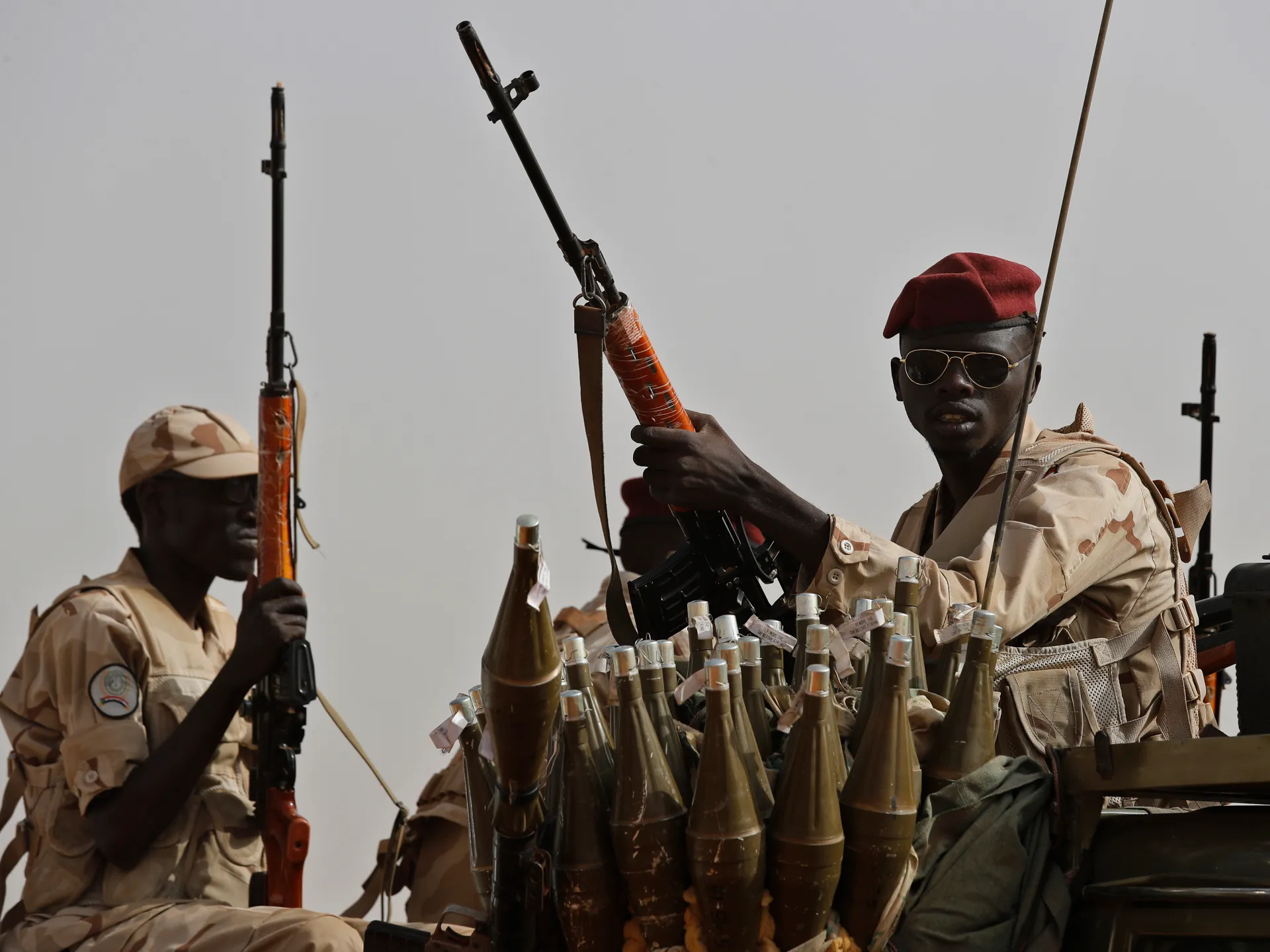
A paramilitary force that lost control of Sudan’s capital six months ago has turned drone strikes on civilians into a pattern of warfare in territories where it still operates, killing at least 17 people Wednesday when it hit a secondary school and health center in White Nile State.
The attack in Shukeiri village wounded 10 others, according to Musa Al-Majri, director of al-Duwaim Hospital, the nearest major medical facility. The dead included female students, teachers and health workers, the Sudanese Doctors Network said.
The strike formed part of an escalation over 48 hours that targeted a student dormitory, power station and residential neighborhoods across the state, the network said, calling it evidence of disregard for international humanitarian law.
“This horrific crime represents a continuation of the violations committed by the RSF in White Nile State,” the group said, referring to the Rapid Support Forces, the paramilitary organization fighting Sudan’s regular army for nearly three years.
The RSF withdrew from Khartoum in March 2025 after government-aligned Sudanese Armed Forces regained control of the capital.
That loss forced the group to shift operations to the Kordofan region and the city of el-Fasher in North Darfur, which had served as the army’s last stronghold in the vast western territory.
El-Fasher fell to the RSF in October. Accounts that emerged afterward accused fighters of mass killings, rape, abductions and widespread looting, prompting the International Criminal Court to open a formal investigation into alleged war crimes by both sides.
A recent United Nations report concluded that atrocities in el-Fasher carried hallmarks of genocide.
The civil war has killed thousands and displaced millions in what the UN describes as the world’s largest displacement and hunger crisis. At least 21.2 million people—41 percent of the population—face acute food shortages, according to the World Food Programme. Twelve million have been forced from their homes.
The conflict began in April 2023 when tensions between the RSF and the Sudanese Armed Forces erupted into open fighting in Khartoum. What started as a power struggle between two military factions metastasized into a nationwide war that has devastated infrastructure, collapsed the economy and fractured communities along ethnic and regional lines.
Read also: At Least 21 Dead After Passenger Boat Capsizes On Nile In Sudan
The RSF, commanded by Mohamed Hamdan Dagalo, known as Hemedti, evolved from Janjaweed militias that operated in Darfur during the early 2000s conflict. The group gained prominence as a semi-independent force under former president Omar al-Bashir before playing a key role in the 2019 coup that ousted him.
General Abdel Fattah al-Burhan leads the Sudanese Armed Forces. The two commanders briefly shared power in a transitional government after Bashir’s fall but competing ambitions and disputes over military restructuring drove them toward confrontation.
International attention to Sudan’s crisis has waxed and waned, often overshadowed by conflicts in Ukraine, Gaza and now the expanding war between the United States, Israel and Iran. Humanitarian organizations have struggled to mobilize funding and political support commensurate with the scale of suffering.
Aid access remains severely restricted in areas controlled by either force. The RSF has blocked deliveries to territory held by the army, while government forces have limited access to zones where the paramilitary operates. Civilians caught between the warring parties face starvation, disease and violence with little prospect of relief.
The ICC investigation announced after el-Fasher’s capture marked the first formal international legal response to atrocities committed during the current war. Whether the court can gather evidence, issue indictments or bring perpetrators to trial remains uncertain given Sudan’s refusal to cooperate with ICC proceedings in the past.
Bashir faced ICC charges for genocide and crimes against humanity related to the Darfur conflict but was never transferred to The Hague despite years of international pressure. His case demonstrated the limits of international justice when governments refuse to surrender suspects and neighboring countries decline to enforce arrest warrants.
Neither the RSF nor the Sudanese Armed Forces has shown willingness to negotiate seriously toward a ceasefire.
Regional mediation efforts led by Saudi Arabia, Egypt and other actors have produced temporary truces that collapsed within days or weeks.
Read also: Secret Ethiopian Camp Training Sudan RSF Forces – Sources
The lack of progress toward peace reflects both sides’ conviction that military victory remains achievable and their reliance on external support that has sustained combat operations despite enormous casualties and territorial stalemate.
Egypt backs the Sudanese Armed Forces with weapons and intelligence. The United Arab Emirates has been accused of providing arms and logistical support to the RSF, though Abu Dhabi denies the allegations.
Other regional actors including Libya, Chad and Eritrea have allowed weapons flows or provided bases that keep supply lines open.
Wednesday’s drone strike underscored how technology has reshaped the conflict. Both forces have acquired unmanned aerial vehicles that extend their ability to strike targets far from front lines, often with little regard for distinguishing military from civilian installations.
The targeting of schools and health facilities violates Geneva Conventions protections for medical personnel and educational institutions during armed conflict. Whether such strikes reflect deliberate strategy or indiscriminate use of weapons in populated areas, the effect on civilians is catastrophic.