
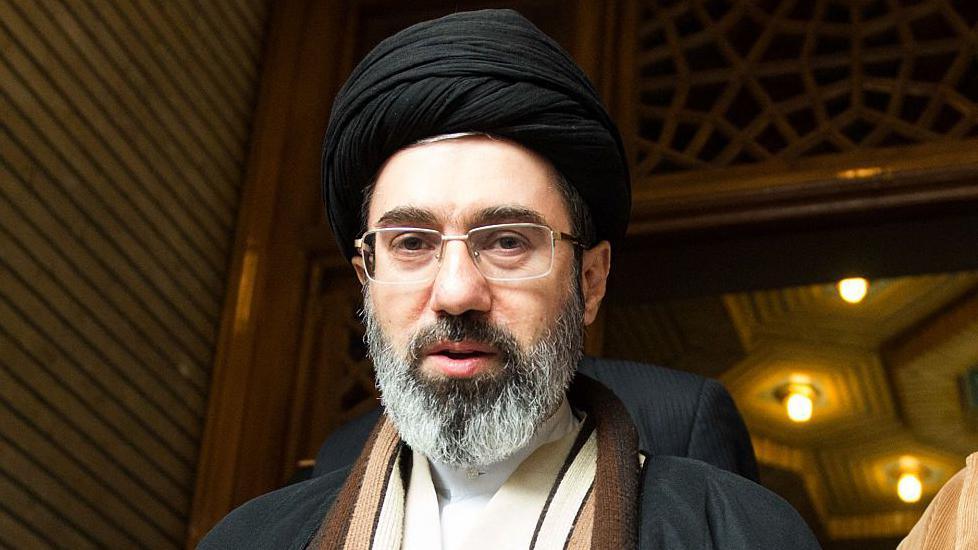
Iran’s new Supreme Leader Mojtaba Khamenei marked 40 days since his father’s death Thursday with a written message declaring that the Islamic Republic had not sought war and does not want it — while warning Iranians that the fragile ceasefire does not mean they should stop demonstrating in the streets.
The message, read out on state television, coincided with the traditional 40-day mourning period following the death of Ayatollah Ali Khamenei, who was killed on February 28 — the first day of the US-Israeli strikes that launched the war. Mojtaba Khamenei, who was appointed to succeed his father as supreme leader, has kept a low public profile since assuming the role, making Thursday’s statement his most substantive public communication since taking power.
Read also: NATO Criticized Over Iran As Trump Revives Greenland Claim
“We did not seek war and we do not want it,” he said. “But we will not renounce our legitimate rights under any circumstances, and in this respect, we consider the entire resistance front as a whole.” The reference to the resistance front as a unified whole appeared to encompass Lebanon, where Israel has been fighting Hezbollah, Tehran’s closest regional ally, as part of the broader conflict that has spread across the Middle East since February 28.
The message came days after Iran and the United States agreed to a fragile two-week ceasefire that both sides said could lead to formal peace negotiations in Islamabad. Despite that development, Khamenei told Iranians not to assume that street mobilisation had become unnecessary. “Your voices in public squares are undoubtedly influential in the outcome of the negotiations,” he said — a signal that Tehran intends to use public demonstrations of popular support as leverage in the talks ahead, and that the new supreme leader views domestic political pressure as a tool in the diplomatic process rather than a distraction from it.
Read also: Reform UK Would Block Visas For Reparations-Seeking Nations
The dual message — peace is not unwanted, but neither is resistance — reflects the position Iran has maintained publicly throughout the conflict. Officials have denied that formal negotiations are underway even as ceasefire terms were being agreed, and have insisted that any permanent resolution must include reparations for war damages and recognition of Iranian rights over the Strait of Hormuz. Trump, meanwhile, said this week that American military forces would remain deployed near Iran until a “real agreement” was reached, signalling that Washington considers the two-week pause a beginning rather than a resolution.
Mojtaba Khamenei’s elevation to the supreme leadership following his father’s death was one of the war’s most consequential early developments. The elder Khamenei had led the Islamic Republic for 35 years and was its defining political figure. His son’s authority, legitimacy and willingness to make the strategic compromises a negotiated end to the war might require remain untested — qualities that the Islamabad talks, if they proceed, will begin to reveal.