
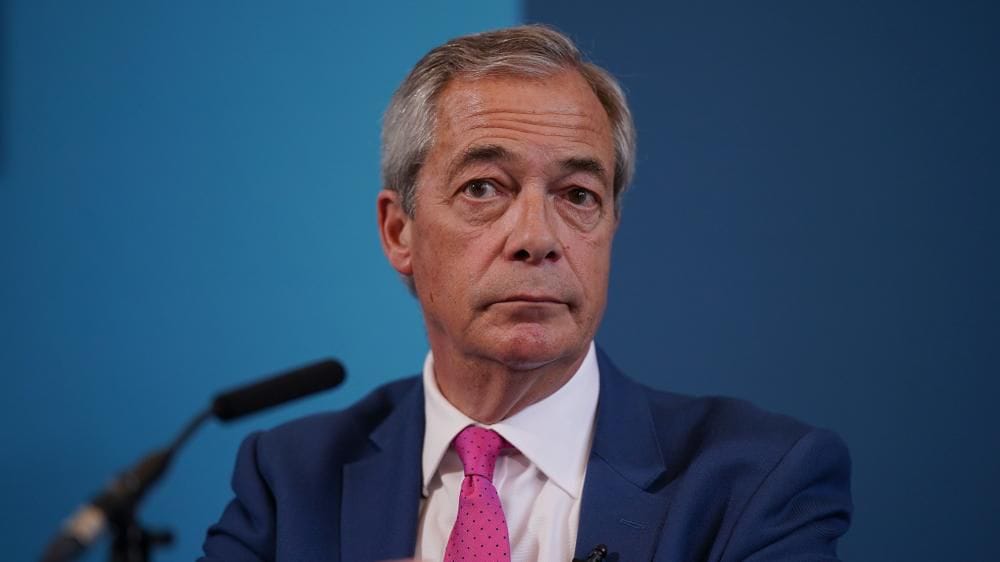
Reform UK announced Monday it would immediately suspend new visa issuances to nationals of any country formally seeking slavery reparations from Britain, in one of the most provocative immigration policy proposals the party has advanced since entering mainstream British politics.
The announcement, framed as putting reparations-seeking nations “on notice,” would apply across all visa categories — tourist, work, student and family — with no exceptions outlined. Reform said the policy would activate the moment a country crosses what the party defines as a formal demand threshold, including establishing national reparations committees, filing motions at the United Nations, pursuing high court claims or issuing official declarations.
Among the countries specifically named by Reform were Barbados, Jamaica, Nigeria and Ghana — the West African nation that proposed the UN General Assembly resolution adopted last month declaring the transatlantic slave trade “the gravest crime against humanity.” That resolution was adopted by 123 votes to three, with Britain among the nations that abstained rather than voted in opposition.
Party frames policy around Britain’s abolition record
Zia Yusuf, Reform’s home affairs spokesman, defended the proposal by pointing to Britain’s historical role in ending the slave trade. “Countries seeking reparations ignore the fact that Britain made huge sacrifices to be the first major power to outlaw slavery and enforce this prohibition,” Yusuf said in a statement accompanying the announcement.
Britain transported an estimated three million African people across the Atlantic before abolishing the slave trade in the early 1800s. The question of what, if any, accountability or restitution should follow that history has divided governments, international bodies and civil society organisations for decades.
Read also: Weakened Hormuz Resolution Faces UN Vote Tuesday
Caricom’s decade-old demands remain unmet
The Caribbean Community — Caricom — a 21-nation grouping that includes Jamaica and Barbados, put forward a 10-point reparatory justice plan more than a decade ago. The plan called for a full formal apology from Britain and other former colonial powers, the cancellation of foreign debts owed by Caribbean nations, and targeted investment to address public health crises and high illiteracy rates that Caricom links directly to the legacy of slavery.
No British government has agreed to those terms. Successive administrations have rejected financial reparations while occasionally acknowledging the historical record.
Prime Minister Keir Starmer has said Britain is “very clear” in its position against paying reparations. Conservative leader Kemi Badenoch went further last month, stating the UK should not pay compensation for “a crime we helped eradicate and still fight today.” Both positions align in outcome, if not in tone, with Reform’s harder-edged announcement.
Read more: Trump Threatens ‘Hell’ If Iran Blocks Strait, Eyes Deal
Cross-party reaction largely negative
The response from other parties was swift and predominantly dismissive.
A Labour Party spokesperson called Reform’s announcement “a desperate gimmick,” declining to elaborate further. The Conservative Party did not issue a response. Liberal Democrat immigration and asylum spokesperson Will Forster was more pointed, accusing Reform of “chasing cheap headlines by threatening our allies” and warning the visa ban would “damage our economy and our public services.”
The Green Party, asked for its position on reparations, pointed to a statement from its Global Majority Greens subgroup welcoming the UN resolution, without addressing Reform’s announcement directly.
Diplomatic and economic implications unaddressed
Reform did not outline in its announcement how a sweeping visa suspension affecting dozens of Commonwealth member states simultaneously would be reconciled with existing bilateral treaties, trade agreements or diplomatic protocols. The party also did not specify what economic modelling, if any, informed a policy that could affect tourism flows, healthcare staffing pipelines and university enrolments — sectors British institutions rely on heavily from the named countries.
The announcement comes roughly two weeks after the UN General Assembly resolution and several months after Commonwealth leaders gathered in Samoa and agreed that “the time has come” for a formal conversation about reparations — a conclusion Britain had lobbied to keep off the summit agenda entirely.
Starmer said following that meeting that no discussions involving monetary compensation had taken place and that the UK’s position remained unchanged.
Reform has not clarified how its proposed visa policy would interact with Britain’s obligations under international law or existing Commonwealth agreements.