
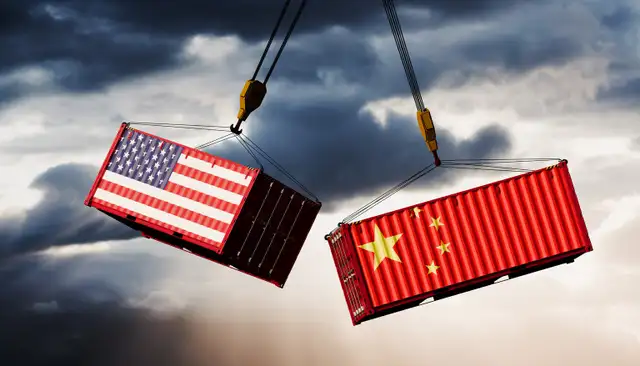
The United States and China have agreed to extend their trade truce for another 90 days, just hours before fresh tariff increases were set to take effect.
On Monday, President Donald Trump signed an executive order keeping current tariffs in place until 10 November, while Beijing announced a parallel extension of its pause on duties. Under the arrangement, the US will maintain a 30% levy on Chinese imports, and China will hold its tariff on American goods at 10%.
The decision averts a sharp escalation that could have seen Washington impose duties of up to 145% on Chinese products and Beijing respond with tariffs of up to 125% on US goods — measures floated earlier this year during some of the most heated moments of the dispute. Those rates were scaled back after talks in Geneva in May, which produced the original truce.
The White House said the latest extension would give negotiators more time to address what it called “unfair trade practices” and a nearly $300 billion US trade deficit with China in 2024 — the largest with any partner. Washington is also seeking greater market access for American exporters and progress on national security and technology concerns.
A spokesperson for the Chinese embassy in Washington welcomed the extension, saying “win-win cooperation between China and the United States is the right path; suppression and containment will lead nowhere.” Beijing urged Washington to remove “unreasonable” trade restrictions, work to benefit companies in both countries, and preserve stability in global semiconductor supply chains.
Read also: Musk’s Tesla Files Application To Power Homes In UK
Despite the reprieve, business owners say uncertainty persists. “There’s no way to plan for the future of the business,” said Beth Benike, founder of the Minnesota-based baby products company Busy Baby. “Since I have no idea what the tariff is actually going to end up being, I have no control or idea about the pricing that’s going to work for my business.”
Tensions between Washington and Beijing surged in April when Trump unveiled sweeping new tariffs on goods from dozens of countries, with China facing some of the steepest penalties. Beijing retaliated, pushing levies into triple digits and choking cross-Pacific trade. The May deal rolled back some of those measures but left the 30% US tariff on Chinese imports and the 10% Chinese tariff on US products in place.
Talks now also cover China’s rare earth exports, its purchases of Russian oil, and US restrictions on advanced technology sales — particularly high-end computer chips. Last month, Washington eased some curbs, allowing firms such as AMD and Nvidia to resume certain chip sales to Chinese companies in exchange for a 15% revenue-sharing arrangement with the US government.
The Biden administration is also pressing for TikTok to be spun off from its Chinese parent, ByteDance — a move strongly opposed by Beijing.
Trump, speaking to reporters earlier Monday, said negotiations were going “nicely,” but stopped short of confirming the extension before it was announced. On Sunday, he urged Beijing to increase purchases of US soybeans.
Even with the truce in place, trade flows between the two nations have fallen sharply. In June, US imports from China were nearly half their level from the same month a year earlier, according to government figures. Over the first six months of 2025, American imports from China totaled $165 billion, down about 15% from 2024. US exports to China fell roughly 20% over the same period.