
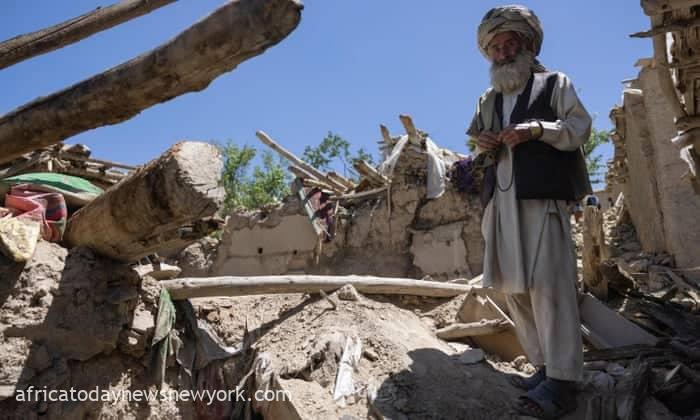
In Andarlachak, Kunar, Afghanistan, farmer Habib-ur Rahman’s quiet life in Loya Banda village was upended by a powerful magnitude 6 earthquake on the night of August 31. The tremor, which struck near the Diwa Gul valley where he had sought refuge, left the community reeling and struggling to cope.
The earthquake that tore through eastern Afghanistan at the end of August struck with a suddenness that left little chance for escape. In the mountain villages of Kunar province, families were still asleep when the ground began to shake on the night of the 31st.
Habib-ur Rahman, a farmer from Loya Banda in the Diwa Gul valley, recalled how different it was from tremors in the past. “When there used to be an earthquake, we had time to save ourselves. This time, the shake was so powerful and so sudden that people didn’t even have the time to wake up. Those who did were injured or trapped under rubble. Many never woke up at all,” he told Al Jazeera.
The official toll has been devastating. Authorities say about 2,200 people were killed and more than 5,000 homes destroyed, most of them in Kunar. The United Nations estimates that nearly half a million people have been affected.
The Diwa Gul valley, a green stretch about 30 kilometres from the provincial capital Asadabad, now carries the look of a disaster zone. Villages are scarred with collapsed mud houses, and stretches once known for orchards and grazing land are dotted with rows of white aid tents. Local officials say they have distributed more than 780 tents in the valley alone.
Read also: Nevada Hit By Earthquake Swarm, Strongest At 3.6
Life inside the camps is uncertain. Aftershocks continue to jolt the ground, forcing families to stay away from standing houses even if they appear intact. “We can’t risk moving people back when the earth is still unstable,” one official said.
For many residents, survival is now tied to the few animals they managed to save. Goats and cows roam the alleys of abandoned villages, tended briefly each day by their owners before they return to the camps. In this rural province, livestock and land are often the only assets families possess.
Rahman spoke of that fragile security in the past tense. “We had a good life, with our land and our animals. Now it is gone,” he said.
According to the UN, more than 500,000 people across eastern Afghanistan are now living with the impact of the quake.