
The Philippines summoned China’s ambassador and lodged a formal diplomatic protest this week over an AI-generated video, posted by state-run China Daily, that depicted Filipinos as a monkey manipulated by the United States and Japan.
The video, shared to China Daily’s Facebook page on July 10 and watermarked as AI-generated, opens with a monkey dressed in a barong Tagalog and a salakot hat being shoved onto a floating karaoke stage by a pair of oversized hands sleeved in American and Japanese flags. After being called “stupid,” the monkey grabs a lyric sheet reading “South China Sea arbitration award” before being thrown into the water and blasted with a water cannon from a China Coast Guard vessel. The post appeared two days before the 10th anniversary of a 2016 international tribunal ruling that found China’s claims across most of the South China Sea had no legal basis.
The Philippines’ Department of Foreign Affairs said the video and related editorial cartoons in the same China Daily series crossed a line the country would not tolerate even amid ongoing disputes over the ruling. “We draw a firm line at the depiction of Filipinos as monkeys in the 10 July 2026 video, which is deeply offensive, distressing and unacceptable,” the department said in a statement, calling the material “contemptible propaganda” and demanding its removal.
Read also: Philippines Dismisses China’s Sweeping Sea Sovereignty Bid
Foreign Affairs Undersecretary Leo Herrera-Lim summoned China’s ambassador to the Philippines, Jing Quan, on July 16 and demanded the video be taken down, according to the department. The Philippine Embassy in Beijing separately sent a letter to China Daily’s editor-in-chief. “Such imagery and misinformation breach editorial norms and principles,” Philippine Ambassador Jaime FlorCruz, a former journalist who spent decades in China, including as a bureau chief for the U.S. network CNN, said of the outlet’s decision to run the video.
China Daily describes itself as China’s most-read English-language newspaper, claiming a combined audience of more than 470 million people and more than 110 million followers on Facebook, the platform where the video was shared.
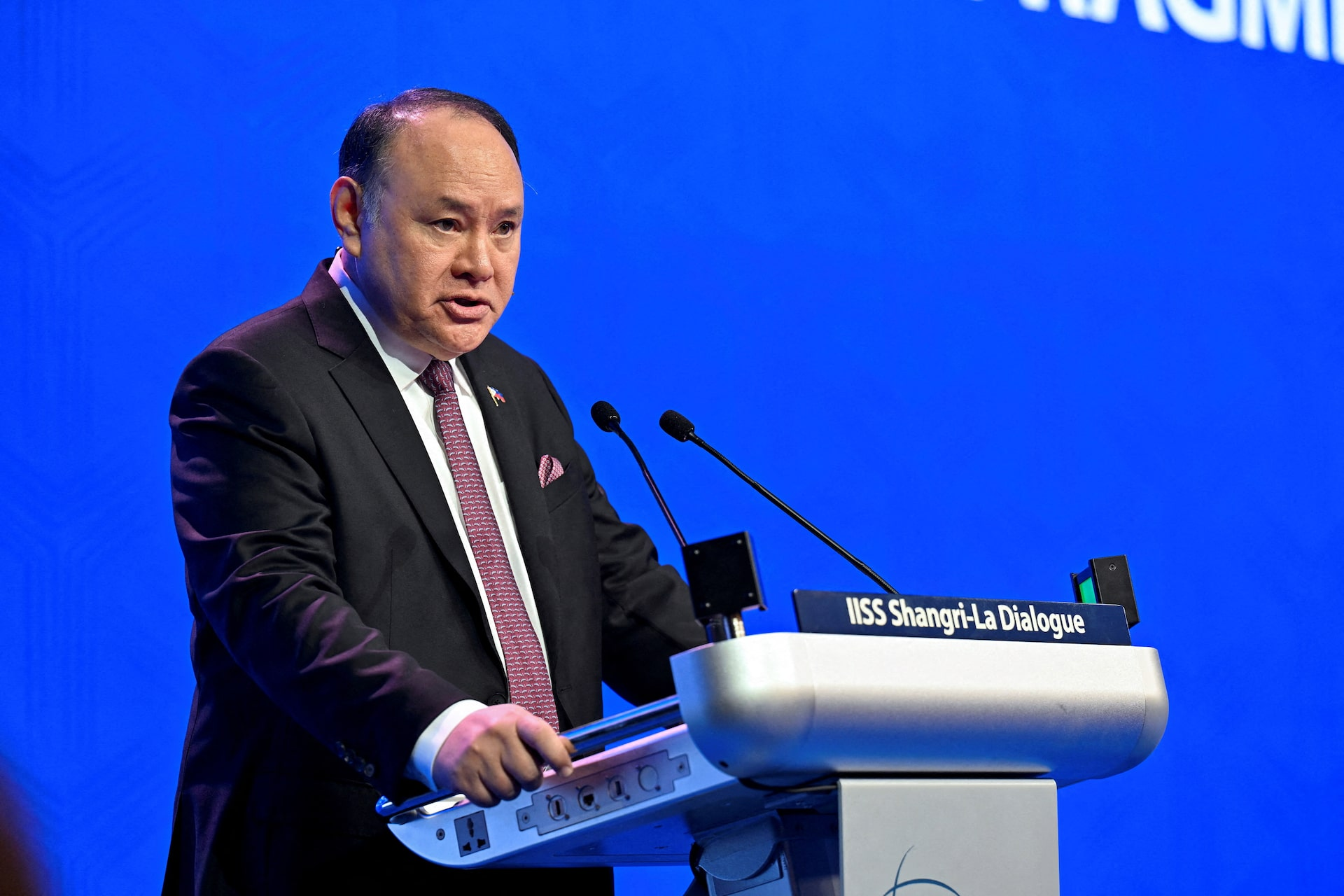
The Philippines’ defense secretary separately criticized the video as dehumanizing, and Philippine lawmakers denounced it in similar terms, with several saying it reflected a broader disregard by Chinese state media for the country and its people. The reaction cut across the usual divides in Philippine politics, with officials who otherwise disagree on how forcefully to confront Beijing over the South China Sea uniting in condemning the video’s imagery.
The dispute traces back to the July 2016 ruling by an arbitral tribunal under the U.N. Convention on the Law of the Sea, which found in the Philippines’ favor and rejected the legal basis for China’s expansive claims to the South China Sea. Beijing has never accepted the ruling and continues to assert sovereignty over most of the waterway, including areas around the Spratly Islands and Scarborough Shoal that the Philippines also claims and considers part of its exclusive economic zone. The waters are believed to hold roughly 11 billion barrels of untapped oil and 190 trillion cubic feet of natural gas.
Read also: China Overturns Death Sentence of Canadian Robert Schellenberg
The video’s water-cannon imagery echoes real confrontations between Chinese and Philippine vessels in the disputed waters, including an incident in March 2024 in which a Chinese coast guard ship used a water cannon on a Philippine resupply vessel near Second Thomas Shoal, an incident Manila said endangered its crew. Chinese and Philippine ships have collided and clashed repeatedly in the area in recent years.
The Philippines has received diplomatic backing from the United States and allies including Germany, Japan and the United Kingdom, which have repeatedly called on China to respect the arbitral ruling. In a joint statement issued earlier this month, those countries described the tribunal’s findings as “legally binding” and “definitive” and warned against “unilateral actions including by force or coercion” in the region.
The video’s publication came just days before China’s most senior diplomat was scheduled to attend a regional meeting in Manila, adding to tension ahead of that visit. It also followed months of friction between the two countries, including China’s decision last month to bar the Philippines’ defense chief from a separate regional gathering. Neither China’s Ministry of Foreign Affairs nor China Daily had issued a public response to the Philippine protest as of Friday.