
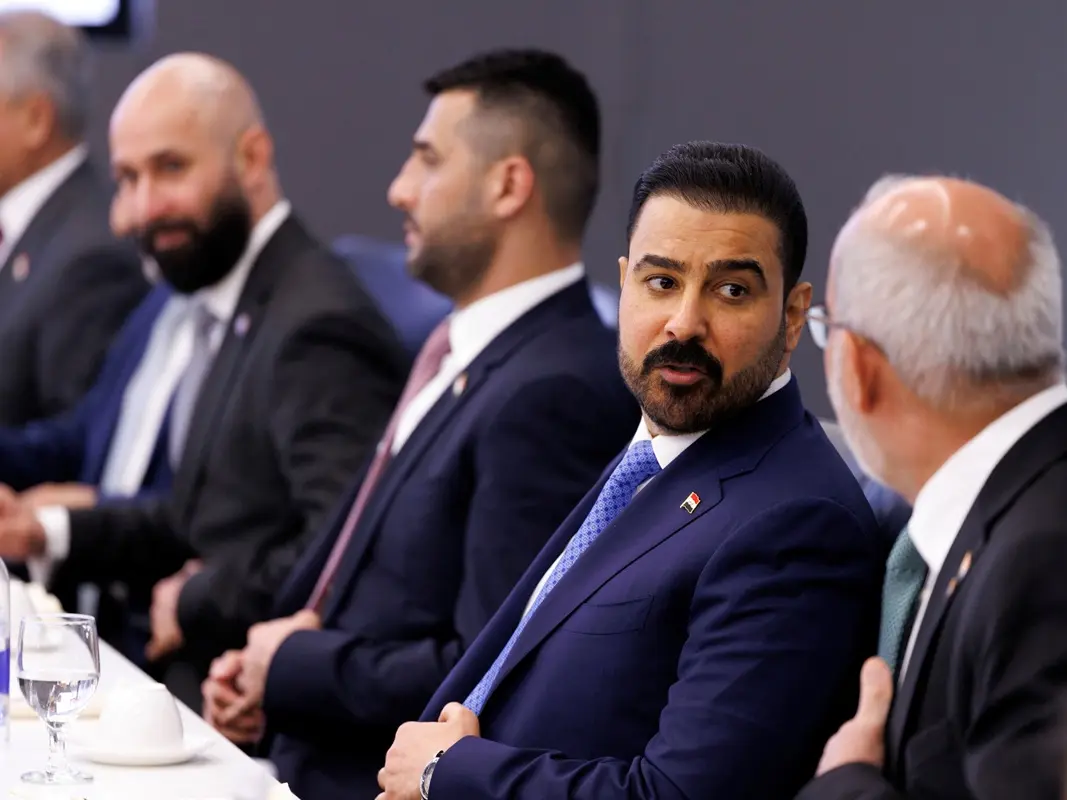
Western energy companies signed dozens of oil, gas and pipeline agreements with Iraqi officials at a Washington summit Friday, part of a package exceeding $60 billion aimed at giving Iraq new export routes that bypass the Strait of Hormuz.
Iraqi Prime Minister Ali al-Zaidi told the U.S.-Iraq Business Summit at the U.S. Chamber of Commerce that his government would welcome any serious investor. “We are using an open-door policy,” Zaidi said through a translator. “Everybody who has a project can come and talk to us. We will not make it difficult for anyone.” Companies in energy, healthcare and technology signed non-binding agreements and memorandums of understanding at the event, which drew roughly 500 attendees.
The deals come as Iraq’s oil exports have collapsed under the strain of the U.S.-Israeli war against Iran. Exports fell from about 4.2 million barrels per day in February to roughly 1.45 million barrels per day in May, according to OPEC data, largely because of the partial closure of the Strait of Hormuz, through which about a fifth of the world’s oil and gas typically passes. Tom Barrack, a U.S. envoy to the region for President Donald Trump, said the war has sown chaos and confusion in the wider Middle East but that Iraq now stands “at the forefront of a new strategic security alliance” with Washington and other partners.
Read also: Baghdad Sends Warning To US Over ‘Attacks’ On Iraq Territory
Chevron is in talks to take over operations at Iraq’s West Qurna 2 oilfield, replacing the sanctioned Russian firm Lukoil, and to invest in the nearby Nassiriya field, following meetings at the company’s Houston headquarters this week. Chevron is also joining a consortium exploring the revival of a long-defunct pipeline running from Kirkuk to the Syrian port of Baniyas on the Mediterranean. Separately, Iraq is expected to sign an agreement with Chevron, U.S. firm TI Capital and Qatar’s UCC to build a pipeline connecting the southern city of Basra to Haditha in western Iraq, with onward links planned to Turkey’s Ceyhan port and to Baniyas. Jake Spiering, a Chevron corporate development executive, told the Chamber event that Iraq’s long-term energy potential could eventually rival U.S. trading hubs such as the Henry Hub for natural gas and Cushing for crude.
ConocoPhillips said Friday it had agreed to buy a 42% stake in BP Energy Company of Kirkuk Ltd., joining BP in redeveloping four producing oilfields in northern Iraq. BP Chief Executive Meg O’Neill said Iraq has “fantastic potential from a resource perspective” and that the partnership supports both Iraqi and global energy security; BP has operated in the country since helping discover the Kirkuk field in 1927. ConocoPhillips Chief Executive Ryan Lance said his company lacks BP’s history in Iraq but has experience in difficult operating environments such as Alaska’s North Slope, adding that Conoco was “anxious to bring our technology, our know-how, our people, and our capital” to the effort.
Read also: Iran Allows Iraqi Ships Through Hormuz As Transits Rise
Iraq holds some of the world’s largest proven oil reserves but has struggled for years to fully develop them because of political instability, aging infrastructure and limited outside investment. Baghdad has set a goal of raising production capacity from about 5.4 million barrels per day currently to 7 million barrels per day by the end of the decade, a target Iraqi officials have said they hope to pursue partly outside OPEC’s production quotas.
Zaidi was sworn in as prime minister in May after emerging as a compromise candidate once Washington objected to the original nominee, former Prime Minister Nouri al-Maliki, over what U.S. officials described as close ties to Iran and its proxies; Maliki has denied the claims. Zaidi met Trump at the White House on Tuesday during a five-day U.S. visit, and Trump said afterward that Iraq had “tremendous potential because of their oil and because of other things,” predicting the two countries would strike numerous additional deals that create jobs on both sides.
Beyond the oil majors, Zaidi’s delegation held talks in Houston this week with oilfield-services companies including Halliburton, Shell, Honeywell, Weatherford and Baker Hughes about further investment in Iraq’s energy sector.
Friday’s agreements were largely non-binding memorandums of understanding rather than final contracts, and companies including Chevron said additional commercial and technical negotiations would be needed before projects like the Kirkuk-to-Baniyas pipeline move toward construction.