
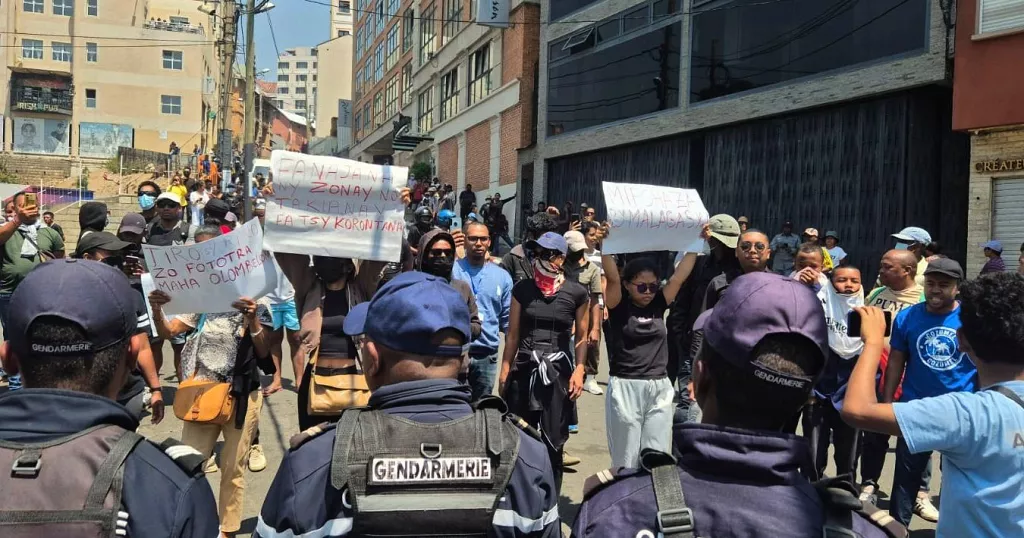
Madagascan President Andry Rajoelina has dismissed calls for his resignation amid escalating nationwide protests, warning that rival politicians may be plotting to exploit the unrest for a coup.
Friday saw tens of thousands of demonstrators fill the streets of Antananarivo, the capital, after a brief lull in near-daily rallies organized by the youth-led “Gen Z” movement. The activists have been demanding Rajoelina step down, citing chronic failures in basic services such as water and electricity. According to the United Nations, at least 22 people have died since the demonstrations began on September 25. Video footage from Real TV Madagasikara showed police firing tear gas to disperse the crowds.
Read also: Andry Rajoelina Wins Controversial Election In Madagascar
Addressing the nation via Facebook Live, Rajoelina painted the protests as part of a larger scheme. “No one benefits from the destruction of the nation. I am here, I stand ready to listen, to extend a helping hand, and to bring solutions to Madagascar,” he said. The president further alleged—without providing evidence—that some political actors had considered a coup while he attended United Nations meetings in New York last week. “What I want to tell you is that some people want to destroy our country,” he added, declining to name individuals.
The Gen Z movement dismissed Rajoelina’s remarks as “senseless” and demanded a concrete response within 24 hours, warning it would take “all necessary measures” if their calls were ignored. Demonstrations have not been limited to the capital; protests also erupted in Mahajanga on the northern coast, and in the southern cities of Toliara and Fianarantsoa.
Madagascar, despite its wealth of natural resources, remains one of the world’s poorest nations, with roughly three-quarters of its 32 million residents living below the poverty line in 2022, according to the World Bank. The ongoing unrest highlights both deep economic grievances and growing frustration among younger citizens, raising questions about the stability of Rajoelina’s government as the protests show no signs of abating.