
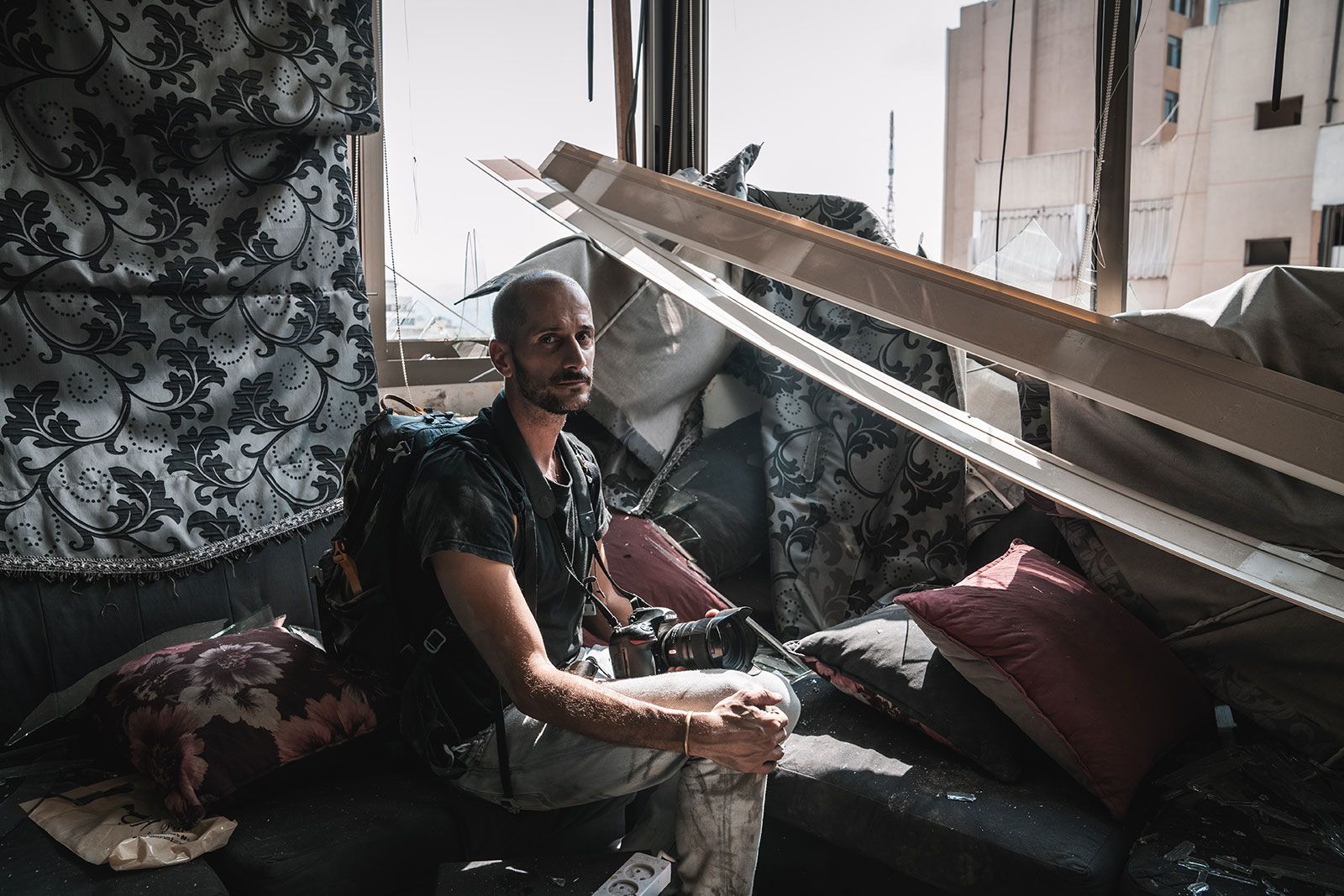
French photojournalist Antoni Lallican was killed on Friday after a drone strike hit his location in eastern Ukraine, the Ukrainian military confirmed through a statement by the Fourth Separate Mechanised Brigade.
Lallican was working alongside a Ukrainian colleague who sustained injuries in the same attack. The Ukrainian army said both journalists were wearing clearly marked press vests and protective gear at the time of the strike. The deadly incident occurred in the embattled Donbas region, one of the frontlines of the war.
Lallican’s final post on Instagram, shared only days before his death, reflected the increasing dangers in the region. “To the bombardments has been added the massive deployment of kamikaze drones, now omnipresent,” he wrote, underscoring the growing threat posed by unmanned aerial assaults.
Read also: Russian Air Strike Kills 24 Pensioners In Ukraine
According to the European Federation of Journalists (EFJ), Lallican’s death marks the first known instance of a journalist killed by a drone since Russia’s full-scale invasion of Ukraine began in February 2022. Seventeen journalists have now lost their lives in the conflict zone.
Lallican had been on assignment for the Hans Lucas photo agency, whose editors described him as an “experienced, deeply compassionate” professional dedicated to documenting human rights and conflict. His work, frequently featured across European publications, was widely recognized for its raw honesty and humanity.
French President Emmanuel Macron paid tribute to the fallen journalist, expressing “deep sadness” and directly blaming Moscow. Lallican, he said in a post on X, was “a victim of a Russian drone attack.”
The Ukrainian Union of Journalists said the attack happened near Druzhkivka, one of the most volatile stretches of the 1,250-kilometre frontline. Its chief, Serhiy Tomilenko, condemned the killing as a deliberate assault on truth-seekers. “By targeting journalists, the Russian army is deliberately hunting those trying to document war crimes,” he said.
“Every visit to the frontline is a calculated risk,” Tomilenko added. “Antoni Lallican faced that risk again and again — returning to Donbas to show the world what others choose not to see.”