
United States President Donald Trump on Monday voiced confidence that a breakthrough on a Gaza peace deal was within reach, saying that both Hamas and Israel were making progress on key sticking points as negotiations formally opened in Egypt.
Speaking to reporters at the White House, Trump said he was “confident but cautious” about the prospects for an agreement, describing the discussions as the most serious attempt yet to end the long-running conflict. He noted that Hamas had shown signs of flexibility on what he called “critical areas of contention,” though he did not elaborate on specific terms.
According to senior administration officials, the indirect talks between the two sides are being held under Trump’s 20-point framework, which aims to secure a permanent ceasefire, humanitarian access, and gradual demilitarisation of the Gaza Strip. The proposal, drawn up by U.S. and Egyptian mediators, also includes provisions for reconstruction funding and guarantees on border management.
Read also: Trump Sees “Really Good” Chance For Gaza Peace
Trump, who has frequently characterised Middle East peace as one of his administration’s defining priorities, said he had “clear red lines” that would determine U.S. engagement, but stressed that current discussions were proceeding “in a very positive direction.”
Officials familiar with the talks said the U.S. president believes a deal could emerge “within weeks” if both sides sustain momentum. They added that Washington had been in constant communication with regional actors, including Egypt and Qatar, to support the process.
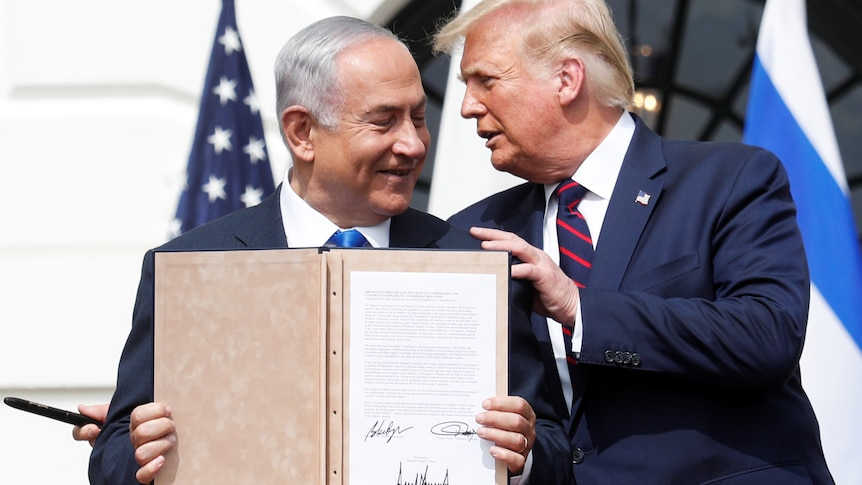
Asked about reports suggesting friction with Israeli Prime Minister Benjamin Netanyahu, Trump dismissed any notion of discord, describing Netanyahu’s position as “constructive and cooperative.” U.S. diplomats said both leaders had recently spoken by phone to align expectations on the negotiation timeline.
The discussions in Cairo come after months of sporadic fighting and humanitarian crises that have left large swaths of Gaza in ruins. Diplomats say the talks are viewed as a last major opportunity to stabilise the region before winter conditions further complicate aid delivery and civilian recovery efforts.
While past peace efforts have faltered amid deep mistrust, U.S. officials insist that the current framework has broader regional backing and reflects lessons from previous failed negotiations.
Whether optimism in Washington translates into lasting peace, analysts say, will depend on the ability of both sides to make concessions long deemed politically unthinkable.
— Africa Today News, New York