
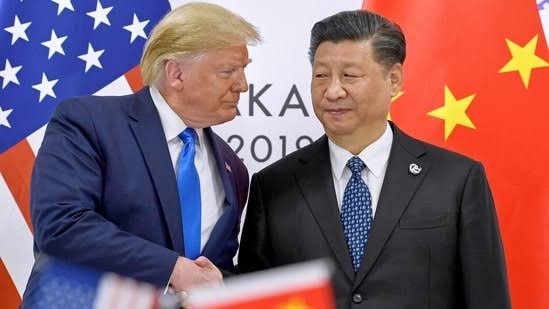
President Donald Trump had on Friday announced that starting November 1, the United States would impose 100 percent tariffs on Chinese goods, while also introducing new export controls on critical software. The move came in direct response to China’s recent tightening of export restrictions on rare earth elements.
China swiftly condemned the new U.S. tariffs as hypocritical and defended its export curbs, but notably stopped short of retaliating immediately with tariffs of its own.
This renewed clash stokes one of the most sensitive flashpoints in global trade. Rare earth elements are critical to modern electronics, green energy systems, and defense technologies. China controls a dominant share of the refined supply chain, making its export policies a potent tool in geopolitical competition. The U.S. reaction not only escalates bilateral trade pressures but also rattles companies dependent on China’s rare-earth materials.
In a lengthy statement, China’s Ministry of Commerce accused the U.S. of deploying “double standards,” citing recent American sanctions, trade blacklists, and port fees on China-linked vessels as provocations. While defending its export controls, Beijing emphasized its measures are motivated by security concerns—especially the military applications of rare earths amid “frequent military conflict”—rather than retaliation.
Read Also: Tensions Rise As Philippines Blames China For Sea Collision
A spokesperson added: ”Threatening high tariffs at the drop of a hat is not the right way to deal with China. China’s position on tariff wars has always been consistent: we don’t want to fight, but we are not afraid to fight.” Unlike earlier rounds of escalation this year, however, China declined to unveil immediate counter-tariffs against U.S. imports.
Trump framed China’s export controls as “surprising” and “very hostile,” and criticized Beijing’s behavior as an attempt to “hold the world captive.” He further expressed skepticism about a scheduled meeting with Chinese President Xi Jinping in South Korea later this month, writing on Truth Social: “now there seems to be no reason to do so.” When pressed by reporters, Trump clarified: ”I haven’t canceled … I would assume we might have it.”
Markets reacted sharply to the escalation. Big Tech stocks took heavy losses amid fears of supply disruptions. Investors worried that companies relying on China’s processed rare earths or magnets might struggle to secure materials.