
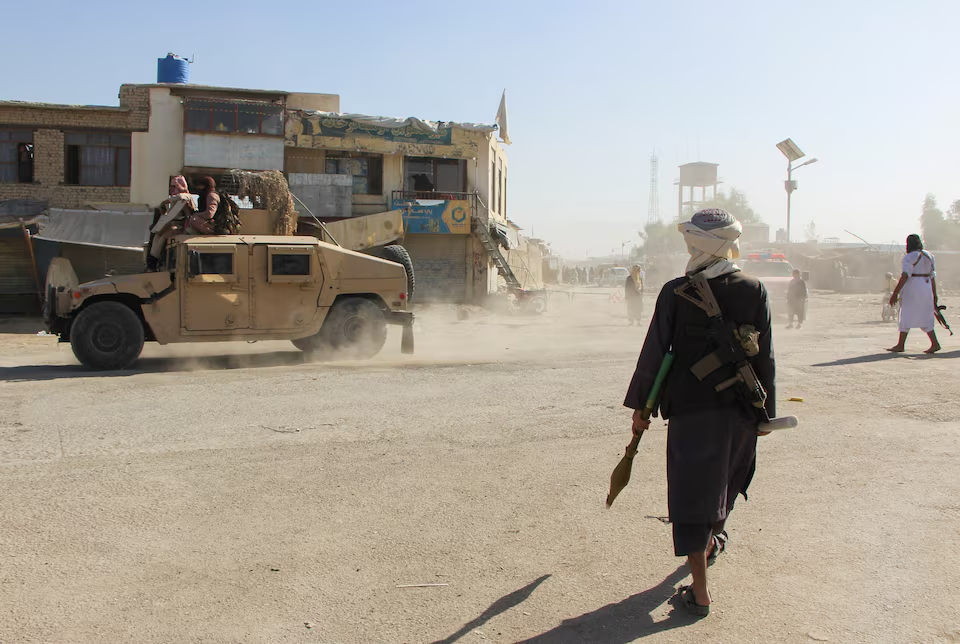
Pakistan and Afghanistan’s Taliban regime have agreed to a 48-hour temporary ceasefire beginning at 1300 GMT on Wednesday, following one of their most violent confrontations in recent years.
The truce comes amid rising regional alarm: clashes along the borders left more than a dozen civilians dead and around 100 wounded. Pakistan’s demand that the Taliban reign in militants inside Afghanistan had inflamed tensions, and both sides are seeking to deescalate.
The ceasefire interrupts a surge in hostilities that is viewed as the worst cross-border conflict between the two since the Taliban’s return to power in 2021. Islamabad has long accused the Afghan regime of harboring militants who strike Pakistan, a charge Kabul denies. With lives lost and border crossings already closed, the break in violence allows an opportunity for dialogue between the two parties which would probably lead to an end to the violence.
Before the ceasefire, Pakistani forces launched an airstrike on Kandahar’s Spin Boldak district, targeting what they claimed was a Taliban brigade. Pakistani officials asserted dozens of Taliban fighters were killed, though independent confirmation is lacking.
Afghan officials, including Defence Ministry spokesperson Enayatullah Khowarazmi, countered that residential areas of Spin Boldak suffered extensive damage. Meanwhile, Taliban spokesman Zabihullah Mujahid claimed at least 12 civilians died and over 100 were injured by Pakistani fire. He also said Afghan forces responded—destroying Pakistani posts, seizing tanks, and killing “invading” soldiers.
Read Also: Afghanistan Claims 58 Pakistani Soldiers Killed In Clash
On Pakistan’s side, reports said some civilians were hit in the border-adjacent districts of Chaman. Pakistani military rejected claims that it initiated the violence, labelling them “outrageous and blatant lies.”
According to Pakistan’s Foreign Ministry, the 48-hour truce will begin at 1300 GMT and was requested by Kabul. Yet the Taliban spokesman said it came at Islamabad’s “insistence.” Kabul ordered its forces to stand down so long as no aggression is committed by Pakistan.
The flare-up follows a weekend of heavy cross-border fire—the deadliest in years. Pakistan had already shut down major border crossings like Torkham and Chaman after exchanges of fire.
In recent years, accusations have repeatedly flown across this border: Islamabad claims Afghanistan shelters Tehrik-e-Taliban Pakistan (TTP) members, while Kabul accuses Pakistan’s military of provoking instability and supporting ISIS-linked militants.
Neighbors like Saudi Arabia and Qatar had already urged both sides to cool tensions. Some international organisations, including the UN’s Afghanistan mission (UNAMA), warned of mounting civilian harm and called for “immediate end to hostilities.”