
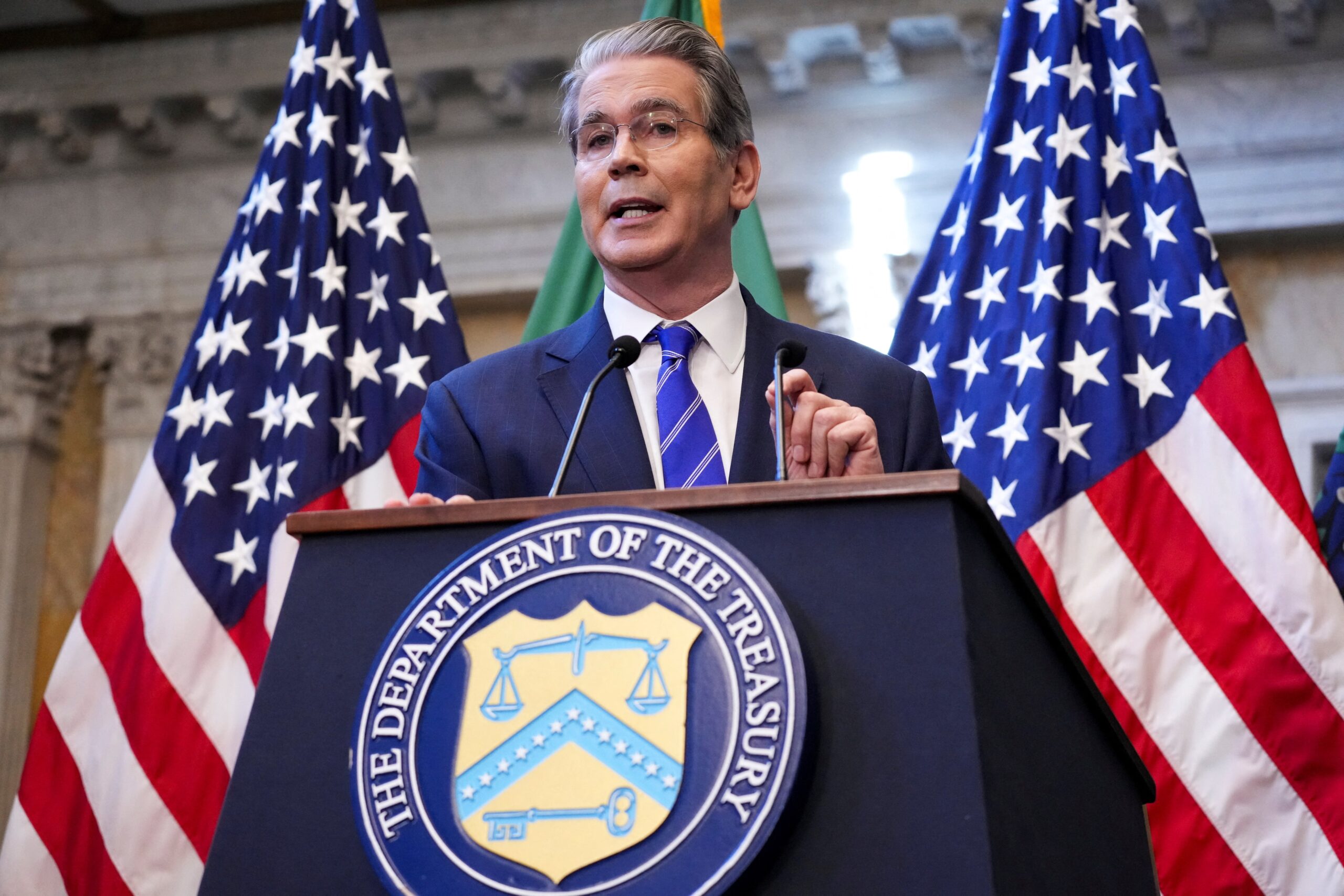
The two-week U.S. government shutdown is now inflicting serious damage on the U.S. economy, costing an estimated $15 billion per day in lost output, Treasury Secretary Scott Bessent said Wednesday during a press conference in Washington.
That daily price tag, Bessent warned, signals the shutdown is beginning to “cut into muscle” and erode the economic strength built over recent months. He appealed directly to Democrats, urging them to “be heroes” and join Republicans in ending the stalemate.
While the U.S. has attracted waves of investment, particularly in technologies such as artificial intelligence, those gains are at risk if the shutdown continues. “The only thing slowing us down here is this government shutdown,” Bessent said.
He defended ongoing strength in investment by pointing to incentives from recently enacted Republican tax measures and tariff policy. “I think we can be in a period like the late 1800s when railroads came in, like the 1990s when we got the internet and office tech boom,” he said.
Read Also: U.S. Shutdown: Data Blackout Clouds Global Policy Outlook
On fiscal performance, Bessent claimed that the U.S. deficit for fiscal year 2025, which ended September 30, was smaller than the $1.833 trillion posted for FY 2024. However, he declined to release a precise figure, noting that Treasury has not yet formally reported the data due to the shutdown.
Bessent expressed optimism that the deficit-to-GDP ratio, currently beginning with a “five,” could be brought down to around 3 percent in the coming years, though doing so will require growth, spending restraint, and tighter control of federal programs.
This estimate is broadly consistent with a recent Congressional Budget Office projection, which placed the FY 2025 deficit at $1.817 trillion.
As of October 14, the Trump administration reported that 4,108 federal employees had been dismissed since the shutdown began. These cuts follow warnings that more reductions could follow, raising concerns about longer-term damage to agencies and public services.
The shutdown has also disrupted the regular flow of economic data. Key reports, including the Consumer Price Index and other Bureau of Labor Statistics releases, have been delayed or suspended. This complicates decision-making for policymakers and markets alike.
In response, the White House’s Office of Management and Budget said it was preparing to “batten down the hatches and ride out” the funding lapse, continuing layoffs and prioritising payments to the military and law enforcement. If the stalemate persists, the damage could get worse.