
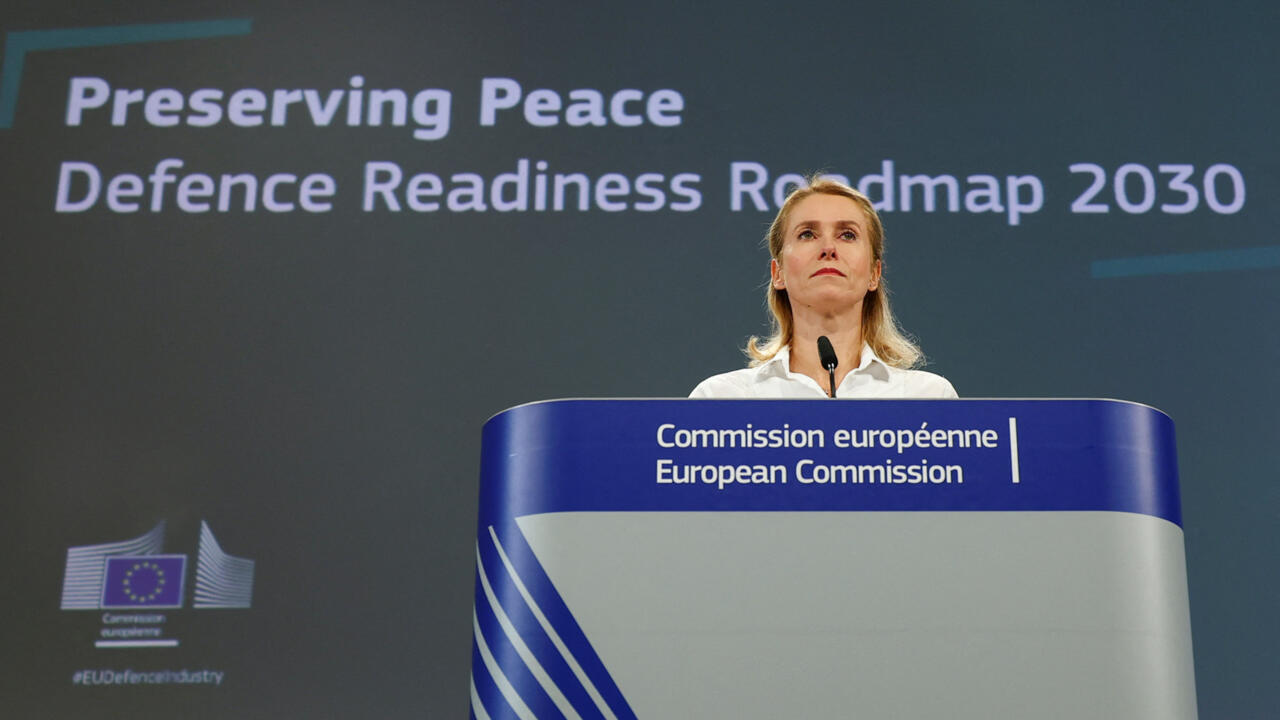
The European Commission on Thursday unveiled a project “Defence Readiness Roadmap 2030,” proposing four pan-EU flagship projects—ranging from a counter-drone system to a fortified eastern border—to prepare Europe to defend itself by 2030.
Deep anxiety over Russia’s aggressiveness in Ukraine and growing international pressure on Europe to take on more of its own defense costs are reflected in the roadmap. One of the most audacious moves the EU has made in recent years toward collective defense is represented by the suggested measures. They seek to bridge capability gaps and lessen reliance on outside military assurances—a strategic change brought on by Russia’s resurgent threats. At a press briefing, EU foreign policy leader Kaja Kallas issued a warning, “Danger will not disappear even when the war in Ukraine ends. It is clear we need to toughen our defences against Russia.”
Read Also: Zelenskiy, Trump Meeting: Ukraine’s Urgent Call For Tomahawks
The following were involved in the four flagship projects: Previously known as the “drone wall,” the European Drone Defense Initiative A counter-drone network spanning the continent is part of this initiative. Full functionality is anticipated by the end of 2027, with initial capacity scheduled for the end of 2026. The Eastern Flank Watch effort, which aims to strengthen the EU’s eastern frontiers (land, air, and sea), comes next. It is anticipated to reach maturity by the end of 2028. The third project is called European Air Shield. It aims to bridge a crucial gap in pan-EU air defense by protecting against missiles and airborne threats. The fourth and last project is European Space Shield. This project would promote cyber-space security and satellite resilience with the goal of safeguarding European space assets and services.
The Commission prioritizes the early deployment of the drone and eastern border initiatives because it sees them as more critical. EU member states are now in charge of approving and monitoring these projects. They have to choose which organizations will oversee them and whether to support each flagship. Full capabilities are anticipated by 2027–2028, however the Commission suggests that the drone system and eastern flank project start beginning operations by the end of 2026. However, there are technical and political obstacles to the proposals. Some major members are hesitant to give Brussels authority over defense.
These major initiatives are a component of the EU’s larger Readiness 2030 effort, formerly known as ReArm Europe, which aims to improve collective security and strengthen European defense capabilities. The roadmap addresses the need for greater European self-reliance as well as growing concerns about future U.S. military involvement in Europe. Though success hinges on agreement, financing, and technical implementation across 27 different countries, if approved, the projects would represent a historic step toward a more cohesive European defense.