
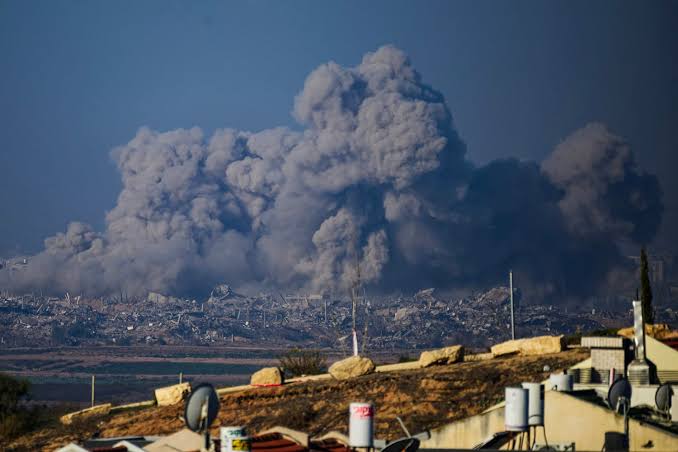
Israel launched air and artillery strikes on southern Gaza on Sunday, targeting militants near Rafah, in what many observers see as the first major strain on the U.S.-mediated truce that began on October 11. The escalation risks derailing a fragile ceasefire even as both sides exchange accusations of violations.
The Israeli military said the strikes were in response to attacks on its troops, including sniper fire and rockets launched from Rafah. It claimed the operations destroyed tunnels and military infrastructure used by militants. Prime Minister Benjamin Netanyahu warned that Israel would respond forcefully to any hostile actions against its soldiers.
Despite these developments, the Al-Qassam Brigades, Hamas’s armed wing, reaffirmed its commitment to the ceasefire across Gaza. It said it had no contact with groups in Rafah and claimed ignorance of clashes there. “We affirm our full commitment to implementing all agreements, foremost among them the ceasefire across all areas of the Gaza Strip,” the statement said.
On the ground, residents in Rafah reported explosions and gunfire. Tank fire was heard in Abassan near Khan Younis, while an airstrike struck Zawayda in central Gaza. In Deir Al-Balah, explosions reportedly killed at least five people, according to medical staff at Al-Aqsa Hospital. One witness said air raids in Khan Younis early in the afternoon preceded heavier shelling.
Read Also: Afghanistan Pakistan Ceasefire Agreement Reached In Doha
Gaza’s media office claimed that Israel had already committed 47 violations of the ceasefire, citing 38 dead and 143 wounded. Violations included direct shooting at civilians, deliberate shelling, and arrests.
Defense Minister Israel Katz said Israel would physically mark what it calls the “yellow line” the boundary beyond which its forces agreed to pull back and would respond with force to any violations or incursions.
Tensions also remain high over the Rafah border crossing with Egypt, currently closed and pivotal for humanitarian aid into Gaza. Under the ceasefire deal, this crossing was to reopen to ease aid delivery. Israel insists it will remain closed until Hamas hands over the bodies of 28 hostages. Hamas has returned 12 and says recovering the rest requires technical effort due to their location under rubble.
Beyond the day’s flareups, key issues remain unresolved: disarmament of Hamas, the future governance of Gaza, and the creation of a stabilisation force. The renewed tensions also rattled Israel’s markets, with Tel Aviv indices falling nearly 2%.