
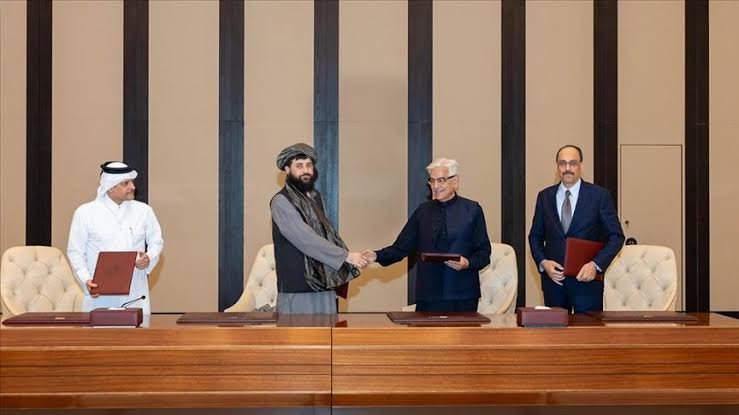
Afghanistan and Pakistan have agreed to an immediate ceasefire after a week of intense border clashes, officials announced Sunday. The accord was reached during talks held in Doha, mediated by Qatar and Turkey.
Pakistan’s Defence Minister, Khawaja Muhammad Asif, confirmed the ceasefire had been “finalised” and said both sides would reconvene on October 25 in Istanbul to iron out “detailed matters.” Taliban spokesperson Zabihullah Mujahid described the agreement as “complete and meaningful,” adding that neither side would undertake hostile actions or support groups operating against Pakistan. Qatar’s foreign ministry said the follow-up sessions are intended “to ensure the sustainability of the ceasefire and verify its implementation in a reliable and sustainable manner.”
This agreement comes after the worst violence between the two nations since the Taliban took power in 2021. The clashes, which included ground skirmishes and Pakistani airstrikes, left dozens dead and hundreds wounded. Pakistan launched the strikes after accusing militants of mounting attacks from sanctuaries inside Afghanistan. Islamabad demanded that Kabul take action against these groups. The Taliban deny harboring militants and accuse Pakistan of spreading misinformation and backing Islamic State–linked groups to weaken Afghanistan’s sovereignty.
Read Also: Afghanistan Claims 58 Pakistani Soldiers Killed In Clash
On Friday, a suicide attack near the border killed seven Pakistani soldiers and wounded thirteen, further escalating tensions. In a stern address, Pakistan’s army chief, Field Marshal Asim Munir, declared: “The Afghan regime must rein in the proxies… using Afghan soil to perpetrate heinous attacks inside Pakistan.”
Afghan officials alleged that Pakistan conducted airstrikes inside Afghanistan even after the ceasefire extension. Kabul claimed these strikes targeted civilians—and notably, Afghan cricketers. In response, Afghanistan withdrew from a planned T20 tri-series in Pakistan, citing the deaths of three of its players in military operations. Pakistan denied the targeting of noncombatants, saying it had struck verified militant camps and claiming over 100 militants were eliminated—though this figure is not independently verified.
Taliban spokesperson Mujahid reiterated that Afghan forces had received instructions not to retaliate, to preserve the integrity of the negotiating process.
The next line of action will depend on implementation and verification. Mediators from Qatar and Turkey will play a role in establishing mechanisms to monitor compliance, while the October 25 meeting in Istanbul is expected to address unresolved bilateral concerns.