
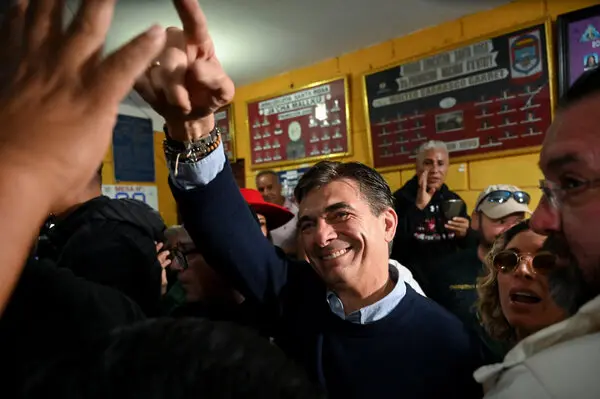
Bolivia has turned a page in its political history, electing Rodrigo Paz of the centre-right Christian Democratic Party (PDC) as president, bringing to an end nearly twenty years of leftist governance under the Movement for Socialism (MAS).
With 97 percent of ballots counted, the 58-year-old economist secured 54.5 percent of votes in Sunday’s run-off election, defeating former interim leader Jorge “Tuto” Quiroga, who garnered 45.4 percent, according to the Supreme Electoral Tribunal (TSE).
The victory marks a generational shift in Bolivian politics. Paz, the son of Jaime Zamora, a former left-wing president, has built his career on pragmatic centrism — combining pro-market reforms with pledges to widen economic opportunity. Educated in the United States, he returned home to serve as mayor of Tarija and later as a senator for the southern region.
In his first address after the results were announced, Paz vowed to deliver what he called a “capitalism for all” model, promising tax relief, tariff cuts, and deeper decentralisation of state power. His running mate, Edmand Lara, struck a conciliatory tone, urging national unity and swift economic stabilisation.
Read also: South Africa Advocates Worldwide Recognition Of Palestine
“People are suffering,” Lara said. “We must secure fuel supplies, stabilise food prices, and confront corruption with resolve.”
The election followed a turbulent campaign season that fractured the long-dominant MAS movement. Former president Evo Morales, who led Bolivia for 14 years, was barred from running due to term limits and disputes over party membership. His successor, Luis Arce, declined to seek re-election after falling out with Morales, leaving the once-unified left divided and weakened.
That rift, combined with a grinding economic crisis and inflation pressures, paved the way for Paz’s centre-right resurgence.
Still, the incoming president faces formidable challenges. Morales remains an influential figure, particularly among Indigenous communities, and has dismissed the election outcome as elitist.
“Neither of these candidates represents the popular movement, much less the Indigenous movement,” Morales told reporters after casting his vote.
President Luis Arce is set to hand over power on November 8, concluding a single term that began in 2020. His exit will formally close a twenty-year chapter of socialist dominance — one defined by sweeping social reforms, economic nationalism, and deep political polarisation.
As Paz prepares to assume office, Bolivians wait to see whether his promise of “inclusive capitalism” can reconcile a country long divided between ideology and survival.