
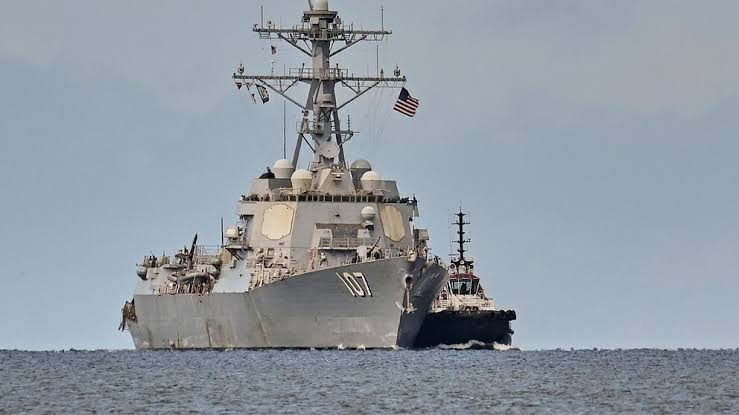
Nicolás Maduro has severed Venezuela’s energy partnership with Trinidad and Tobago, retaliating against the Caribbean island nation for allowing an American warship to dock at its ports.
The Venezuelan president announced the “immediate suspension” of the bilateral agreement during a televised address Monday, casting the decision as a response to what he characterized as Trinidadian complicity in U.S. military pressure against Caracas.
Maduro accused Prime Minister Kamla Persad-Bissessar of converting Trinidad into “an aircraft carrier of the American empire against Venezuela”—language that echoes his broader narrative of Washington orchestrating regime change through military encirclement.
The energy agreement, which has facilitated natural gas cooperation between the two nations, represents significant economic value for Trinidad and Tobago’s industrial sector. Venezuela possesses vast hydrocarbon reserves, while Trinidad has developed sophisticated processing infrastructure. The partnership allowed both countries to leverage complementary strengths despite their political differences.
Persad-Bissessar’s government has not yet responded publicly to Maduro’s announcement, though the decision to host American naval vessels reflects Trinidad’s balancing act between regional relationships and its security ties with Washington. Port of Spain has historically maintained pragmatic relations with Caracas despite ideological divergence, making this rupture particularly notable.
Read also: Maduro Alleges US Manufacturing Conflict With Venezuela
The suspension comes as U.S. military assets continue moving through Caribbean waters toward Venezuela, part of what the Trump administration describes as counter-narcotics operations but what Caracas insists represents preparation for intervention. The USS Gerald R Ford, the world’s largest aircraft carrier, has been steaming toward Venezuelan waters for days, accompanied by a battle group that includes destroyers and support vessels.
Maduro’s government has responded with coastal defense exercises and increasingly bellicose rhetoric, framing the American military presence as an existential threat. Cutting energy cooperation with Trinidad sends a message to other Caribbean nations that allowing U.S. forces to use their facilities will carry economic consequences.
For Trinidad, the suspension creates immediate complications. The island’s petrochemical industry depends partly on Venezuelan gas supplies, and replacing those volumes quickly could prove difficult. Whether Persad-Bissessar’s government will reverse course on hosting American vessels or absorb the economic hit remains unclear.
The episode underscores how Venezuela’s crisis is rippling across the Caribbean, forcing smaller nations to choose sides in a confrontation between Caracas and Washington that most would prefer to avoid. Trinidad’s geographic proximity to Venezuela—the two countries are separated by just 11 kilometers at the nearest point—makes neutrality particularly difficult to maintain.
Maduro’s willingness to sacrifice energy revenue by canceling the Trinidad agreement suggests he views the U.S. military buildup as serious enough to warrant economic warfare against perceived collaborators. Whether that calculation proves strategically sound or simply isolates Venezuela further will depend on how other Caribbean governments respond to the implicit ultimatum: host American forces and lose access to Venezuelan energy, or maintain commercial ties and risk Washington’s displeasure.