
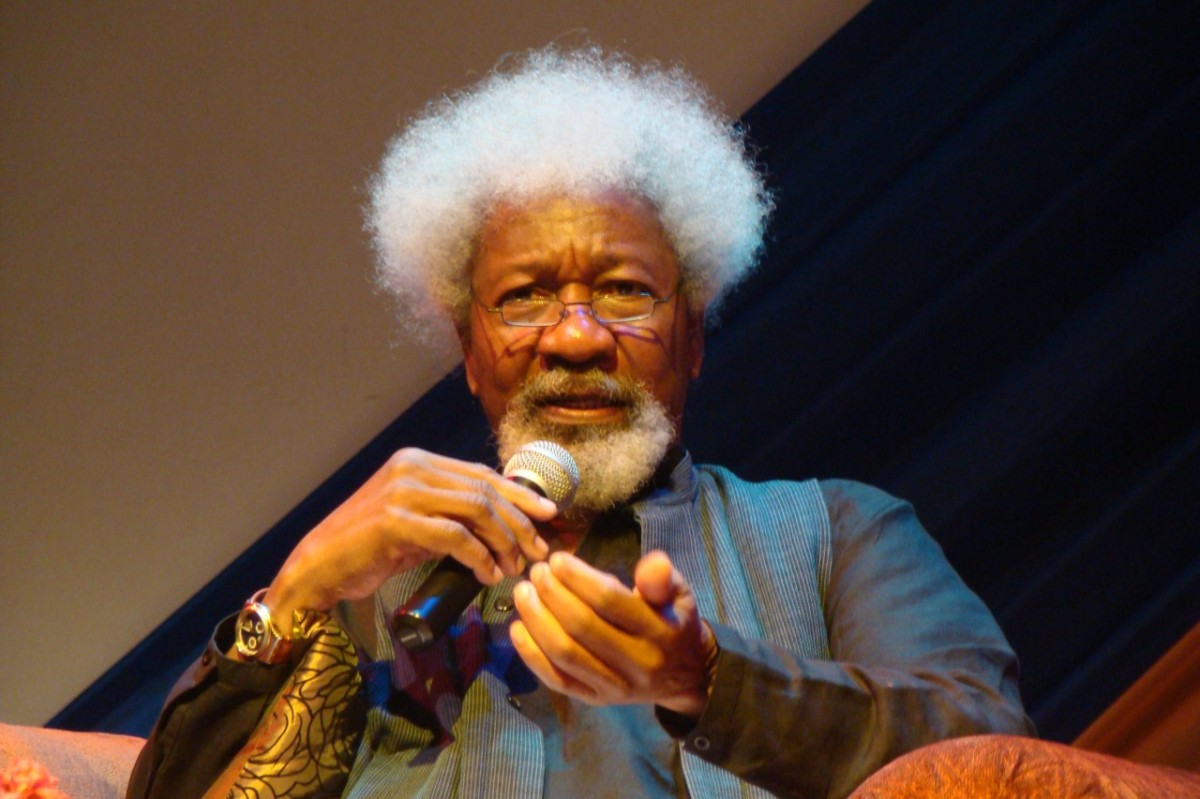
Nobel Laureate Wole Soyinka says U.S. authorities cancelled his visa after he refused a re-interview, calling the decision “their business, not mine.”
Nobel Laureate and renowned writer Professor Wole Soyinka has confirmed that the United States government has permanently revoked his visa after he declined to attend a revalidation interview requested by the U.S. Consulate in Lagos.
Speaking at a media briefing on Tuesday October 28, 2025, at Freedom Park, Lagos, Soyinka said he was notified of the cancellation on October 23, 2025. The letter, he explained, formally stamped his visa as “cancelled permanently.”
“I will not go there to help them do it,” the 90-year-old author said, dismissing the issue with characteristic calm. “If they wish to cancel it, that is their business.”
Soyinka said he chose not to comply with the consulate’s request because he considered the process unnecessary. Despite the revocation, he expressed no animosity toward the U.S. government or its citizens. “I will continue to welcome any American to my home if they have legitimate reasons to meet with me,” he said.
Read Also: After June 12 Struggle, I Almost Ran For President — Soyinka
The Nigerian playwright and activist has had a long and complex relationship with the United States. In 2016, he famously destroyed his American green card shortly after President Donald Trump assumed office, describing the act as a symbolic protest against policies he viewed as divisive and discriminatory. Since then, he had relied on a visitor’s visa for travel.
Reflecting on past encounters with U.S. immigration authorities, Soyinka recalled two “minor misunderstandings.” The first, he said, involved a $25 fine for failing to declare chili peppers he carried into the country from London. The second occurred in the 1970s, when he confronted an immigration officer in Chicago over a racist remark — an exchange that escalated until Nigerian diplomat Emeka Anyaoku intervened.
“I do not think those two incidents are enough to classify me as having a criminal record,” he said, smiling. “They were simply misunderstandings that could happen to anyone.”
Soyinka, known globally for his outspoken defense of human rights, said his relationship with the U.S. remained cordial until what he described as a “shift in political climate” during Trump’s administration.
He ended his remarks with a message about justice and moral courage: “Silence in the face of prejudice,” he warned, “is as dangerous as the act itself.”