
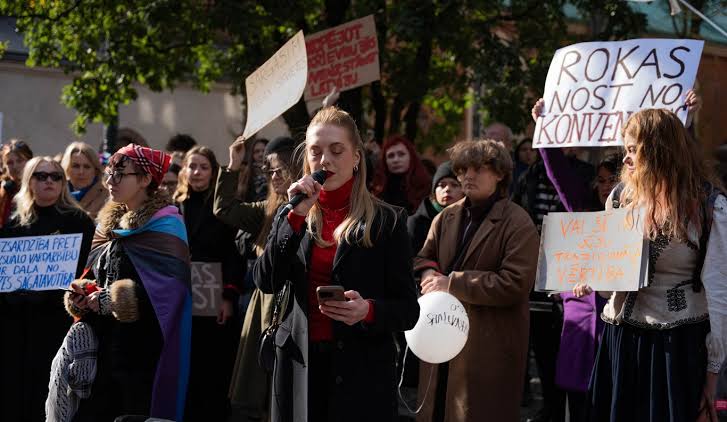
Latvia’s parliament has voted to withdraw from the Istanbul Convention, a key international treaty aimed at preventing violence against women, in a move that has sparked protests and condemnation from human rights advocates across Europe.
After a 13-hour debate in the Saeima on Thursday, lawmakers voted 56 to 32 in favor of leaving the accord, with backing from opposition parties and members of the ruling coalition’s Union of Greens and Farmers. The vote followed weeks of fierce public debate and demonstrations in the capital, Riga, where thousands gathered to oppose the move.
The decision marks a significant reversal for Latvia, which only ratified the 2011 treaty last year—becoming the first European Union member to consider pulling out. Turkey, the first country to leave the convention in 2021, faced similar backlash from rights groups and European institutions at the time.
President Edgars Rinkevics must now decide whether to sign the bill or send it back to parliament for reconsideration. He said on X (formerly Twitter) that he would evaluate the legislation “taking into account state and legal, rather than ideological or political, considerations.”
Supporters of the withdrawal, including members of the Latvia First party, argue that the convention promotes “gender ideology” and threatens traditional family values. Party leader Ainars Slesers urged Latvians to “choose between a natural family and gender ideology with multiple sexes.”
Read Also: Afghanistan Pakistan Peace Talks To Resume In Istanbul
Opponents, however, say the treaty has been distorted by misinformation. Ombudswoman Karina Palkova warned against politicizing the issue, while the advocacy group Equality Now stated the agreement “is not a threat to Latvian values, it’s a tool to realize them.”
Prime Minister Evika Silina, who leads the center-right coalition government, called the vote a setback for women’s rights. Earlier in the week, she joined demonstrators outside parliament, telling the crowd, “We will not give up. We will fight so that violence does not win.”
The Council of Europe, which oversees the treaty, expressed deep concern over Latvia’s decision. The organization’s parliamentary assembly head, Theodoros Rousopoulos, said the vote was “an unprecedented and deeply worrying step backwards for women’s rights and human rights in Europe.” He warned that countries leaving the treaty have seen rising levels of violence against women, citing Turkey as an example.
Inside Latvia, more than 22,000 citizens have signed a petition urging the government to reverse course. Women’s rights group Centrs Marta has called another protest for next Thursday, accusing lawmakers of “ignoring the voices of Latvian people.”
The Progressives, another coalition partner, said it may challenge the bill in the Constitutional Court if President Rinkevics refuses to veto it.