
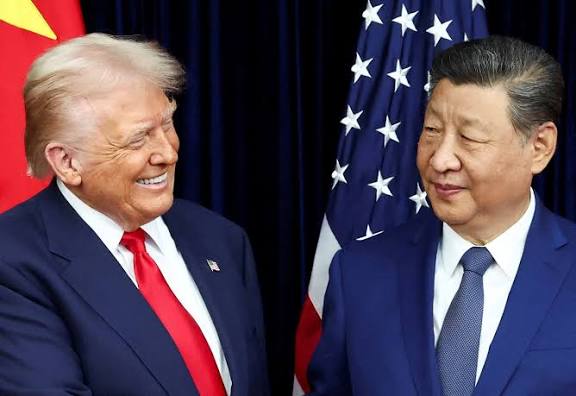
President Donald Trump and China’s Xi Jinping, in a rare meeting after six years, agree on key trade and security issues, signaling a potential reset in ties.
President Donald Trump has wrapped up his visit to South Korea following a landmark summit with Chinese leader Xi Jinping — their first face-to-face meeting in six years. The high-stakes dialogue, held at the tail end of Trump’s tour across Asia, could mark a turning point in relations between Washington and Beijing.
Speaking before his departure, Trump described the discussions as “tremendously productive,” saying both sides agreed on “almost everything.” He said a new trade agreement between the United States and China could be signed “pretty soon,” hinting at progress after years of tensions over tariffs, technology exports, and global supply chains.
The meeting — which observers have called the most significant U.S.-China engagement in years — reportedly covered a wide range of issues, from Russia’s ongoing war in Ukraine to the global supply of rare earth minerals and China’s role in stemming the flow of fentanyl into the United States. Trump said the two nations had made “real headway” on each of these fronts, though he did not release details of any specific commitments.
Read Also: United States: $1 Billion Pact With AMD To Build Supercomputers
Chinese officials echoed a tone of cautious optimism, stating that both sides had reached a “consensus on important economic and trade issues.” The statement, however, stopped short of confirming whether a formal deal had been concluded, saying further consultations would continue through diplomatic and technical channels.
Analysts say the summit could signal a recalibration of relations between the world’s two largest economies, which have been strained by disputes over technology access, defense alliances in the Indo-Pacific, and differing positions on global conflicts. A thaw in ties, experts note, could help stabilize global markets and open new channels of cooperation in trade, energy, and security.
Trump’s Asia trip included stops in Japan and South Korea before the concluding summit with Xi. It comes amid growing regional uncertainty, as Washington seeks to strengthen alliances in the Pacific while managing competition with Beijing.
While both sides appear to have left the table with a renewed sense of engagement, diplomats caution that translating broad pledges into enforceable agreements will test the resilience of U.S.-China diplomacy in the months ahead.