
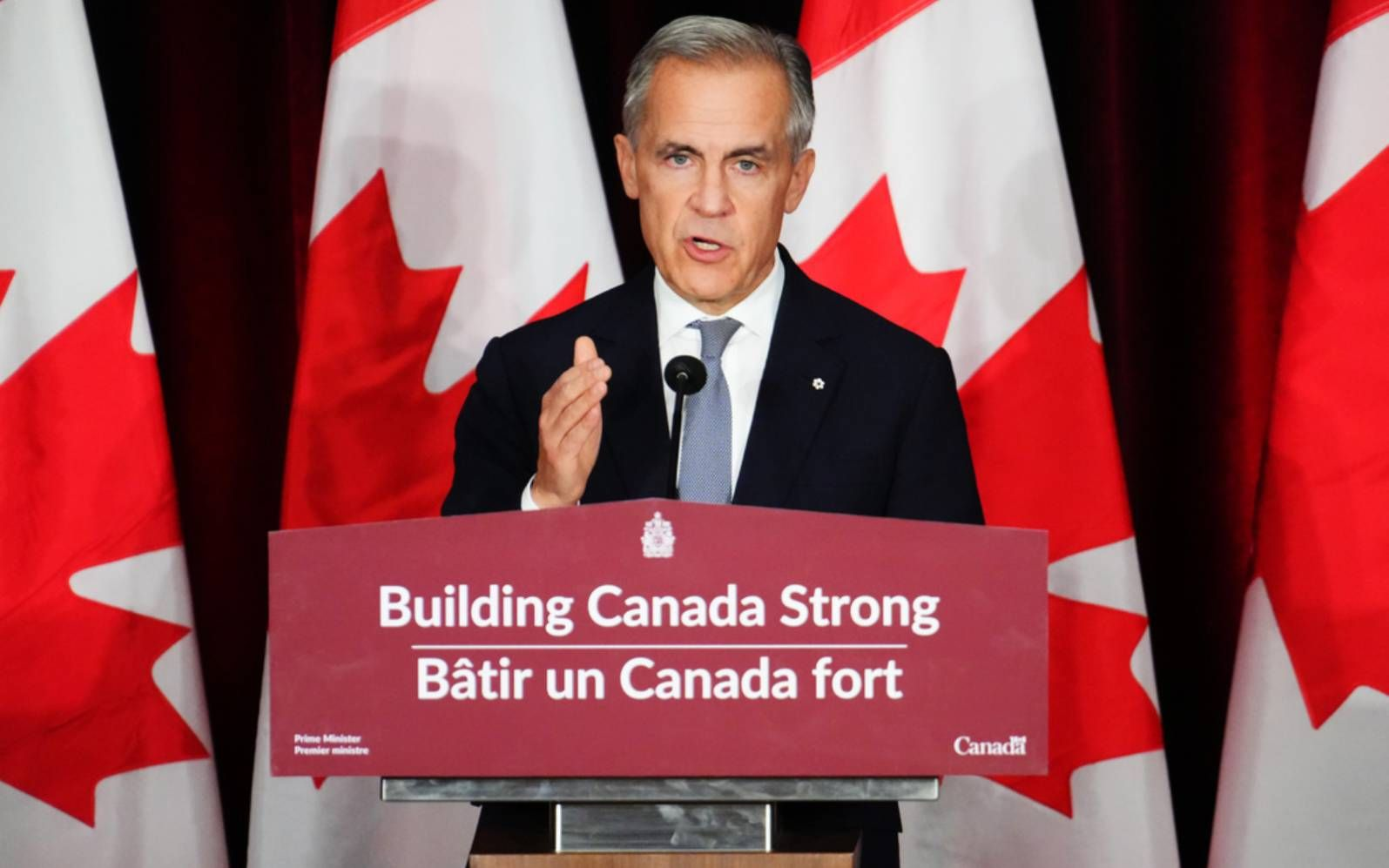
Mark Carney arrives at parliament Tuesday carrying a budget he believes will rescue Canada from Donald Trump’s trade war—though whether it survives the legislative gauntlet remains an open question for a prime minister governing without a majority.
The former central banker, who led monetary policy in both Canada and Britain before his political pivot this year, has wrapped his first budget in almost existential language. Not just economic policy, he insists, but “the answer” to how Canada survives what he calls a permanent rupture with its southern neighbor.
Trump’s tariffs haven’t been subtle. Unemployment is climbing. Auto plants, aluminum smelters and steel mills—cornerstones of Ontario and Quebec’s industrial heartland—are hemorrhaging jobs as American duties make Canadian goods uncompetitive. The economic model that made Canada prosperous for generations, built on frictionless access to U.S. markets, is collapsing in real time.
Finance Minister François-Philippe Champagne will unveil specifics Tuesday, but the government has telegraphed broad strokes: massive defense spending hikes to satisfy NATO requirements Trump has weaponized, and what Carney terms investments in “economic sovereignty”—ports, energy infrastructure, and the roads and railways needed to extract critical minerals from Canada’s vast, underpopulated north.
“The idea is to build the Canada of tomorrow,” Champagne said, deploying the kind of nation-building rhetoric that signals expensive ambitions.
Carney replaced Justin Trudeau in January, then won his own mandate in April—though fell three seats short of a majority. That arithmetic means his budget lives or dies based on opposition choices. Because budget votes carry confidence implications, defeat triggers elections nobody particularly wants.
The Conservatives, led by Pierre Poilievre and holding the largest opposition bloc, have made their price clear: deficit reduction. It’s a demand seemingly incompatible with an “investment budget” designed to rewire Canada’s economy. Genevieve Tellier, who studies public policy at the University of Ottawa, expects deficits to be “very large”—which suggests Conservative support won’t materialize.
Read also: Ontario Premier Halts Anti-Tariff Ad After Trump Ends Trade Talks
That leaves the New Democrats, whose catastrophic April election performance stripped them of official party status. Facing potential extinction if Canadians vote again soon, the NDP may choose abstention over triggering another campaign. Tellier sees “little chance” the government falls, reading the parliamentary mood as begrudging tolerance rather than enthusiasm.
Over the weekend in South Korea, where he’d attended an Asia summit, Carney framed the stakes in characteristically blunt terms. “Where are we going to find the growth given the headwinds from the new US trade policy?” he asked reporters. His budget, he promised, provides that answer—though he’s also warned Canadians that reducing American dependence “can’t happen overnight.”
It’s a delicate political balancing act. Carney needs to convince voters that transformation is both urgent and achievable, that short-term fiscal pain buys long-term resilience, and that his particular vision deserves support even from those who didn’t vote Liberal.
Asked about his confidence in passage, Carney abandoned diplomatic hedging. “I am 100 percent confident that this budget is the right budget for this country, at this moment,” he declared, then added a warning: “This is not a game.” Translation: he’ll defend these proposals in another election campaign if opposition parties force one.
That defiance reflects calculated risk. Carney is betting Canadians share his read that Trump’s hostility represents permanent realignment rather than temporary disruption, that the post-NAFTA economic consensus is dead, and that bold spending beats cautious incrementalism.
The alternative view—that Carney is using external threats to justify expensive ideological preferences—will get its hearing from Conservatives eager to paint the budget as reckless. Whether voters buy that critique or accept Carney’s framing will determine not just the budget’s fate but possibly the government’s survival.
Canada is confronting questions it hasn’t seriously asked in decades. Can a country of 40 million, stretched across a continent, reduce dependence on the 330-million-strong economic colossus next door? Does building “sovereignty” through infrastructure megaprojects make strategic sense, or does it simply waste money that won’t change fundamental geographic and economic realities?
Carney’s answers emerge Tuesday. He’s staking his premiership—barely four months old after replacing Trudeau—on the proposition that Canadians want transformation, not tinkering. The budget details will matter less than whether parliament, and ultimately voters, accept that premise.