
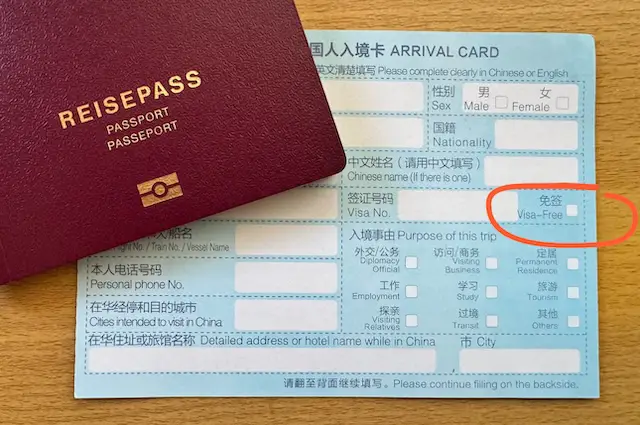
Beijing unveils a digital arrival card and wider visa-free transit access to streamline border control and attract more international travelers.
China is introducing a new digital arrival card system and expanding visa-free transit access for foreign visitors, part of a major modernization effort to simplify border procedures and revive international travel.
The National Immigration Administration (NIA) announced that the digital arrival card will take effect on Thursday November 20, 2025, allowing travelers to submit entry details online before departure. The move aims to improve efficiency at ports of entry and reduce paperwork, aligning China’s border management with digital systems used in other Asian economies such as India, Indonesia, and South Korea.
Under the new system, all foreign travelers—regardless of visa type—can fill out their entry details via the NIA website, the 12367 mobile app, or through WeChat and Alipay mini-programs. Digital kiosks and QR code stations will also be available at major airports for travelers who do not complete the form in advance. Paper forms will remain available during the transition period.
According to the NIA, seven categories of travelers will be exempt from filling out the digital card. These include foreign permanent residents in China, Hong Kong and Macao residents with valid Mainland Travel Permits, cruise passengers arriving and departing on the same vessel, transit passengers who remain inside the airport, international transport crew members, and participants in group entry or collective visa programs.
Read Also: China: Bai Family Leaders Sentenced To Death In Scam Crackdown
The digital arrival card is part of a broader package of ten new policies designed to make travel to China more convenient and to position the country as an open, globally connected destination.
Beginning Wednesday November 5, 2025, China’s 24-hour visa-free transit policy—which allows passengers en route to a third country to remain within airports without clearing immigration—will be expanded to ten additional international airports. These include Tianjin, Dalian, Nanjing, Fuzhou, Qingdao, Wuhan, Nanning, Haikou, Chongqing, and Kunming.
China’s 240-hour (10-day) visa-free transit program will also extend to five new entry points in Guangdong Province: Guangzhou Pazhou Ferry Terminal, Hengqin Port, the Hong Kong–Zhuhai–Macao Bridge Port, Zhongshan Passenger Port, and the West Kowloon Station Port on the Guangzhou–Shenzhen–Hong Kong high-speed rail.
Altogether, the expanded visa-free transit scheme now spans 65 ports across 24 provinces, offering simplified entry to travelers from 55 eligible countries for tourism, business, and family visits.
In a further step toward regional integration, mainland residents visiting family in Hong Kong or Macao will soon be able to renew their travel permits directly through China Travel Service offices in the two Special Administrative Regions—ending the need to return to the mainland for renewals.
Officials say the combined reforms underscore Beijing’s commitment to facilitating cross-border mobility, boosting tourism, and enhancing China’s image as a modern, accessible travel destination.