
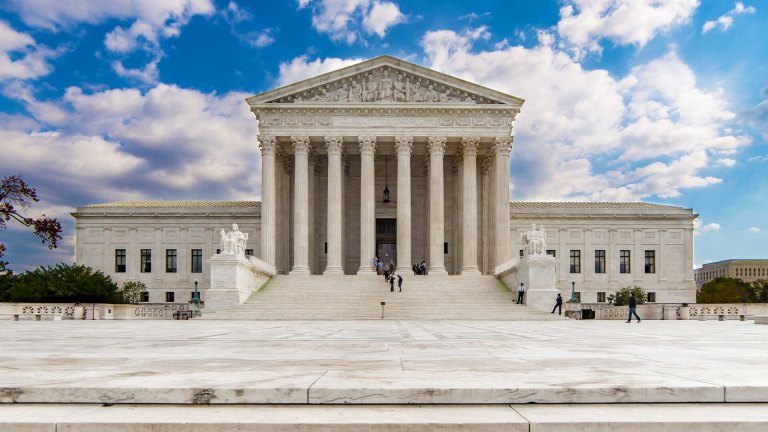
The United States’s highest court grappled Monday with a troubling question that cuts to the heart of religious freedom in America’s prisons: What happens when officials violate someone’s constitutional rights, but the law offers no meaningful remedy?
At the center of the case is Damon Landor, whose nearly two-decade journey of growing dreadlocks as part of his Rastafarian faith came to an abrupt and traumatic end during the final weeks of his incarceration. The incident, which occurred in 2020 at a Louisiana correctional facility, has now become a flashpoint in the ongoing debate over accountability within the American prison system.
Landor was serving out the last three weeks of a five-month sentence for drug possession when prison guards forcibly cut his knee-length locks. The confrontation unfolded despite Landor’s efforts to assert his rights—he had presented guards with a copy of a 2017 court decision that explicitly protected Rastafarians’ religious practice of maintaining dreadlocks. According to court documents, a guard simply threw the legal ruling away. What followed was a scene that lower courts would later describe as “egregious”: Landor was handcuffed to a chair while his head was shaved.
Read also: Trump To Sue BBC For $1bn Over Edited January 6 Speech
Louisiana officials have since acknowledged the obvious—that the treatment was “antithetical to religious freedom.” The state has even amended its prison grooming policies in response. But when it comes to holding individual officers accountable through monetary damages, Louisiana draws a firm line in the sand.
The state’s legal argument hinges on a technical interpretation of federal law, contending that individual officials cannot be sued in their personal capacity for such violations. During Monday’s oral arguments before the Supreme Court’s conservative-majority bench, that position appeared to gain traction among several justices.
Landor’s attorney, Zachary Tripp, warned of the dangerous precedent such a ruling would set. “Without damages, officials can literally treat the law like garbage,” he told the court, emphasizing that constitutional protections mean little if violations carry no personal consequences for those who commit them.