
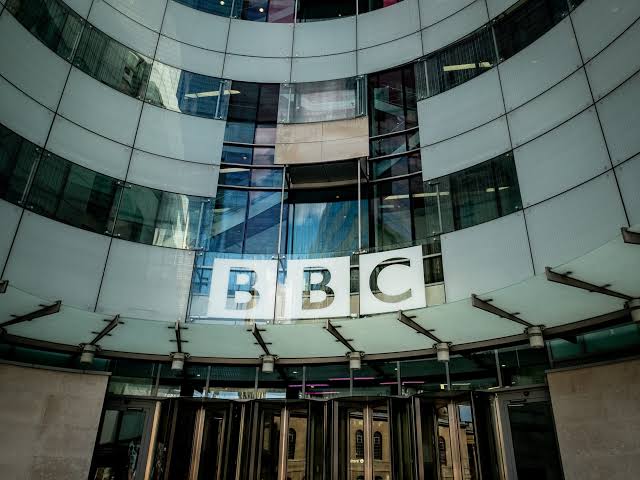
The BBC lost its top two news executives Sunday after an internal memo exposed how the British broadcaster manipulated footage of Donald Trump, triggering resignations that the American president celebrated as victory over what he called “corrupt” and “very dishonest people.”
Director-General Tim Davie and Head of News Deborah Turness stepped down amid mounting pressure following the leak of a document written by Michael Prescott, a former adviser to the BBC’s standards committee. Prescott’s memo detailed how the broadcaster altered a Trump clip to create misleading context, while also accusing the BBC of suppressing critical coverage of transgender issues and displaying anti-Israel bias within its Arabic service.
Trump seized on the resignations with characteristic swagger, posting on Truth Social that the departures vindicated his longstanding complaints about BBC coverage. The broadcaster had long dismissed his criticism as unfounded attacks on press freedom—a defense that crumbled once internal documents confirmed editorial manipulation.
BBC Chair Samir Shah attempted damage control Monday, acknowledging the clip was “misleading” and apologizing for the “error of judgement.” But he rejected broader claims of institutional bias, arguing Prescott’s memo didn’t present “a full picture of the discussions, decisions and actions that were taken” by the standards board when concerns were raised internally before the leak.
That defense satisfied few critics. The admission that footage was deliberately edited to alter meaning—regardless of internal deliberations—confirmed that editorial processes failed at the world’s most prominent public broadcaster. Whether those failures reflected isolated mistakes or systemic bias became the question dividing observers.
The scandal hands Trump ammunition in his broader war against media organizations he views as hostile. His legal threat against the BBC represents the latest salvo in an escalating campaign that’s reshaped American journalism’s relationship with the presidency.
Read also: US Govt Shutdown Deal Passes Senate In Major Breakthrough
Trump has filed defamation claims against The New York Times, The Wall Street Journal, and ABC News—lawsuits that legal experts view as having dubious merit but which nonetheless force news organizations to dedicate resources to defense rather than reporting. He’s slashed funding to NPR and PBS, undermining public broadcasting’s independence. And he’s removed Associated Press journalists from the White House press pool, restricting access for an organization that serves thousands of newspapers and broadcasters.
The pattern is unmistakable: Trump is wielding presidential power and personal wealth to punish critical coverage, creating chilling effects that extend beyond targeted organizations. Smaller outlets watching the BBC’s humiliation or the Times’ legal bills must calculate whether aggressive reporting justifies the potential consequences.
The BBC, insulated from direct American political pressure as a British institution funded by license fees, nonetheless found itself vulnerable once internal documents leaked. Prescott’s decision to go public—whether motivated by principle or personal grievance—exposed editorial decisions that the broadcaster apparently hoped would remain private.
His memo’s additional allegations about transgender coverage and Arabic service bias add complexity beyond the Trump clip. If accurate, they suggest editorial capture by particular ideological perspectives rather than isolated manipulation. The BBC now faces questions about whether its commitment to impartiality has eroded across multiple coverage areas.
Shah’s defense—that internal processes addressed concerns before the leak—rings hollow given the ultimate admission of error. If the standards board recognized problems but failed to correct them publicly or hold individuals accountable, that suggests institutional dysfunction regardless of whether systemic bias exists.
The resignations of Davie and Turness, while dramatic, may not satisfy critics demanding broader accountability. Both executives oversaw the organization during the period when the misleading clip aired and when, according to Prescott, other editorial failures occurred. Their departures create opportunities for leadership change but don’t answer fundamental questions about how the BBC ensures impartiality.
For Trump, the episode provides validation he’ll exploit relentlessly. His claims of “fake news” and media bias, often dismissed as authoritarian rhetoric, gained credibility when one of the world’s most respected news organizations admitted to manipulating his footage. That credibility boost empowers his broader media war, making it harder for journalists to dismiss his attacks as baseless intimidation.
The international dimension matters too. The BBC’s reputation as an impartial broadcaster has made it influential globally, particularly in regions where state media dominates. Revelations that it edits footage for political effect—regardless of motivation—damage that reputation and feed authoritarian governments’ narratives about Western media hypocrisy.