
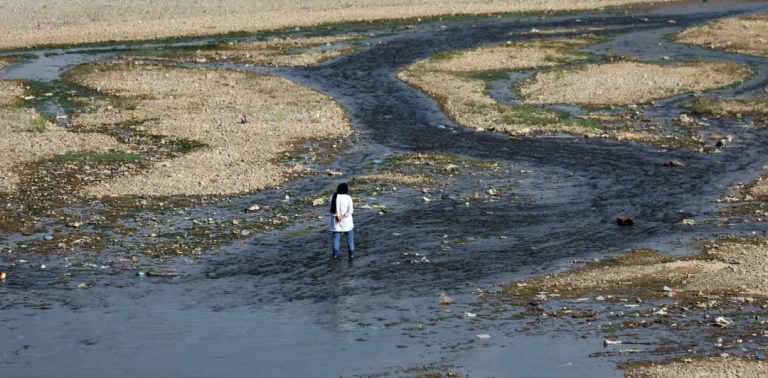
Iran is confronting its worst water shortage in decades, with President Masoud Pezeshkian warning that Tehran — a capital city of more than 10 million people — could soon become uninhabitable if the drought gripping the country continues through December.
Speaking on November 6, Pezeshkian said the government may be forced to begin water rationing in Tehran if rains fail to arrive in the coming weeks. “Even if we do ration and it still does not rain, then we will have no water at all. Citizens will have to evacuate Tehran,” he said.
The worsening water crisis follows one of the hottest summers on record and decades of poor resource management. Environmental experts and local media say overbuilding of dams, illegal wells, and wasteful agricultural practices have depleted Iran’s reservoirs and aquifers.
While the government blames the situation on climate change, population growth, and past policy failures, critics argue that mismanagement and corruption have made the system brittle.
Read Also: Iran Condemns Trump’s Push To Restart US Nuclear Testing
Iran’s National Water and Wastewater Company has denied that formal rationing has begun in Tehran but confirmed that nightly pressure reductions are now in effect across multiple districts. State media reported that some areas have experienced complete water outages for several hours at night.
Mahnaz, a mother of two in eastern Tehran, described how her family went nearly eight hours without water last week. “It was around 10 p.m., and the water didn’t come back until 6 a.m. We had to use bottled water for everything,” she said.
Water levels in Tehran’s five main reservoirs — which once held up to 500 million cubic meters, have fallen by nearly half, officials say. Behzad Parsa, head of Tehran’s Regional Water Company, warned that the city’s supply could run dry within two weeks if consumption remains high.
He said the Amir Kabir Dam, Tehran’s largest, is now at just 8% capacity, while inflows from nearby rivers have dropped by 43% compared to last year. Nationwide, at least 19 major dams — roughly 10% of the total — are effectively dry, according to the Water Research Institute.
Last year’s rainfall was 40% below the 57-year national average, and meteorologists predict continued dry conditions through December, said Mohammadreza Kavianpour, head of Iran’s Water Research Institute.
The government has introduced temporary conservation measures, including diverting water from nearby reservoirs and urging residents to install storage tanks and reduce consumption. However, many experts say the steps are too little, too late.
In July, authorities said 70% of Tehran’s residents consumed more than the standard 130 liters of water per day. Power and gas shortages have compounded frustration, with citizens enduring blackouts during extreme heat. “It’s one hardship after another — no water, no electricity, no relief,” said Shahla, a 41-year-old teacher in central Tehran.