
Pakistan’s interior minister identified Afghan nationals as the perpetrators behind two devastating suicide bombings this week, intensifying accusations against Kabul as diplomatic relations between the neighboring countries continue to deteriorate.
Interior Minister Mohsin Naqvi told parliament Thursday that investigators had confirmed both attackers involved in the strikes were Afghan citizens. The announcement came as authorities work to piece together the deadliest assault on Pakistan’s capital in nearly two decades.
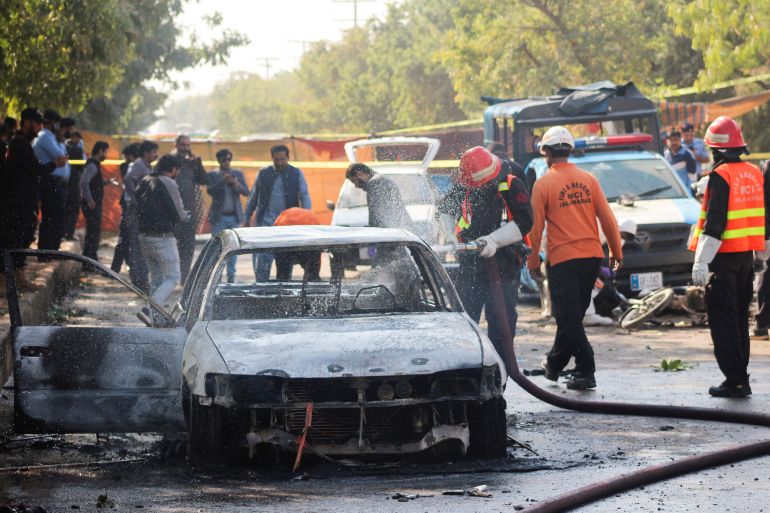
A suicide bomber detonated explosives outside an Islamabad district court Tuesday, killing 12 people and wounding 27 others. The blast occurred near a police vehicle at a busy time when the court area was crowded with visitors attending hearings.
The second attack unfolded Monday evening when militants rammed an explosive-laden vehicle into a military school in South Waziristan district near the Afghan border, killing three people. Armed militants then stormed the compound, triggering a firefight with Pakistani forces that lasted over 24 hours until all attackers were eliminated.
Read Also: Britain: Elderly Migrants Allowed To Stay After Winning Case
“It is our major, serious concern,” Naqvi told lawmakers during the televised parliamentary session. He said Pakistani authorities have repeatedly raised security issues with Afghanistan’s Taliban government in Kabul, accusing them of providing sanctuary to militants who launch cross-border attacks.
Pakistan has long alleged that the Afghan Taliban shelter members of Tehrik-e-Taliban Pakistan (TTP), also known as the Pakistani Taliban, who have waged an insurgency against Islamabad since 2007. The group seeks to overthrow the government and impose strict Islamic rule. Kabul consistently denies harboring militants who target Pakistan.
The attacks come just weeks after violent border clashes between Pakistani and Afghan forces killed dozens of soldiers and civilians in October. That fighting marked the most intense confrontation between the neighbors since the Taliban returned to power in 2021.
Relations between the South Asian neighbors have grown increasingly hostile in recent years. Pakistan accuses Afghanistan of allowing militants safe haven across the border, while the Taliban government protests what it calls Pakistani violations of Afghan sovereignty through airstrikes and military operations.
Pakistan’s security establishment also contends that India provides covert support to anti-Pakistan militants operating from Afghan territory, charges New Delhi categorically denies. Both regional powers have historically competed for influence in Afghanistan, viewing the strategically located nation as vital to their security interests.
Islamabad maintains that militant groups like TTP receive backing from both the Afghan Taliban and Indian intelligence agencies, creating what Pakistani officials describe as a coordinated threat to national security.
A breakaway faction of the Pakistani Taliban, Jamaat-ul-Ahrar, initially claimed responsibility for the Islamabad court bombing, though a group commander later contradicted that statement. The TTP itself denied involvement in Tuesday’s attack.
The Pakistani Taliban have intensified operations since the Afghan Taliban seized control of Afghanistan in August 2021. That takeover emboldened TTP militants, many of whom reportedly relocated to Afghan territory, according to Pakistani and Western intelligence assessments.
The Islamabad bombing represented the deadliest suicide attack in Pakistan’s capital since 2008, when militants struck the Marriott Hotel, killing 54 people. Until this week, the capital had largely escaped the surge of militant violence plaguing Pakistan’s border regions and northwestern provinces.
Prime Minister Shehbaz Sharif condemned both attacks and vowed perpetrators would face justice. The government has placed security forces on high alert nationwide, tightening checkpoints and increasing surveillance at sensitive locations.