
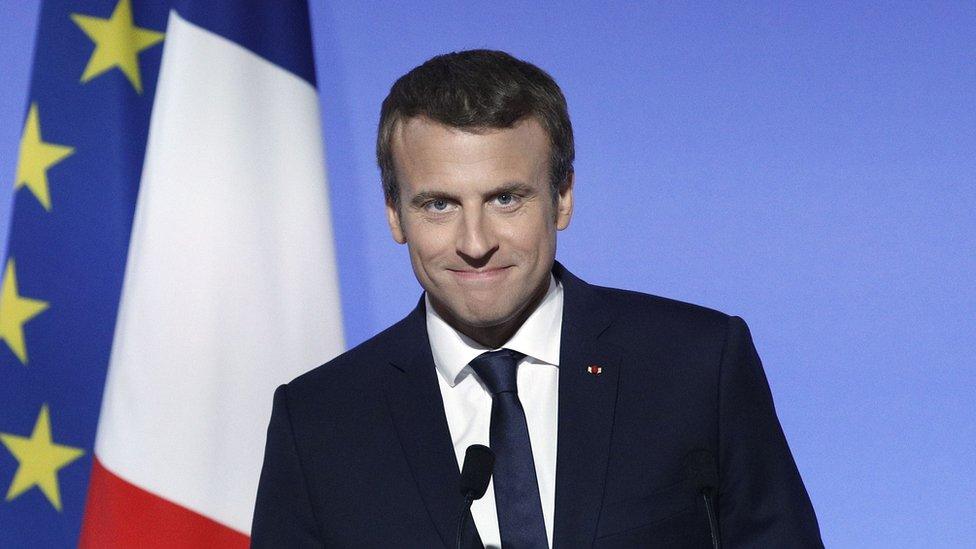
President Emmanuel Macron pledged Thursday that France would deploy every resource to prevent another massacre like the jihadist attacks that killed 130 people in Paris ten years ago, while warning of a new, more elusive terrorist threat.
“Everything will be done to prevent any new attack and to ruthlessly punish those who would dare to attempt it,” Macron said during commemorations marking the November 13, 2015 assaults that traumatized the nation.
The only surviving member of the ten-person cell that executed the attacks, 36-year-old Salah Abdeslam, is serving life in prison. His nine accomplices either detonated suicide vests or were killed by police during the coordinated rampage claimed by the Islamic State group across multiple Paris locations.
U.S.-backed forces crushed the last remnants of IS’s so-called caliphate straddling Syria and Iraq in 2019, dismantling the proto-state that inspired the Paris bloodshed. But Macron cautioned that threat has morphed rather than disappeared.
The president warned of what he termed “internal, insidious” jihadism that is “less detectable, less predictable” than the external networks that orchestrated 2015’s violence. That characterization reflects French security services’ growing concern about homegrown radicalization that operates without direct links to foreign terrorist organizations.
“No one can guarantee the end of attacks, but we can guarantee that for those who take up arms against France, the response will be uncompromising,” Macron declared, standing alongside Paris Mayor Anne Hidalgo and victims’ association representatives at the Jardin du 13 novembre 2015.
France has thwarted 85 attacks over the past decade, including six this year, according to the president—a statistic meant to reassure citizens that security apparatus remains vigilant even as threats evolve.
Read also: Paris Attacks 10th Anniversary: France Honors 130 Victims
The commemorations unfolded at the memorial garden dedicated to the 130 victims who died when gunmen and suicide bombers struck the Bataclan concert hall, cafes, restaurants and the Stade de France stadium. The coordinated assault represented Islamic State’s most deadly operation on European soil and fundamentally altered France’s security posture.
Macron’s pledge to track jihadists “at home and abroad” signals continued French military and intelligence operations both within its borders and across former colonies in Africa’s Sahel region, where jihadist insurgencies persist despite years of French intervention.
The “internal, insidious” threat Macron described reflects patterns security services have observed: individuals radicalized online without traveling to conflict zones, acting alone or in small cells with minimal external coordination. These lone actors or micro-networks prove harder to detect than larger conspiracies involving foreign travel, weapons smuggling and communications that intelligence agencies can intercept.
France maintains Europe’s most extensive counterterrorism infrastructure, developed through painful experience with attacks that have killed hundreds since 2015. That apparatus combines surveillance, intelligence sharing with allies, deradicalization programs and legal frameworks allowing extended detention of terrorism suspects.
Critics argue those measures have eroded civil liberties, particularly for Muslim communities subjected to disproportionate scrutiny. Supporters counter that preventing another massacre justifies aggressive prevention, pointing to the 85 foiled plots as evidence the approach works.
Abdeslam’s life sentence followed a historic trial that gripped France, offering survivors and victims’ families their only opportunity to confront the attacks’ sole living perpetrator. His silence and occasional defiant outbursts during proceedings frustrated those seeking explanations for the carnage.
The decade since 2015 has seen France oscillate between heightened security states and attempts at normalcy, with soldiers patrolling landmarks becoming permanent fixtures and security checks routine at public gatherings. Whether that vigilance represents the new normal or temporary response to elevated threat remains debated.
Macron’s acknowledgment that “no one can guarantee the end of attacks” reflects sobering reality: even sophisticated security apparatus cannot eliminate risk entirely when individuals committed to violence can strike with minimal preparation or weaponry.