
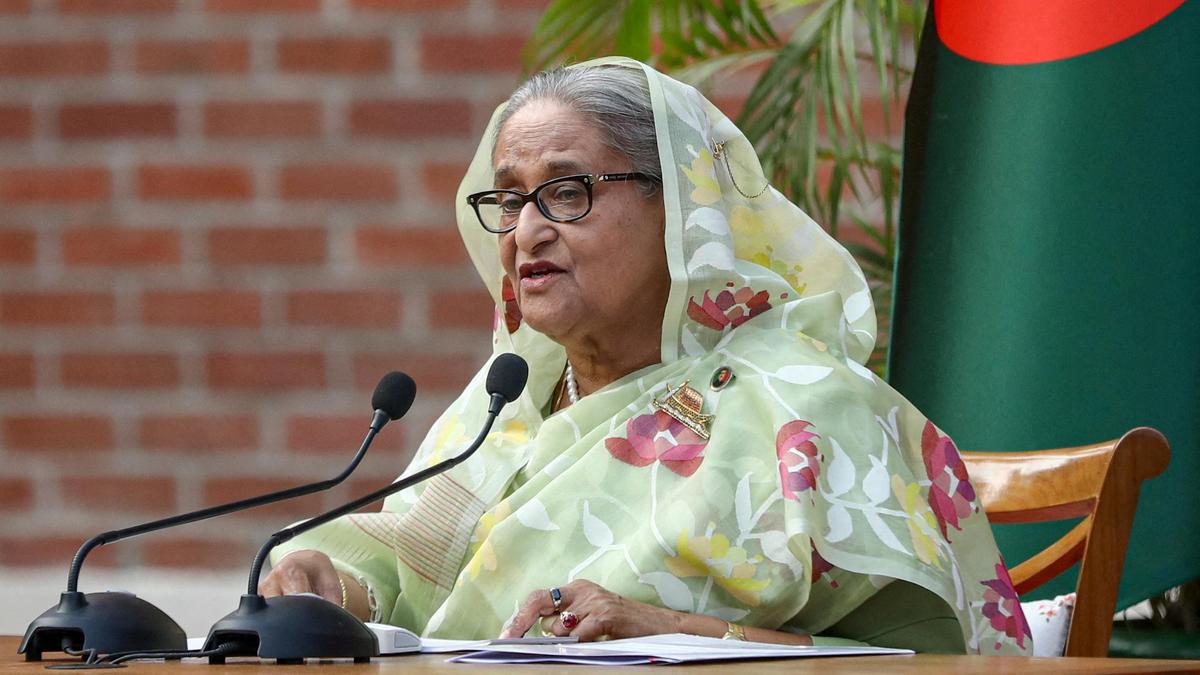
A special tribunal in Bangladesh has issued a death sentence for ousted Prime Minister Sheikh Hasina, convicting her of crimes against humanity stemming from her administration’s brutal suppression of youth-led demonstrations in 2024.
The 78-year-old former leader, currently living in exile and tried in absentia, faced charges of orchestrating what prosecutors described as a systematic campaign of lethal force against civilian protesters. Judicial authorities identified Hasina as the “mastermind and principal architect” behind the violent government response that resulted in approximately 1,400 fatalities during last year’s mass mobilization.
Live broadcasts from the Dhaka courtroom captured dramatic scenes as the verdict was delivered, with attendees breaking into spontaneous applause and celebratory cheers following the capital punishment announcement at 08:52 GMT.
The tribunal’s lengthy investigation concluded that Hasina bore direct criminal responsibility for directing security apparatus to employ deadly measures against demonstrators. Evidence presented during proceedings indicated the former premier explicitly authorized the deployment of armed drones, aerial surveillance helicopters, and lethal weaponry to quell the uprising.
According to the court’s formal determination, the violence perpetrated against protesters constituted actions “directed against the civilian population” that were both “widespread and systematic” in nature.
“Therefore, in the atrocities of killing and gravely injuring protesters, as aforesaid, accused Prime Minister Sheikh Hasina committed crimes against humanity by her incitement order and also failure to take preventive and punitive measures under Charge 1,” the tribunal stated in its ruling.
The court further specified: “Accused Sheikh Hasina committed one count of crimes against humanity by her order to use drones, helicopters and lethal weapons under Charge number 2.”
Read also: Hasina Rejects Allegations Ahead Of Crucial Verdict
Historic Bloodshed Since Independence Era
The 2024 demonstrations represented Bangladesh’s deadliest internal conflict since the nation’s 1971 independence struggle. A comprehensive United Nations assessment documented that between July 15 and August 5, 2024, as many as 1,400 individuals may have perished in protest-related violence, with several thousand more sustaining serious injuries.
UN investigators determined that gunfire from government security forces accounted for the majority of casualties during the three-week period of peak confrontation.
Trial prosecutors presented the court with documentation they characterized as definitive proof of Hasina’s personal authorization for lethal engagement protocols against the student-organized movement.
End of Fifteen-Year Tenure
The 2024 popular uprising effectively terminated Hasina’s decade-and-a-half grip on power—a period international observers frequently characterized as increasingly authoritarian. Her administration faced persistent accusations of systematically silencing political opposition, conducting extrajudicial detentions, and carrying out unlawful killings of dissidents.
Following her government’s collapse, Hasina secured refuge in India, where she has remained since losing executive authority. The former prime minister has maintained complete public silence, abstaining from both physical appearances and digital communication platforms.
Political Tensions and Security Concerns
Hasina’s Awami League party, which Bangladeshi authorities have since outlawed, has vigorously contested the tribunal’s legitimacy, dismissing it as a “kangaroo court” lacking judicial credibility.
Party leadership has called upon loyalists to organize protest actions against the verdict—a development that has generated substantial anxiety about potential violent confrontations within Bangladesh.
Pre-verdict tensions manifested across the nation in recent days, with security officials documenting at least 30 crude explosive device detonations and the deliberate torching of 26 vehicles in scattered incidents throughout the country, suggesting coordinated efforts to destabilize the proceedings.
The convergence of political volatility, the historic nature of the verdict, and calls for street mobilization has placed Bangladesh on heightened security alert as the nation processes this pivotal judicial moment.