
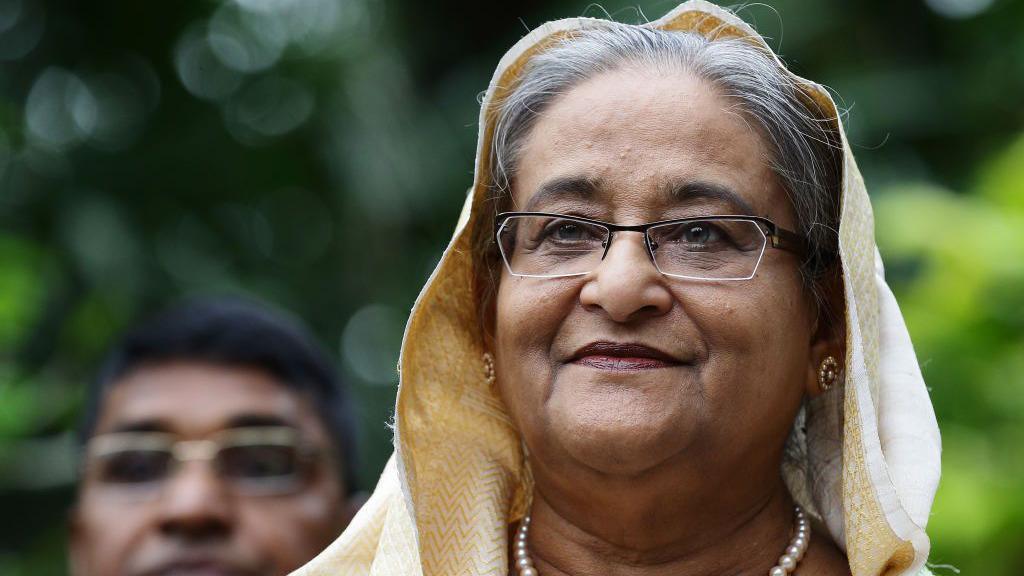
Bangladesh’s former prime minister Sheikh Hasina is speaking out forcefully ahead of a landmark verdict that could define her legacy. Days before a special tribunal is set to rule on charges of crimes against humanity, she insists she is innocent and the proceedings against her are nothing more than political theatre.
Hasina, who was forced from office during a sweeping student-led uprising last year, faces accusations that she orchestrated a brutal crackdown that left hundreds dead. Prosecutors allege she personally authorised lethal force in a desperate attempt to preserve her long-running rule. In an interview conducted from India, where she fled in August 2024, she dismissed the entire case as a “farce,” arguing that her political rivals are using the courts to erase her party and rewrite the country’s recent turmoil.
The upcoming verdict has heightened tensions in Dhaka, where security around the tribunal has been sharply increased. For many families of those killed during the protests, Monday represents a long-awaited moment of accountability. For Hasina, it is a test of political survival from afar. She has refused to return to Bangladesh, saying she cannot defend herself under a system she believes is stacked against her.
Hasina has been accused of directing security forces to open fire on demonstrators in the final weeks of her government. She denies ever issuing such an order, acknowledging only that the unrest spiraled beyond control. The trial has featured leaked recordings from July 2024 in which she appears to approve the use of “lethal weapons.” Her lawyers insist the recordings have been taken out of context and argue she was denied proper representation throughout the proceedings.
Read Also: US Govt Sues California Over Redistricting Maps
Two key members of her former administration are also entangled in the case. One has pleaded guilty, while another remains in hiding. Prosecutors are seeking the death penalty for both men and for Hasina herself.
Beyond the immediate trial, Hasina faces a wider reckoning. Her long tenure has come under renewed scrutiny as investigators uncover secret detention sites, alleged disappearances, and claims of systematic abuse under her government. She denies any personal involvement, calling for impartial investigations rather than politically charged accusations.
With her party already barred from contesting the next election, the verdict looms as more than a legal judgment. It marks a decisive chapter in a country still navigating the shockwaves of an uprising—and in the evolving story of a leader fighting to salvage her place in it.