
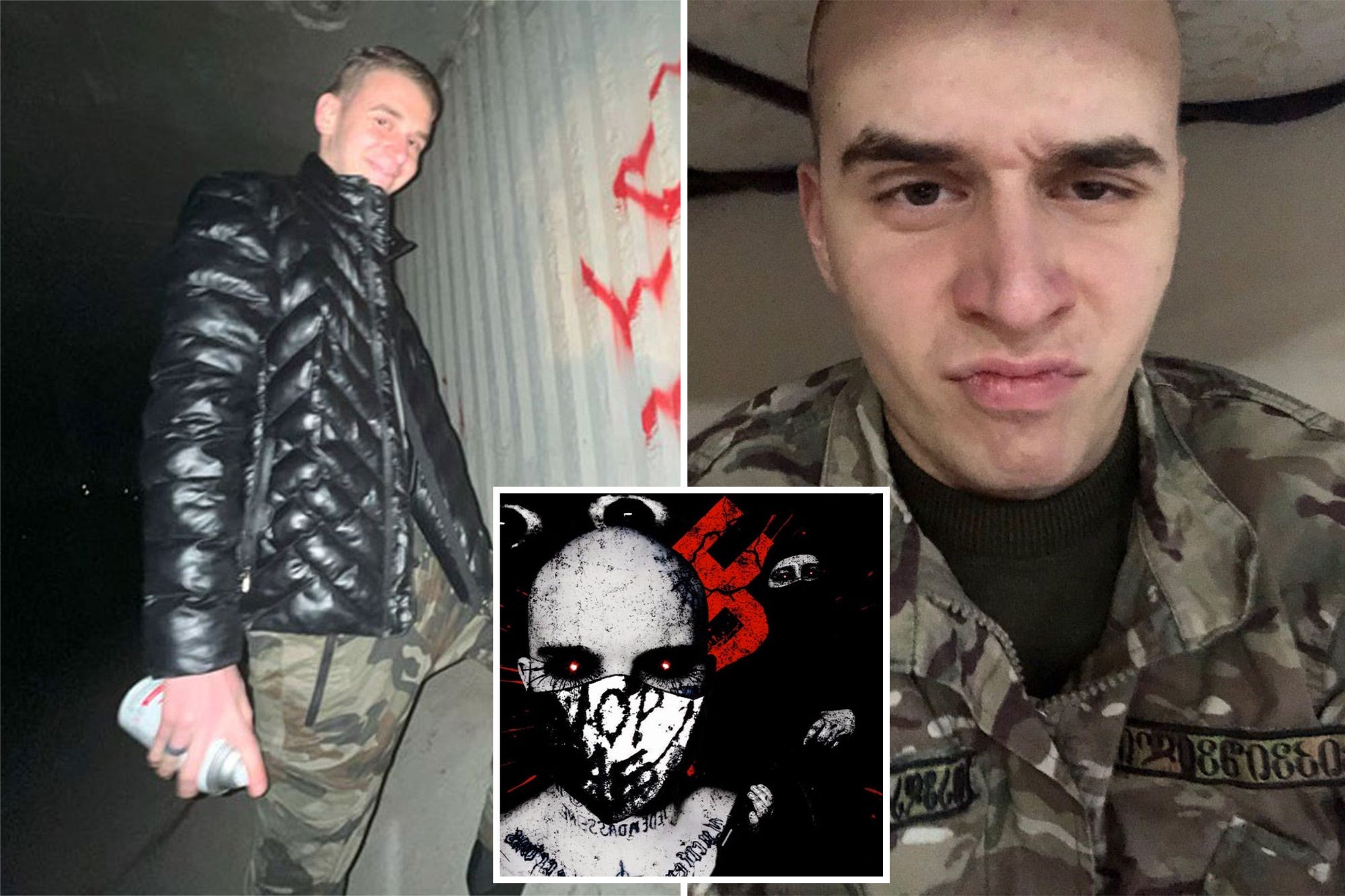
Michail Chkhikvishvili, 22, admitted plotting to poison Jewish children and recruit others for violent hate crimes in Brooklyn, New York, prosecutors say.
The leader of an Eastern European neo-Nazi group has pleaded guilty on Monday November 17, 2025, in New York to orchestrating violent plots targeting Jewish and other minority communities, including a plan to distribute poisoned candy to children.
Michail Chkhikvishvili, 22, from the Republic of Georgia and known by the nickname “Commander Butcher,” entered his plea Monday before a Federal Judge in Brooklyn. He admitted to soliciting hate crimes and distributing materials on bomb and ricin production, according to federal prosecutors. They are seeking a prison sentence of up to 18 years.
Prosecutors described Chkhikvishvili as the head of the Maniac Murder Cult, an international extremist network promoting violence intended to trigger racial and religious conflict. The group’s activities, conducted largely through encrypted Telegram channels and detailed in a manifesto called the “Hater’s Handbook,” appear to have inspired multiple real-world attacks, including a school shooting in Nashville, Tennessee, earlier this year that claimed the life of a 16-year-old student.
Read Also: Donald Trump, Musk Reconcile: Signaling Political, Tech Unity
Authorities said Chkhikvishvili was arrested in Moldova in July 2024 and extradited to the United States in May. Since 2022, he made multiple trips to Brooklyn, where he boasted about assaulting an elderly Jewish man and encouraged others, primarily through text messages, to commit violent acts in support of the cult.
Prosecutors detailed one chilling plot that involved Chkhikvishvili dressing as Santa Claus to distribute poisoned candy to racial minorities. The scheme later escalated to targeting Jewish schoolchildren in Brooklyn. In 2023, he allegedly recruited an undercover FBI agent into these plans, further exposing the breadth of his criminal intentions.
Court filings indicate that Chkhikvishvili viewed the United States as vulnerable to mass attacks due to easy access to firearms. He also reportedly suggested targeting homeless people, asserting that the government “wouldn’t care even if they die.”
The case underscores ongoing concerns about transnational extremist networks using digital platforms to radicalize individuals and coordinate violent attacks. U.S. authorities have intensified efforts to track such groups and prevent similar plots, citing the potential for significant casualties if these schemes were carried out.
Chkhikvishvili’s guilty plea marks a rare prosecution of a foreign extremist with direct operational plans on U.S. soil, highlighting the international dimension of modern domestic terror threats. Sentencing is scheduled in the coming months.