
Just after midnight, somewhere along Ukraine’s embattled eastern corridor, a soldier leans into his radio and murmurs, “The toy is delivered.” It’s a quiet code that cuts through the tension. Moments later, he and a partner slide a compact robot from the back of a van, moving with the urgency of men who know Russian drones are hunting for heat, sound, and shadows.
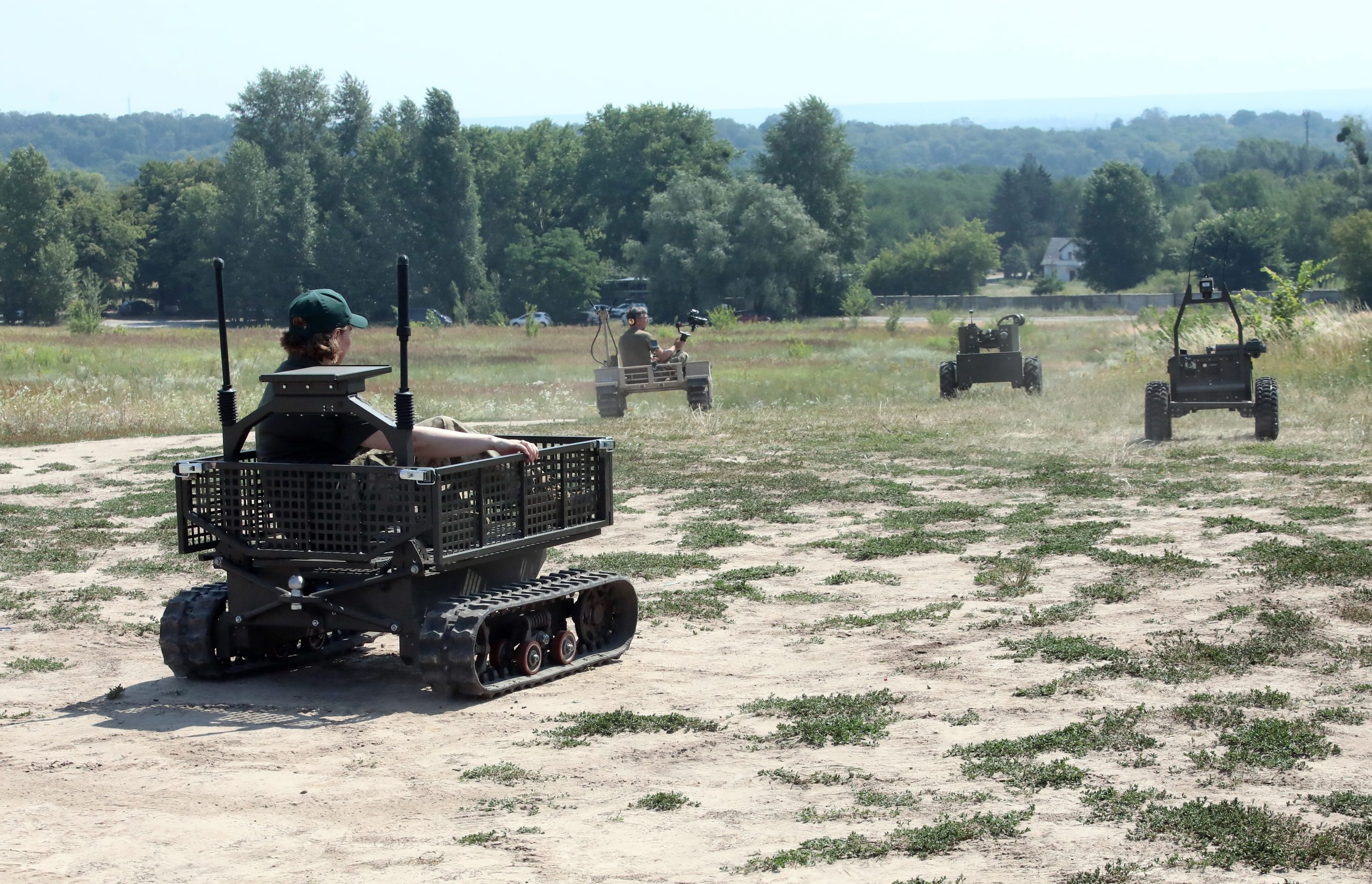
Their “toy” is an unmanned ground vehicle—small, track-driven, and rugged enough to crawl through terrain where humans would likely die. In places like Pokrovsk and Myrnograd, where Russia is pressing hard to seize the supply routes that keep Ukrainian troops alive, these robots have become something close to lifelines.
The stakes are brutal. Without steady deliveries of ammunition, food, water, and fuel, frontline units could be forced into surrender or left scrambling toward retreat under fire. Armored convoys rarely make it in; the routes are too exposed. Foot soldiers carrying heavy loads are just as vulnerable. So the machines go instead—rolling low, quiet, and unarmed through what many here now call the kill-zone.
This stretch of frontline—nearly 30 kilometers wide—is under constant drone reconnaissance from both sides. Anything that moves risks immediate targeting. First-person-view drones swoop at head height; artillery follows within moments. Medical evacuations are a race against time. A military doctor known as Vitsik recalls one rescue attempt where he and a drone operator endured fifty-nine minutes of continuous strikes, darting between shattered walls as explosions shook the floors beneath them.
Yet inside Pokrovsk, troops stay put. Rotating units in and out of the city has become too dangerous, leaving soldiers on the line for weeks or months at a time. That makes the work of the land drones even more essential—and demand for them has soared.
Read Also: Nigerian School Kidnapping Draws Urgent Appeal From Pope Leo
A typical mission begins in a dim, battered garage. A robot named Termit is loaded with water, ammunition, and fuel. It’s driven by remote control into a van to save battery power, hauled close to the front, and then rolled into the darkness. Within seconds, an operator miles away locks onto the connection and guides it forward.
These unmanned vehicles aren’t flawless—they can still fall prey to drone attacks—but they’ve altered the rhythm of survival. In a landscape where stepping outside can draw fire, the machines have become the only safe couriers left.