
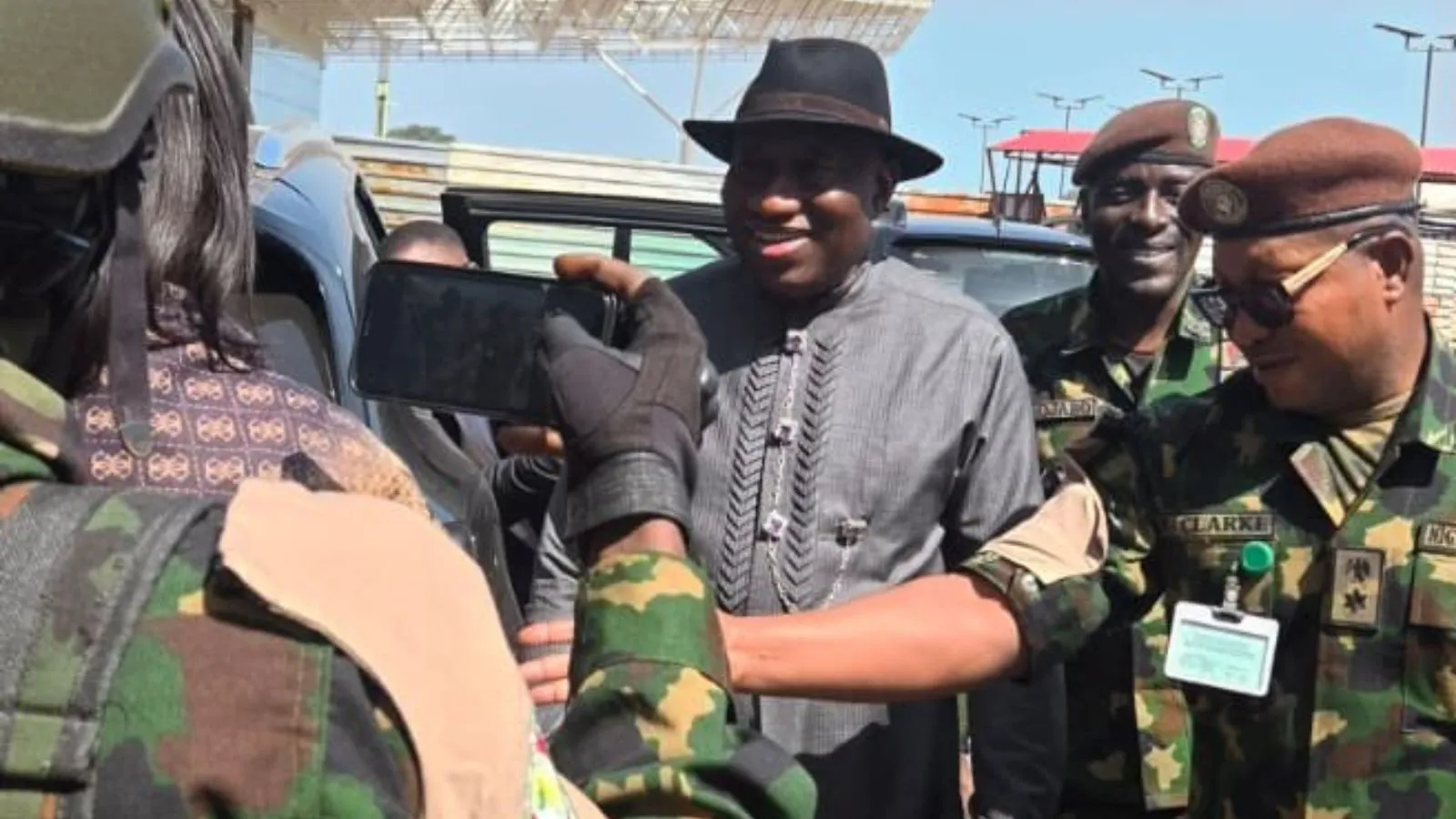
Nigeria’s former president, Goodluck Jonathan, has left Guinea-Bissau after the sudden military takeover that toppled the country’s civilian authorities. His departure was confirmed late Thursday by the Ministry of Foreign Affairs, which disclosed that he boarded a special flight alongside members of his delegation.
According to the ministry’s spokesperson, Kimiebi Ebienfa, Jonathan and his team, including Ibrahim Chambas, are “very safe” and have been evacuated without incident. Jonathan had been in the country heading the West African Elders Forum Election Observation Mission, monitoring last weekend’s presidential and legislative polls when the crisis erupted.
Tension escalated midweek after soldiers announced they were assuming full control of the state. Borders were shut, the electoral process was halted, and the incumbent president, Umaro Embalo, was arrested. General Denis N’Canha, who oversees the presidential military office, briefed the press that a unified command drawn from all arms of the military would lead the country until further directives were issued. By Thursday, the armed forces named General Horta N’Tam as transitional leader for a one year period.
Read also: Shehu Sani Explains Why Jonathan Shouldn’t Run In 2027
The Nigerian government denounced the power grab, describing it as a dangerous setback for democracy in the region. In a strongly worded statement, the Ministry of Foreign Affairs expressed disappointment, saying the insurrection violates the ECOWAS Protocol on Democracy and Good Governance. Nigeria called for the unconditional restoration of constitutional rule, the safety of all detainees, and respect for democratic institutions.
International observers also raised alarms. Delegations from ECOWAS, the African Union, and the West African Elders Forum, represented by Goodluck Jonathan, Filipe Nyusi, and Issifu Baba Braimah Kamara, jointly condemned the coup. They urged the military to release arrested officials and warned that the seizure of power threatens progress made during the electoral process. The missions noted that their announcement came hours after meeting the two leading presidential candidates, both of whom had pledged to respect the outcome of the vote.
The unfolding situation places Guinea-Bissau back in a familiar cycle of instability, prompting renewed calls from regional bodies for swift diplomatic and political action to restore order.