
The Failure of Intelligence — Why Nigeria Can’t Protect Its Citizens
A 7-Day Investigative Series by Prof. MarkAnthony Nze
In every nation that collapses, there comes a moment when truth dies before the state does. Nigeria has reached that point. Its intelligence community, the hidden machinery built to detect danger before it strikes, has become the single greatest accomplice to national insecurity. The system that once promised protection now manufactures paralysis. It collects secrets no one acts on, produces warnings no one reads, and buries evidence no one dares to expose.
This is not ignorance. It is engineered blindness.
The Machinery of Dysfunction
In theory, Nigeria’s intelligence agencies—the Department of State Services (DSS), Defense Intelligence Agency, National Intelligence Agency, and police units—exist to anticipate threats and prevent them. In practice, they function as rival empires trapped in a permanent turf war. Each guards its information like contraband, fearing exposure more than failure. Cooperation is rare; competition is routine.
Their loyalty lies not with the constitution, but with whoever occupies Aso Rock. Surveillance tools meant for national defense are turned inward—to monitor opposition politicians, journalists, and activists. Field officers in the North-East complain that their reports on insurgent movements are ignored while senior officials obsess over social media posts critical of the president.
Intelligence, once the currency of statecraft, has become the weapon of self-preservation.
The Silence That Kills
Every mass abduction, every massacre, every ambush follows the same pattern. Local informants warn of suspicious movements. Community leaders send messages to police and military posts. Days later, the attacks come exactly as predicted. Then the ritual begins: condemnations from Abuja, a promise to “bring perpetrators to justice,” and silence.
The tragedy is not a lack of information—it is the refusal to believe it. When truth threatens political comfort, it dies in bureaucracy.
Security operatives admit, off record, that they often receive intelligence too detailed to ignore yet too dangerous to act on. Acting might expose corruption, implicate allies, or contradict official narratives of progress. In the arithmetic of Nigerian politics, truth that embarrasses power is treason.
Corruption as Policy
The Nigerian intelligence system bleeds money as fast as it bleeds credibility. Funds allocated for surveillance equipment vanish into private accounts. Contracts for drones and cyber-tracking tools are awarded to shell companies owned by retired officers and political loyalists. The technology never arrives, but the invoices are always cleared.
Field agents survive by improvisation, buying fuel for patrols out of pocket, begging communities for food, or renting their services to wealthy individuals seeking protection. Intelligence, in many regions, is now a side hustle. When loyalty is sold to the highest bidder, national security becomes a commodity.
Procurement fraud and “ghost operations” have turned counterterrorism into an industry. The longer the crisis lasts, the richer the system grows. Each new tragedy means another emergency budget, another contract, another committee. In Nigeria’s warped economy of insecurity, peace is bad for business.
Read also: Nigeria’s Breaking Point: Why America Must Step In—Part 4
A Military Fighting Blind
On paper, the Nigerian Armed Forces command Africa’s largest defense apparatus. In reality, they operate without eyes. Soldiers in the North-East rely on outdated maps and unreliable communication channels. They march into ambushes planned weeks in advance, their positions leaked by insiders for cash. Drone footage sits unprocessed for months because of “clearance delays.”
Morale collapses faster than logistics. Commanders on the front lines complain that their intelligence briefings are recycled from previous operations. The enemy adapts, the army repeats. Soldiers die not because they are outnumbered, but because they are out-informed.
In some units, officers quietly confess that insurgent groups appear to know their movements better than their own headquarters does. When failure becomes routine, loyalty turns to survival.
The Politics of Fear and Denial
Nigeria’s political class has mastered the art of denial as governance. Instead of admitting collapse, it renames it. Terrorism becomes “banditry.” Ethnic cleansing becomes “clashes.” Intelligence lapses are rebranded as “complex situations.” Language is deployed not to clarify, but to confuse.
Every administration promises reform; none survives long enough to implement it. Ministers reshuffle, committees form, and white papers pile up. The intelligence community, built to serve the people, now exists to serve the illusion that someone is in charge.
Inside the agencies, analysts know the truth. Their reports describe troop exhaustion, inter-agency sabotage, and infiltration by organized crime. But these findings never reach the public. They are classified, suppressed, and forgotten—because exposing the truth would mean admitting that the government no longer controls the ground it claims to rule.
Intelligence Without Trust
At the heart of this collapse is a crisis of trust. Communities no longer believe the state will protect them. Informants risk their lives to report suspicious movements only to see nothing done. Some are exposed and executed. Others are framed as collaborators by corrupt officers seeking to cover their tracks.
In many villages, people now prefer silence to engagement. They trust the gunmen more than the uniforms. This is not cynicism—it is survival. When the state punishes those who warn it, fear becomes policy.
How the System Devours Itself
Nigeria’s intelligence institutions have been consumed by the same pathology that defines its politics: corruption justified by necessity. Budgets are inflated in the name of “national security.” Secrecy becomes the perfect disguise for theft. Every layer of the chain of command learns to look away.
When oversight is impossible and accountability is treason, failure is inevitable. Yet even failure is profitable. The chaos keeps everyone employed. The insurgency keeps the funding alive.
No officer is ever jailed for negligence. No intelligence chief resigns after mass killings. Responsibility, like justice, is perpetually deferred.
The Price of Willful Ignorance
A nation cannot defend what it refuses to see. Nigeria’s intelligence community has collapsed not from ignorance but from choice. It chose comfort over courage, politics over patriotism, and propaganda over performance.
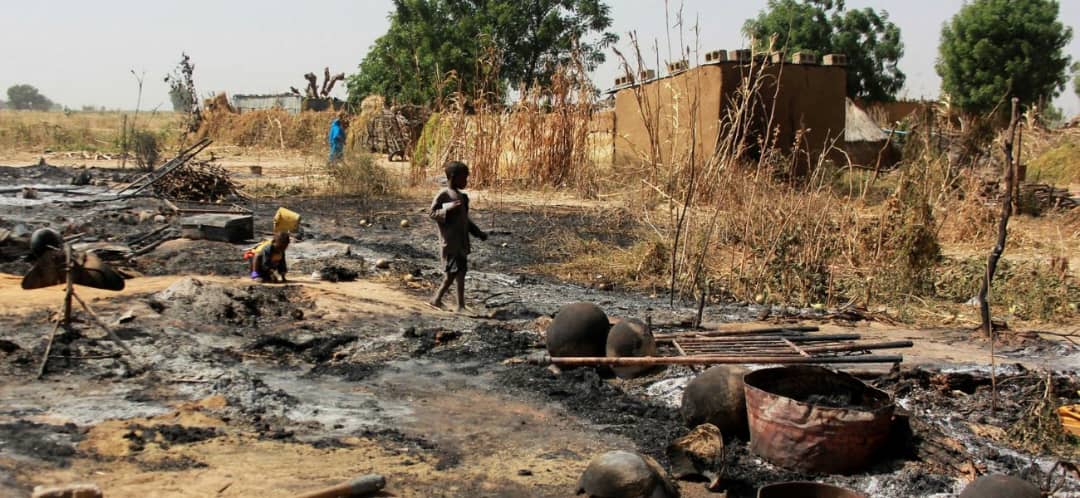
The result is a republic that bleeds information but produces no security. Farmers die before their warnings are verified. Students vanish before their rescue is approved. Villages are erased before their names reach official reports.
This is what state failure looks like—not the absence of government, but the presence of one that prefers not to know.
The Reckoning Ahead
The intelligence deficit has transformed Nigeria into a nation permanently on the brink—too militarized to be peaceful, too corrupt to be secure, too fragmented to be whole. The agencies built to guard democracy now guard only themselves.
Unless this cycle breaks, Nigeria will soon have no secrets left to protect, only ruins to explain.
Professor MarkAnthony Ujunwa Nze is an acclaimed investigative journalist, public intellectual, and global governance analyst whose work shapes contemporary thinking at the intersection of health and social care management, media, law, and policy. Renowned for his incisive commentary and structural insight, he brings rigorous scholarship to questions of justice, power, and institutional integrity.
Based in New York, he serves as a full tenured professor and Academic Director at the New York Center for Advanced Research (NYCAR), where he leads high-impact research in governance innovation, strategic leadership, and geopolitical risk. He also oversees NYCAR’s free Health & Social Care professional certification programs, accessible worldwide at:
👉 https://www.newyorkresearch.org/professional-certification/
Professor Nze remains a defining voice in advancing ethical leadership and democratic accountability across global systems.
Bibliographies
ACLED (Armed Conflict Location & Event Data Project). (2023). Nigeria conflict data. https://acleddata.com
Amnesty International. (2020). We dried our tears: Addressing the humanitarian crisis in Nigeria’s North-East. Amnesty International Publications.
Aremu, O., & Akinyemi, A. (2021). Rethinking security intelligence and national resilience in Nigeria. African Security Review, 30(2), 174–192. https://doi.org/10.1080/10246029.2021.1895620
Campbell, J., & Harwood, A. (2021). Nigeria: What everyone needs to know. Oxford University Press.
Ewi, M., & Salifu, U. (2017). The security sector in Nigeria: Governance challenges and reform opportunities. Institute for Security Studies (ISS) Report, 295. https://issafrica.org
Fisher, J., & Anderson, D. M. (2022). Authoritarianism and the politics of security in Africa. Cambridge University Press.
Human Rights Watch. (2021). Nigeria: Insecurity and killings in the North West. Human Rights Watch. https://www.hrw.org
International Crisis Group. (2021). Stopping Nigeria’s spiralling farmer–herder violence (Africa Report No. 262). International Crisis Group. https://www.crisisgroup.org
International Crisis Group. (2020). Violence in Nigeria’s North West: Rolling back the mayhem (Africa Report No. 288). International Crisis Group. https://www.crisisgroup.org
Kwaja, C. M. A., & Ademola-Adelehin, B. I. (2018). Rebuilding security governance in Nigeria: Lessons from the North-East crisis. Search for Common Ground. https://www.sfcg.org
Nwagwu, E. J. (2019). Corruption and counterterrorism in Nigeria: Assessing the role of the intelligence community. Journal of Intelligence and National Security, 34(5), 657–674. https://doi.org/10.1080/02684527.2019.1621051
Okoli, A. C., & Orinya, S. (2020). State fragility and the crisis of internal security management in Nigeria. African Security Review, 29(4), 365–383. https://doi.org/10.1080/10246029.2020.1831587
Transparency International – Defence & Security. (2021). Government Defence Integrity Index: Nigeria Country Profile 2020. Transparency International. https://ti-defence.org
United Nations Office for the Coordination of Humanitarian Affairs (UNOCHA). (2022). Humanitarian needs overview: Nigeria. UNOCHA. https://www.unocha.org
Zenn, J. (2020). Unmasking Boko Haram: Exploring global jihad in Nigeria. Lynne Rienner Publishers.