
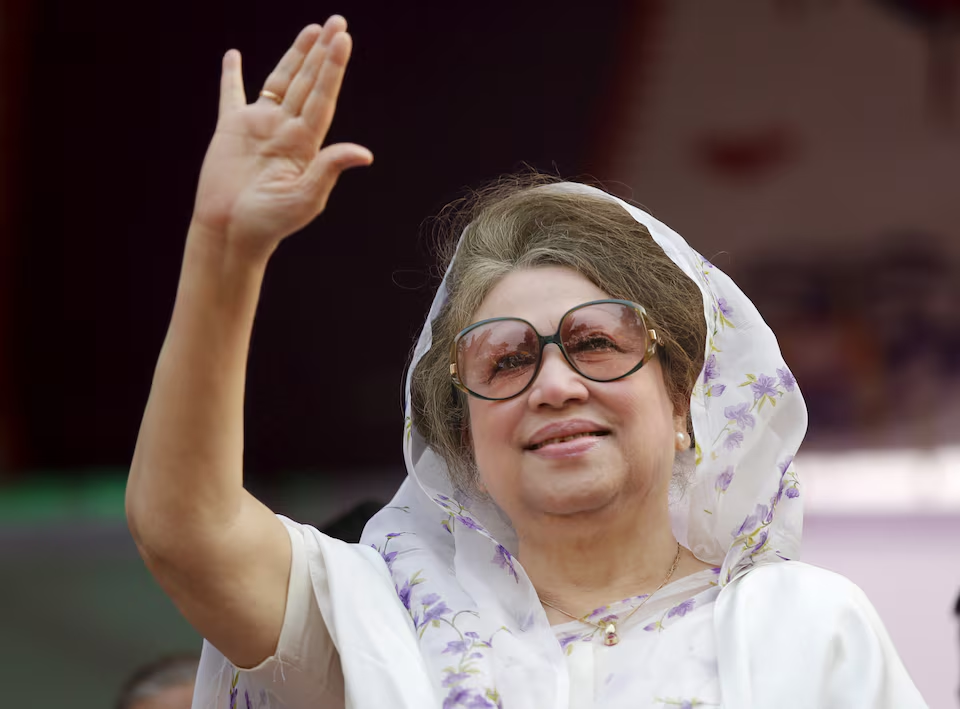
Bangladesh’s former prime minister Khaleda Zia remains in “very critical” condition at a Dhaka hospital, her party said on Sunday, deepening uncertainty within the Bangladesh Nationalist Party as it navigates a volatile political moment. The 80-year-old opposition leader was admitted on November 23 with a severe chest infection affecting her heart and lungs, according to her doctors and senior BNP officials.
Her illness arrives at a pivotal time for the BNP, which has regained visibility since the fall of Sheikh Hasina’s long-running administration last year during a student-led revolt. With its figurehead hospitalized and its acting chairman still overseas, the party faces renewed questions over its leadership structure and political strategy.
Tarique Rahman, Khaleda’s son and the BNP’s acting chairman, has lived in London since 2008. On Saturday, he wrote on Facebook that his return to Bangladesh was “not entirely” in his control, comments that fuelled speculation about whether legal hurdles or political barriers remained in place.
Within hours, the interim government led by Nobel laureate Muhammad Yunus responded publicly. In a statement issued through his press secretary, Shafiqul Alam, the administration said it had “no restrictions or objections” regarding Rahman’s return. Alam added on Facebook, “There are no obstacles in this matter.”
Despite the assurance, Rahman has not clarified his next steps, leaving party supporters and rivals alike waiting for further signals.
Khaleda’s worsening condition has pushed the BNP into a period of introspection. Party voices have acknowledged that her health has raised new concerns at a time when the BNP is attempting to consolidate its expanding base.
Read Also: Hasina Handed 21-Year Term In New Bangladesh Corruption Case
The party boycotted general elections in both 2014 and 2024, calling them unfair, but has gained traction since last August when Hasina’s administration collapsed following months of protests and clashes reported widely by Reuters and AFP. Analysts say the BNP now stands among the most influential actors in Bangladesh’s shifting political landscape.
Internal debates have intensified in recent weeks over how the party should position itself ahead of a potential transition process. Without confirmation of Rahman’s return date and with Khaleda confined to intensive care, senior BNP members are preparing for a difficult period of decision-making.
Doctors have not released detailed updates on Khaleda’s condition beyond confirming she remains in critical care, with her medical team focusing on stabilizing her heart and lung complications. BNP officials have asked supporters to remain calm as they await further assessments.
The interim government, meanwhile, has sought to project openness around Rahman’s status, likely aiming to fend off speculation about political interference. However, with the BNP’s two most recognisable leaders unavailable, observers expect public debate to intensify in the coming days.