
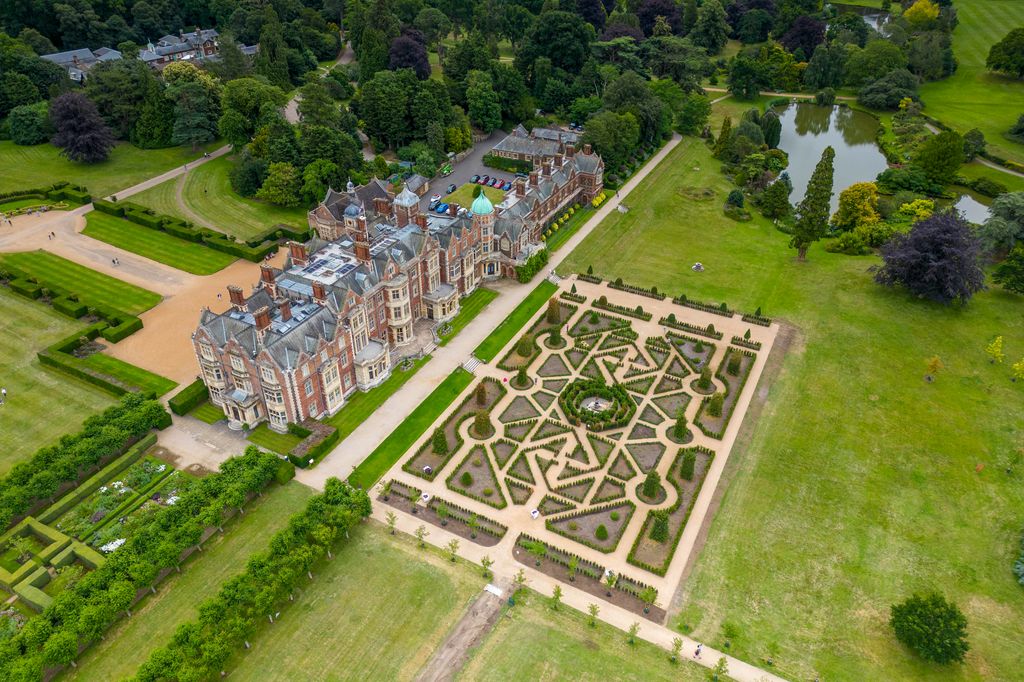
Drawing on early memories, King Charles transforms Sandringham’s gardens and farmland through restoration, sustainability, and organic innovation.
King Charles has breathed new life into the historic Sandringham Estate, reviving its long-neglected gardens and reshaping the vast 21,000-acre property with a blend of nostalgia and environmental stewardship. The monarch assumed full management of the Norfolk estate in 2017, launching an ambitious restoration project that reflects both his childhood memories and his lifelong commitment to sustainable land use.
Although his official duties often take him between Clarence House in London and Highgrove in the Cotswolds, the King is said to be happiest when tending to the grounds at Sandringham. While the gardens remain open to the public for much of the year, his influence is visible throughout the transformed landscape.
One of the most personal additions is the Topiary Garden, inspired by one of Charles’ earliest memories. In a 2019 interview, he recalled visiting the topiary yews planted by Queen Alexandra at the estate’s Dairy Cottage. “I can still remember being wheeled in my pram,” he said, describing the clipped shapes of animals and birds as “so special” and deeply formative. “I’ve never forgotten it. I would say it had a profound influence on me.”
Read Also: King Charles III Urges Beatrice And Eugenie To ‘Stand Alone’
That sense of nostalgia extends to the estate’s maze, a feature he and Princess Anne enjoyed as children. A newly restored maze, completed in 2024, draws on classical geometry and cosmological symbolism, reflecting the King’s interest in linking natural forms with cultural meaning.
Sandringham’s gardens, once celebrated in the early 20th century, fell into decline around the 1950s. Reviving them was no small task, and Charles placed sustainability at the core of his redevelopment. Under his direction, Sandringham’s agricultural operations now rely on organic processes and agroforestry, integrating trees with crops and livestock to improve soil health and biodiversity.
According to the estate, 2,400 hectares are now managed “in-hand,” producing a wide range of grains, beans, and heritage crops, alongside grass-fed organic sheep and cattle. Tenant farmers contribute organic vegetables, poultry, and pork across the remaining farmland.
Charles also focused on restoring the estate’s 60 acres of pleasure gardens, creating the new Maze Garden, Topiary Garden, and Sundial Garden. His passion for gardening dates back to childhood, when he and Princess Anne maintained a small vegetable patch at Buckingham Palace. Over the decades, he has applied those early lessons to his royal residences, championing hedgelaying, foraging, and environmental restoration.
For visitors, the renewed Sandringham Estate now stands as a blend of heritage, memory, and modern ecological design—a reflection of the King’s enduring commitment to the natural world.