
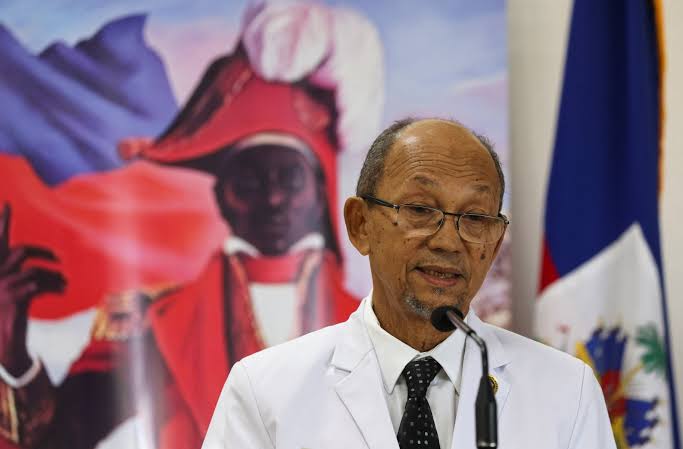
Haiti, a nation pulled to the edge by gang rule and political collapse, edged toward a democratic reopening on Tuesday after transitional authorities set a date for the country’s first elections in almost ten years. The Provisional Electoral Council, the body charged with organising national polls, announced that the first round of voting is scheduled for August 2026. That timeline, it stressed, remains contingent on a single obstacle that has defined Haiti’s recent history: security.
Council president Jacques Desrosiers put it plainly, saying no ballots can be cast until armed groups are pushed back and the state can guarantee safe access to polling stations. It is a tall order for a country where gangs now dominate large stretches of Port au Prince and exert influence over daily life to a degree unseen in decades.
The government’s last experiment in electoral politics took place in 2016. Since then, Haiti’s institutions have buckled one after another. President Jovenel Moise was assassinated in 2021. Ariel Henry, the last acting prime minister, stepped down in early 2024 after armed groups closed the airport, blockaded key neighborhoods, and effectively chased him out of office. The interim Transitional Presidential Council has governed since, its mandate ending in February 2026, the same year the newly announced vote is supposed to take place.
Read also: Trump Signals Lengthy Freeze On US Asylum Decisions
Washington welcomed Tuesday’s decree. The US State Department urged Haiti’s political actors, civil society groups, and international partners to rally behind the electoral calendar and help the country claw back political legitimacy. A conference in New York on December 9 is expected to secure additional troop commitments for the expanding Gang Suppression Force, the international mission created after the United Nations signed off on a security intervention last year. That mission has struggled with scarce equipment and uneven coordination, prompting the Security Council to approve a more muscular version this autumn.
For many Haitians, the decree offers a faint but meaningful signal that a political future is still imaginable. Transitional Council president Laurent Saint Cyr called it a chance for citizens to “choose those who should lead them,” framing the decision as part of a broader push to restore stability.
But the numbers tell their own story. More than 16,000 people have been killed since 2022 as gangs tightened their grip, turning entire districts into no-go zones. Reversing that reality remains the steepest challenge between Haiti and the ballot box.