
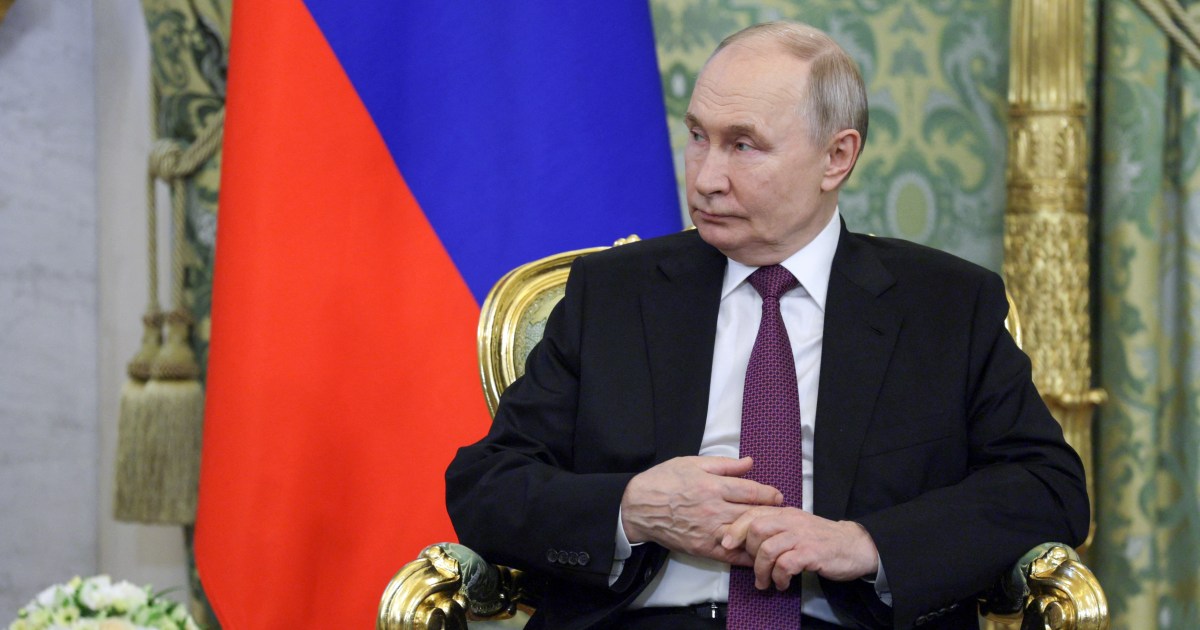
Russian President Vladimir Putin described recent discussions with US negotiators on ending the war in Ukraine as “very useful,” while reiterating his intention to take control of the eastern Donbas region by force. His comments came in an interview with India Today TV ahead of a trip to New Delhi on Thursday.
The statements underline the continuing gap between Moscow’s maximalist demands and the positions of Washington and Kyiv, highlighting the challenges in reaching a negotiated peace.
Putin told India Today that Russia intends to secure the Donbas region, comprising Donetsk and Luhansk, either through military action or by compelling Ukrainian forces to withdraw. “It all boils down to this: either we will liberate these territories by force, or Ukrainian troops will leave these territories and stop fighting there,” he said, according to state news agency Tass.
The Russian leader’s remarks follow the February 2022 invasion, which came after eight years of fighting between Russian-backed separatists and Ukrainian forces in the Donbas. Putin’s reaffirmation of his territorial objectives appears to contradict earlier statements by US President Donald Trump, who had said special envoy Steve Witkoff and Trump’s son-in-law Jared Kushner believed Putin wanted “to end the war.”
Witkoff and Kushner are scheduled to meet Ukraine’s top negotiator, Rustem Umerov, in Florida on Thursday, following a five-hour session in Moscow earlier this week. Meanwhile, Ukrainian President Volodymyr Zelenskyy maintains that ceding territory is unconstitutional and refuses to reward Russia for its invasion, stressing that Kyiv has no authority to make concessions on occupied land.
Read Also: Putin: No End To War Unless Ukraine Gives Up Territory
Russia has repeatedly insisted that Washington formally recognise Moscow’s control over Donbas, a stance embedded in a proposed 28-point peace plan first outlined during the Russia-US summit in Alaska last August. Putin told Tass that while the plan has been reorganized into four discussion packages, the points themselves remain unchanged.
“The 28-point plan is still valid and being discussed,” he said. “They just broke these 28 or 27 points into four packages. And they proposed discussing these four packages with us. But, in effect, they are the same [points].”
The initial 28-point proposal faced intense criticism for appearing heavily skewed toward Russian demands, prompting Ukrainian negotiators to revise the draft in Geneva to 19 points. It remains unclear which version of the plan was the focus of the Moscow discussions.