
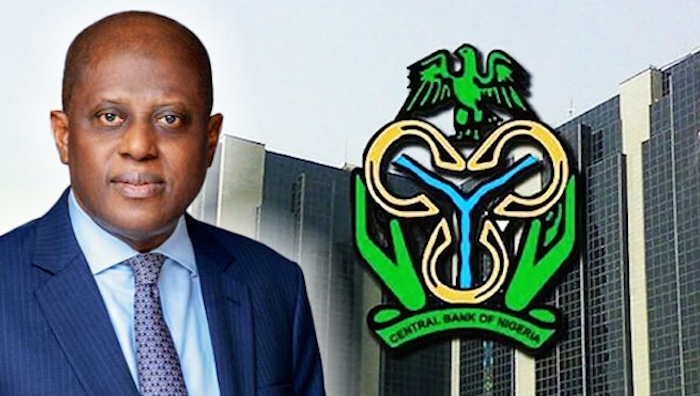
The Nigerian Senate on Thursday demanded that the Central Bank of Nigeria (CBN) provide a detailed account of N1.44 trillion in operating surplus reportedly not remitted to the Federation Account, even as the bank reported that the economy has achieved its most stable period in over a decade.
The request came during a briefing by the Senate Committee on Banking, Insurance and Other Financial Institutions, led by Senator Tokunbo Abiru, who stressed that the Auditor-General’s findings must be addressed with full documentation. He said public confidence in monetary management relies on transparency and accountability.
While commending the CBN’s efforts to stabilise the foreign-exchange market and rein in inflation, Abiru insisted that economic progress must be accompanied by strict institutional responsibility. Lawmakers asked the bank to explain the circumstances behind the query, outline corrective measures, and detail safeguards to prevent recurrence.
Appearing before the committee, CBN Governor Olayemi Cardoso said the central bank had implemented monetary reforms, liberalised the foreign-exchange market, and tightened liquidity management, which together contributed to renewed macroeconomic stability.
He reported that headline inflation fell from 34.6 per cent in November 2024 to 16.05 per cent in October 2025, marking seven consecutive months of decline. Food inflation also slowed to 13.12 per cent, supported by better supply conditions and exchange-rate stability.
Read also: Nigeria: CBN Revises Cash Withdrawal Rules From January 2026
Cardoso described the foreign-exchange market as largely free from speculative attacks and arbitrage pressures. He said the gap between official and parallel-market rates had fallen below two per cent, compared with over 60 per cent a year earlier. The naira, he said, was trading at N1,442.92 per dollar as of November 26, stronger than its mid-2025 average of N1,551.
The CBN chief also reported that external reserves had risen to $46.7 billion, the highest in nearly seven years, while diaspora remittances reached $600 million monthly. Foreign capital inflows for the first ten months of 2025 totalled $20.98 billion, more than 70 per cent higher than 2024. He added that the $7 billion verified FX backlog had been cleared, restoring investor confidence.
On the banking sector, Cardoso said recapitalisation efforts were progressing, with 27 banks raising additional capital and 16 meeting or exceeding new regulatory requirements ahead of the March 31, 2026 deadline. He noted improvements in ATM cash availability, digital-payment oversight, and cybersecurity compliance.
Senators pressed for explanations on the sustained 45 per cent Cash Reserve Ratio, the 75 per cent CRR applied to non-TSA public-sector deposits, forward FX settlements, circulation of mutilated naira notes, bank charges, failed electronic transactions, and oversight of CBN subsidiaries.
The committee also requested updates on the Financial Services Regulatory Coordinating Committee, noting that stronger coordination among regulatory agencies was essential to maintain public trust.
The briefing concluded with a closed-door session for further deliberations.