
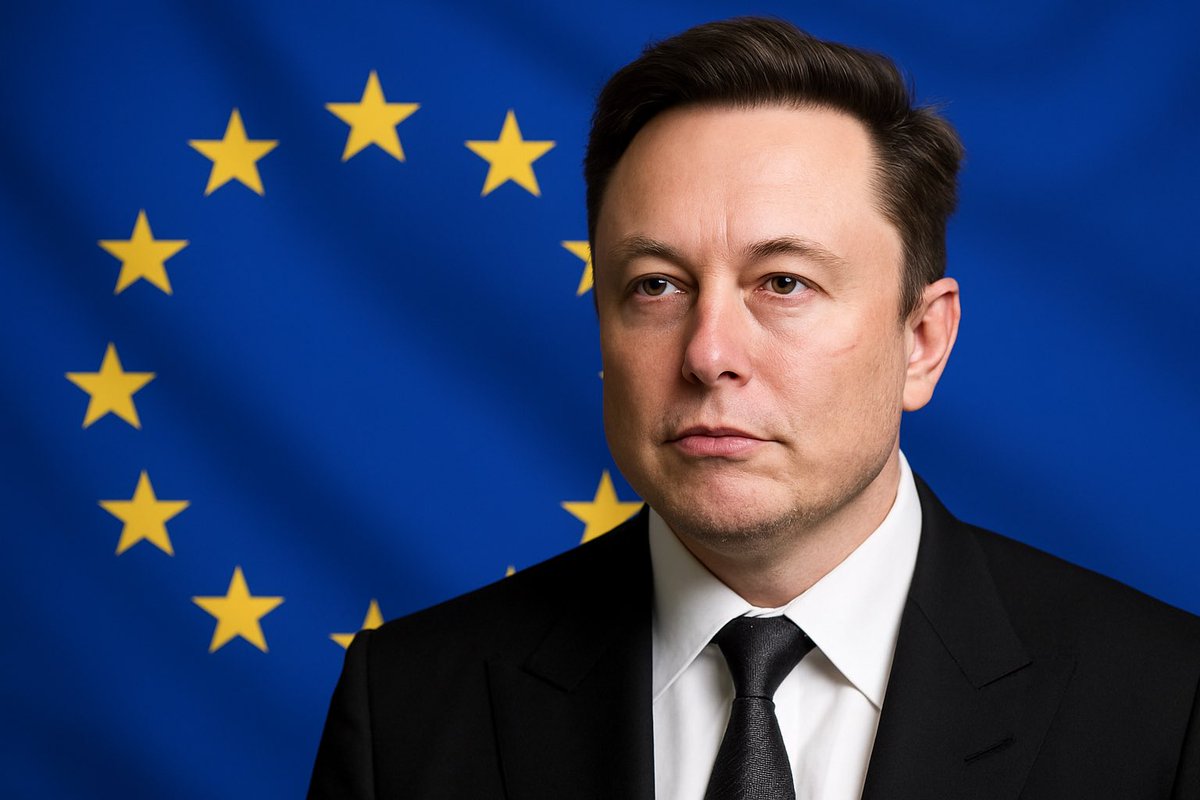
EU issues first major non-compliance ruling under its Digital Services Act, imposing a $140 million penalty on X and escalating transatlantic tension.
The European Union has imposed a €120 million ($140 million) fine on X, the social media platform owned by Elon Musk, marking the bloc’s first major non-compliance ruling under its sweeping Digital Services Act (DSA). The decision, announced Friday December 5, 2025, immediately stirred political backlash in Washington and revived long-running disputes over digital regulation and free speech.
The European Commission, which enforces EU competition and digital rules, said X violated key transparency provisions of the DSA, a landmark law that requires large online platforms to remove illegal content, curb harmful practices, and provide detailed disclosures about advertising. Regulators opened the probe two years ago, making Friday’s ruling the culmination of one of the most closely watched investigations in Europe’s tech sector.
Officials said the penalty stems from three separate transparency failures. The Commission accused X of using “deceptive design practices” in its paid blue checkmark system, failing to maintain a proper public database of advertisements, and restricting researchers’ access to platform data. All three, regulators said, undermine user protection and obstruct efforts to combat disinformation and online manipulation.
Read Also: Elon Musk: Predicts AI And Robotics Will Make Money Obsolete
The ruling quickly drew criticism from officials in the United States, where President Donald Trump’s administration has accused Brussels of singling out American companies for punitive treatment. U.S. Secretary of State Marco Rubio called the EU’s action “an attack on the American people,” arguing on X that the fine represents an attempt by foreign governments to “censor Americans online.” Musk echoed Rubio’s comments, expressing agreement.
Vice President JD Vance, posting ahead of the ruling, accused the European Commission of penalizing X “for not engaging in censorship,” saying the EU should be “supporting free speech,” not pursuing American platforms over what he described as “garbage” complaints.
EU officials strongly rejected those claims. Commission spokesperson Thomas Regnier said the bloc’s enforcement actions are neutral and driven by law, not nationality. “We are not targeting any company or any country of origin,” he said. “This is a democratic process.”
Before Musk purchased the platform in 2022, verification badges on what was then Twitter were limited to public figures and high-profile accounts. The Commission said the shift to a paid model—allowing any user who pays $8 per month to obtain a blue check—strips the badge of meaningful authentication, exposing users to impersonation and scams.
X did not respond to requests for comment.
The Commission also concluded a separate DSA case involving TikTok on Friday December 5, 2025, after the platform agreed to make changes to its ad transparency system.
With the X ruling now finalized, EU regulators signaled that more enforcement actions may follow as the bloc seeks to assert global leadership in digital governance.