
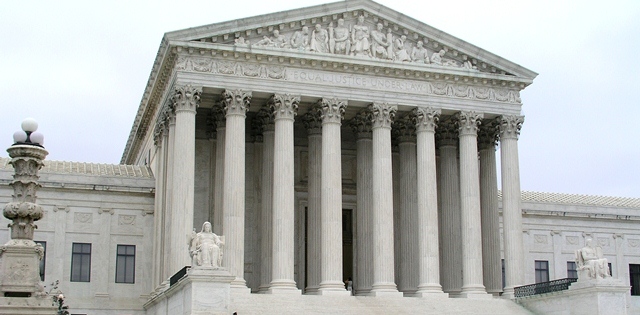
Conservative justices on the U.S. Supreme Court signaled on Monday that they are prepared to uphold the legality of President Donald Trump’s decision to fire Federal Trade Commission member Rebecca Slaughter, a move that could significantly expand presidential authority and endanger a foundational precedent governing independent agencies.
The court’s reaction during 2½ hours of oral arguments suggested that the conservative majority is inclined to side with the Trump administration’s view that Congress cannot shield leaders of independent regulatory agencies from presidential removal. The case marks one of the most consequential tests yet of the administration’s efforts to broaden executive power after Trump returned to office in January.
At the center of the dispute is whether the Court should overturn Humphrey’s Executor v. United States, a 1935 decision that has long restricted the president’s ability to dismiss officials at agencies like the FTC without cause. The Justice Department argues the ruling stands in the way of democratic accountability.
U.S. Solicitor General D. John Sauer, arguing for the administration, urged the justices to reverse the precedent entirely, calling it an “indefensible outlier” that has “not withstood the test of time.”
Sauer argued that the precedent encourages Congress to create insulated government agencies, saying it has “tempted Congress to erect, at the heart of our government, a headless fourth branch insulated from political accountability.”
Several conservative justices appeared open to dismantling or weakening the nearly 90-year-old precedent, emphasizing that the federal bureaucracy today bears little resemblance to the one that existed when Humphrey’s Executor was decided.
Read Also: Ronaldo Confirms 2026 World Cup Will Be His Final One
Chief Justice John Roberts suggested that the FTC of 1935 was far less powerful than the modern agency, making the original ruling outdated.
“Humphrey’s Executor is just a dried husk of whatever people used to think it was,” Roberts told Amit Agarwal, Slaughter’s attorney. He added that the unanimous court in 1935 was addressing an agency that exercised “very little, if any, executive power.”
Liberal members of the court expressed alarm over the administration’s sweeping request, saying it could result in an unprecedented concentration of authority in the presidency.
Justice Elena Kagan warned that ignoring “the real-world realities” of such a ruling would drastically reshape how the federal government operates across countless agencies.
The case stemmed from Trump’s decision in March to dismiss Rebecca Slaughter, a Democratic FTC commissioner, before the end of her statutory term. A lower court concluded the president had exceeded his authority—an outcome the administration is now asking the Supreme Court to reverse.