
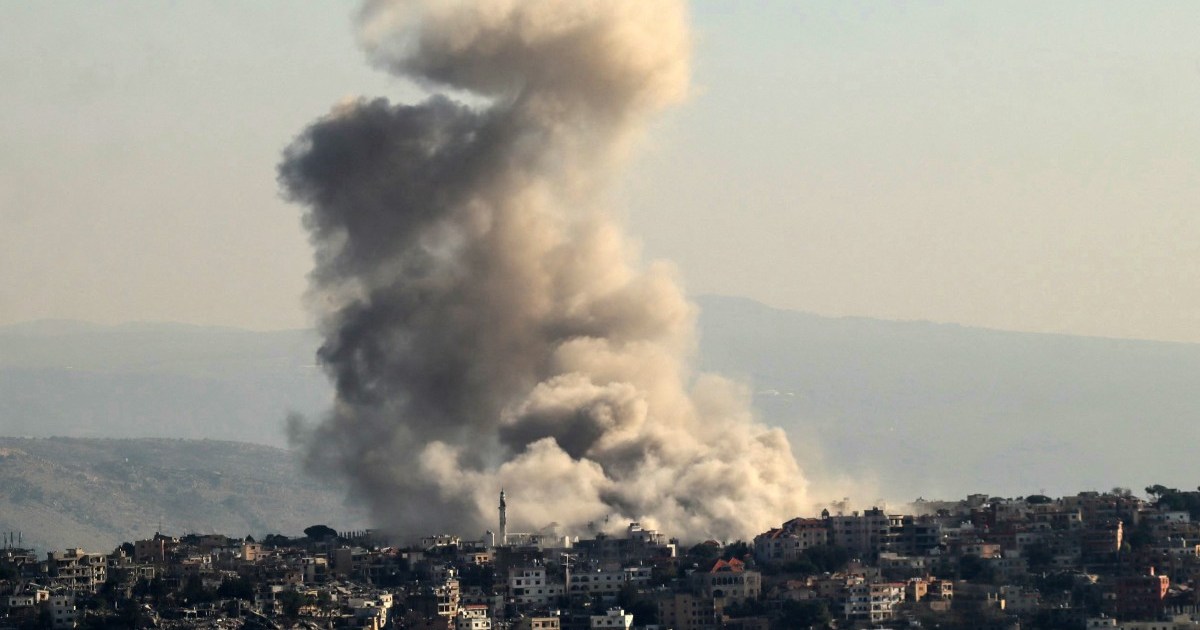
Israel airstrikes in southern Lebanon intensified on Friday as Israeli warplanes launched more than a dozen raids on rural areas across Jezzine and Zahrani, targeting what the military said were Hezbollah training compounds. The strikes marked another breach of the year-old ceasefire that has steadily eroded under near-daily cross-border attacks.
Israel said its latest operation focused on sites used by Hezbollah’s Radwan Force, claiming the group had been training fighters and preparing cross-border attacks on Israeli troops and civilians. The Lebanese state news agency reported hits near al-Aaichiyeh, along the corridor between al-Zrariyeh and Ansar, and around Jabal al-Rafie, as well as on the outskirts of several nearby towns.
The continued air raids have deepened concerns about the stability of the truce agreed in late 2024, which the United Nations says has already collapsed in practical terms.
Reporting from Beirut, Al Jazeera correspondent Zeina Khodr described the situation as “a one-sided truce, since Israel has continued near-daily attacks on the country.” She said the latest strikes followed a familiar pattern of hitting hills and valleys instead of residential areas.
“The locations were in hills and valleys, not population centres,” she noted. “In fact, just a few days ago, in the middle of the night, they did the same thing.”
Israel said it also targeted rocket-launch sites and other infrastructure, insisting the operations were necessary because Hezbollah had violated long-standing understandings that govern the border.
The UN reported in November that at least 127 civilians, including children, had been killed in Lebanon since the ceasefire came into effect. UN officials said many of the attacks may constitute “war crimes,” urging both sides to halt actions that endanger civilians.
Khodr said Israeli officials view the strikes as part of sustained pressure on Hezbollah to give up its arsenal.
“This is all part of military pressure on Hezbollah to force it to disarm,” she said, outlining Israel’s demand that the group surrender long-range missiles, precision-guided weapons and drones believed to be stored in the Bekaa Valley and other regions.
Read Also: Ghana Deports Israelis As Airport Row Widens
Hezbollah has repeatedly rejected those demands, saying it will not relinquish its weapons while Israel continues air raids and maintains a presence in disputed areas.
“The group doesn’t want to give up its weapons because it would view that as surrender,” Khodr said, adding that Israel maintains air superiority that leaves Hezbollah with few strategic options.
Cross-border tensions escalated sharply two weeks ago when an Israeli strike in Beirut’s southern suburbs killed senior Hezbollah military commander Haytham Ali Tabatabai. Hezbollah, which praised him as one of its most experienced leaders, has not yet responded but said it would do so “at the right time.”
The violence comes as Lebanese and Israeli civilian envoys recently joined meetings of the committee that monitors the ceasefire, the first time in decades that civilian representatives from both sides have been at the same table. Diplomatic observers say the committee’s work may become even more difficult as strikes and counter-strikes continue.