
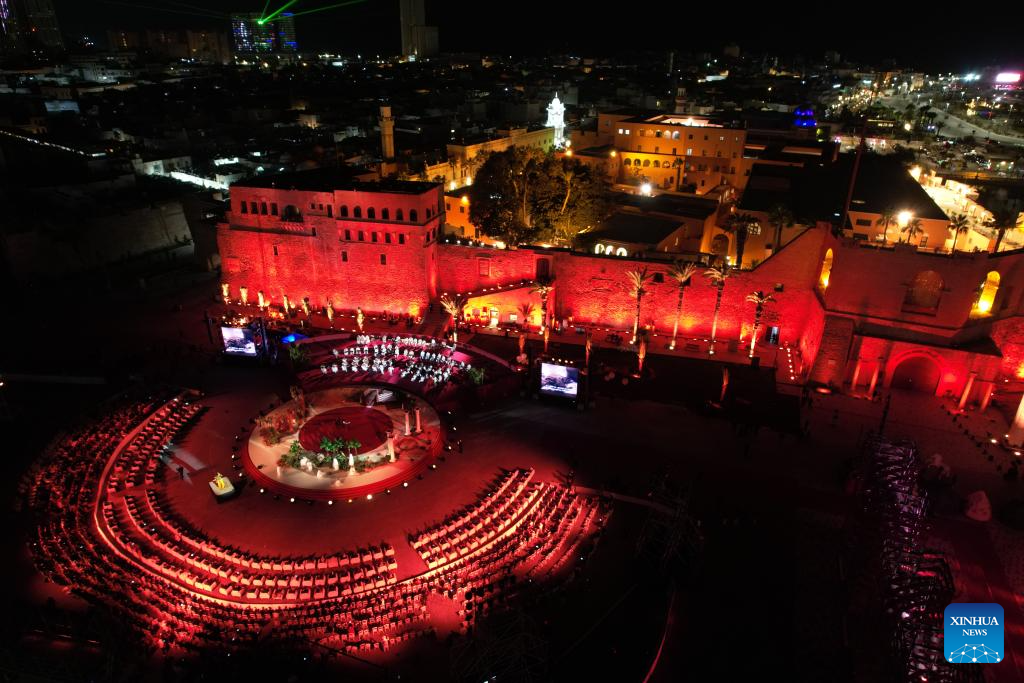
Libya has reopened its national museum in Tripoli for the first time since the 2011 uprising that toppled longtime ruler Muammar Gaddafi, marking a symbolic step in the country’s efforts to rebuild cultural institutions after years of conflict.
The museum, formerly known as As-Saraya Al-Hamra or the Red Castle, welcomed visitors on Friday following extensive renovations led by Libya’s U.N.-backed Government of National Unity (GNU). It is the country’s largest museum and houses some of Libya’s most important archaeological and historical treasures.
The Red Castle complex was closed during the NATO-backed revolt that ended Gaddafi’s four-decade rule. The former leader famously used the castle’s ramparts to deliver speeches before being overthrown and killed later that year.
Renovation work began in March 2023 under the GNU, which assumed office in 2021 as part of an internationally supported political process.
At the reopening ceremony, Prime Minister Abdulhamid al-Dbeibah described the event as a sign of institutional recovery.
“The reopening of the National Museum is not just a cultural moment,” al-Dbeibah said. “It is a live testimony that Libya is building its institutions.”
Built in the 1980s, the museum spans roughly 10,000 square meters of gallery space. Its collection includes mosaics, murals, sculptures, coins, and artifacts dating from prehistoric times through Libya’s Roman, Greek, and Islamic eras.
Among its most notable exhibits are ancient mummies from Uan Muhuggiag in Libya’s far south and from Jaghbub, near the country’s eastern border with Egypt.
Museum director Fatima Abdullah Ahmed said the reopening will initially focus on educational access.
“The current program focuses on enabling schools to visit the museum during this period,” she told Reuters, adding that full public access is expected at the beginning of the year.
Libyan authorities have also intensified efforts to recover cultural artifacts smuggled out of the country following the collapse of state control in 2011.
Read Also: Sarkozy Libya Financing Appeal Set For March After Release
Mohamed Farj Shakshoki, chairman of the board of Libya’s antiquities department, said the country has already recovered 21 artifacts from France, Switzerland, and the United States.
Negotiations are ongoing to retrieve more than two dozen additional items from Spain, as well as others from Austria, he said. In 2022 alone, Libya received nine artifacts from the U.S., including funerary stone heads, urns, and pottery.
Libya is home to five UNESCO World Heritage sites, all of which were declared endangered in 2016 due to ongoing instability and armed conflict.
In a sign of improvement, Libya’s delegation to UNESCO announced in July that the ancient city of Ghadames had been removed from the endangered list after security conditions improved.
Officials say the reopening of the national museum aligns with broader efforts to protect heritage sites and restore public access to Libya’s cultural history as the country seeks greater stability.