
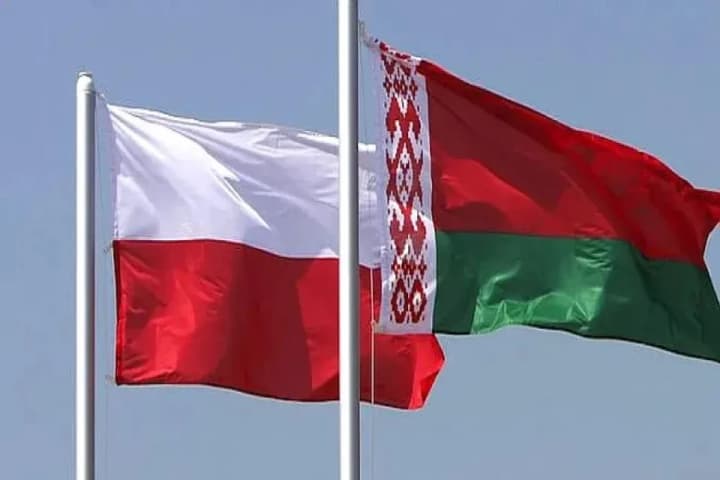
Polish officials say Belarus-backed networks used underground routes dug by foreign specialists, arresting 130 migrants as Warsaw toughens border rules.
Poland says it has uncovered a network of underground tunnels used by migrants to cross illegally from Belarus into the European Union, accusing Minsk of escalating a coordinated pressure campaign along the bloc’s eastern frontier.
Polish border authorities said around 130 migrants were detained last week after emerging from a tunnel that crossed beneath the heavily fortified border. The passage began in a wooded area on the Belarusian side and extended roughly 100 meters underground, surfacing about 10 meters inside Polish territory, according to officials.
The discovery marks the fourth such tunnel found this year by Poland’s Podlaskie Border Guard unit, underscoring what Warsaw describes as an evolving tactic to bypass reinforced border defenses.
Poland’s deputy interior minister, Czesław Mroczek, said the tunnels were constructed with the help of “specialists from the Middle East,” arguing that traditional smuggling routes have become less effective due to tighter surveillance and barriers.
“Our border controls have forced a change in methods,” Mroczek said. “That is why more sophisticated underground routes are now being used. We are adapting our detection systems to respond.”
Polish officials allege that Belarusian authorities are facilitating the crossings as part of a broader strategy to destabilize the EU by channeling migration pressure toward its borders. Minsk has repeatedly denied orchestrating the flows.
Read Also: Polish Christmas Market Terror Plot Foiled, Student Arrested
According to Poland’s Interior Ministry, most of the migrants intercepted in recent months originate from the Middle East and Africa. Interior Minister Marcin Kierwiński said some of those involved in digging the tunnels came from Iraq’s Kurdish region, but stressed that responsibility lies with Belarusian state structures.
The EU and NATO members have accused Belarus for several years of encouraging migrants to travel to its territory and then directing them toward EU borders, particularly with Poland, Lithuania, and Latvia. The issue intensified after the EU imposed sanctions on Minsk following its disputed 2020 election and subsequent political crackdown.
In response, Poland has invested heavily in border security, erecting physical barriers, deploying electronic monitoring systems, and increasing patrols along the frontier. The government has also tightened migration rules, including temporary limits on asylum claims in designated border zones.
Warsaw says the measures are necessary to protect national and EU security, while human rights groups have criticized Poland’s approach as overly restrictive and harmful to vulnerable migrants.
European officials continue to frame the situation as part of a broader hybrid pressure strategy, blending migration, disinformation, and security threats.
Poland says it will further strengthen underground detection capabilities as authorities warn that smuggling networks are likely to continue adapting tactics amid rising geopolitical tensions along the EU’s eastern edge.