
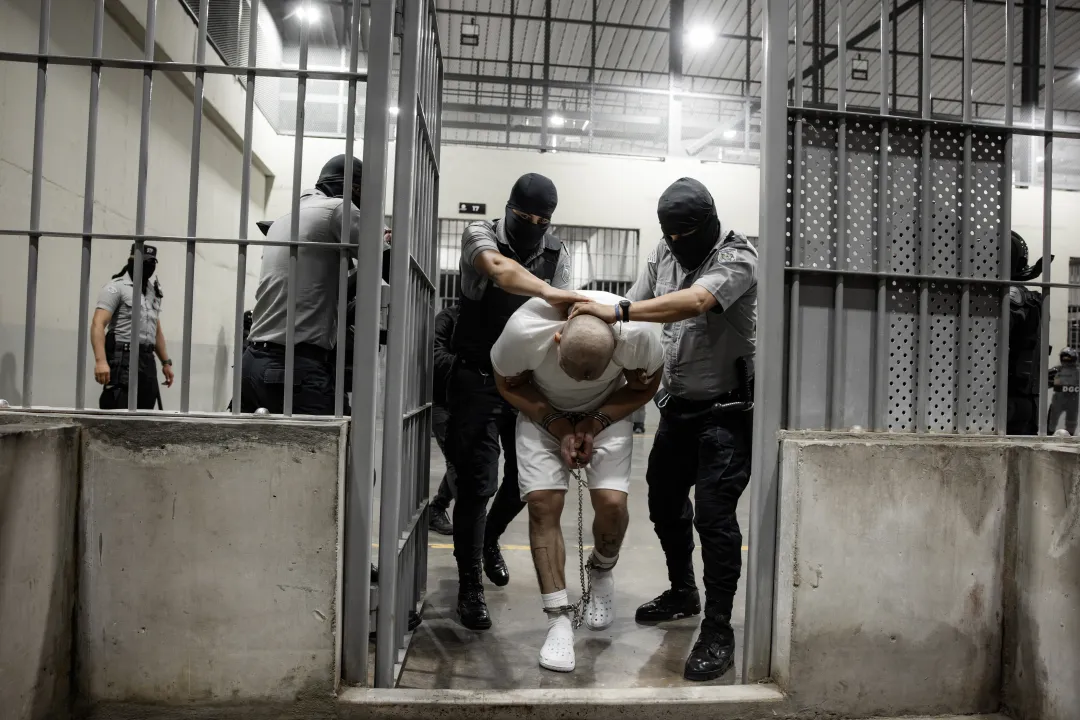
El Salvador’s authorities have handed down prison sentences to nearly 250 members of the Mara Salvatrucha gang, including one term totalling 1,335 years, as part of the government’s sweeping anti-gang campaign.
In a statement posted on X on Sunday, the attorney general’s office said 248 MS-13 members had been convicted and sentenced for crimes that included 43 murders and 42 enforced disappearances. Prosecutors described the punishments as “exemplary”, though they did not disclose when the rulings were issued or whether the defendants were tried individually or as part of a mass proceeding.
According to the statement, one defendant received a cumulative sentence of 1,335 years in prison. Ten others were given terms ranging from 463 to 958 years. El Salvador’s legal system allows judges to stack sentences for multiple serious crimes, even though inmates do not serve time beyond the maximum allowed under national law.
The convictions come amid a prolonged state of emergency introduced by President Nayib Bukele in March 2022. The measure, which remains in force, grants security forces expanded powers, including the ability to arrest suspects without warrants and hold them for extended periods.
Read also: Trump Meddled In Honduras Vote, Presidential Hopeful Says
Since the crackdown began, more than 90,000 people have been detained on suspicion of gang involvement, according to official figures. Authorities say around 8,000 detainees have since been released after investigations found no evidence linking them to criminal groups.
The government credits the campaign with sharply reducing violent crime, bringing homicide rates down to their lowest levels in decades. El Salvador was once among the most violent countries in the world, with MS-13 and its rival Barrio 18 exerting control over large parts of the territory. Officials estimate the two gangs were responsible for about 200,000 deaths over the past 30 years and at one point dominated roughly 80 percent of the country.
Prosecutors said the gangs sustained themselves through systematic extortion, targeting shop owners and other small businesses and demanding regular payments in exchange for protection. Many victims, they added, were forced to shut down their livelihoods due to threats.
Human rights organizations have repeatedly raised concerns about the emergency measures, accusing security forces of arbitrary arrests and abuses in detention. The government has rejected those claims.
The United States has designated MS-13 and several other Latin American gangs as foreign terrorist organizations.