
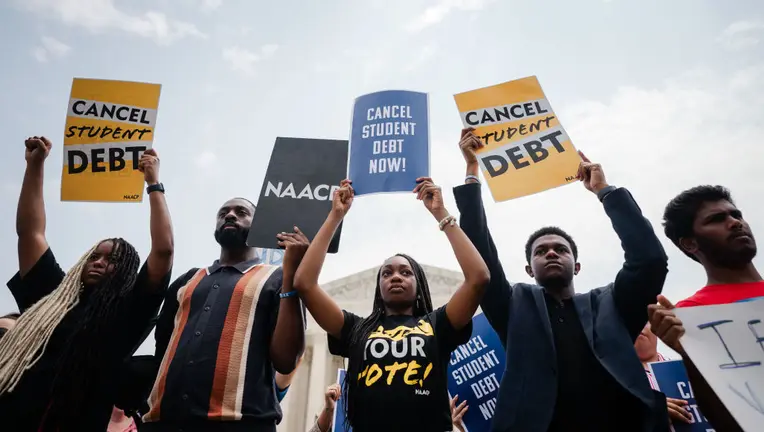
The Trump administration is moving to restart one of the federal government’s toughest debt collection tools, announcing plans to begin deducting money directly from the paychecks of Americans who have fallen behind on their student loans. It will be the first time wage garnishment is used for student debt since collections were largely frozen during the COVID-19 era.
According to the US Department of Education, affected borrowers will start receiving formal notices from January 7. The initial phase will touch roughly 1,000 people, but officials say the scope will widen steadily in the months ahead as more cases are added.
While the department declined to explain how the first group of borrowers was selected or how many people could ultimately be affected, it said the process follows long standing rules. Officials insist garnishment only begins after borrowers have been notified repeatedly and given opportunities to resolve their debts or enter repayment arrangements.
Under federal law, the government is allowed to take up to 15 percent of a borrower’s disposable income, provided their remaining pay does not fall below 30 times the federal minimum wage each week. That minimum wage, set at 7.25 dollars an hour, has not changed since 2009, a fact critics argue makes the threshold outdated in today’s economy.
Read also: Tinubu To Launch Students Loan Scheme This Week – Presidency
Student loan debt remains a heavy burden across the United States. Roughly one in six adults owes money for higher education, contributing to a national total of about 1.6 trillion dollars. As of April, more than five million borrowers had gone at least a year without making a payment, according to government data.
The decision comes at a fragile economic moment. Job growth has slowed, layoffs have increased, and household budgets are under pressure from persistent price increases. Consulting firm Challenger, Gray and Christmas estimates that more than 1.1 million Americans lost their jobs in 2025 alone. Meanwhile, the unemployment rate climbed to 4.6 percent in October and November, the highest level seen since 2021.
Critics say restarting garnishments now risks pushing vulnerable families further into hardship. Julie Margetta Morgan, a former senior official at the Education Department, argued that many borrowers are already juggling impossible choices between rent, food and utilities.
Beyond wages, the federal government can also recover unpaid student loans by withholding tax refunds, tapping portions of Social Security benefits and seizing certain disability payments. For millions of borrowers still struggling to regain financial stability, the return of these measures signals a tougher chapter in the long running student debt crisis.