
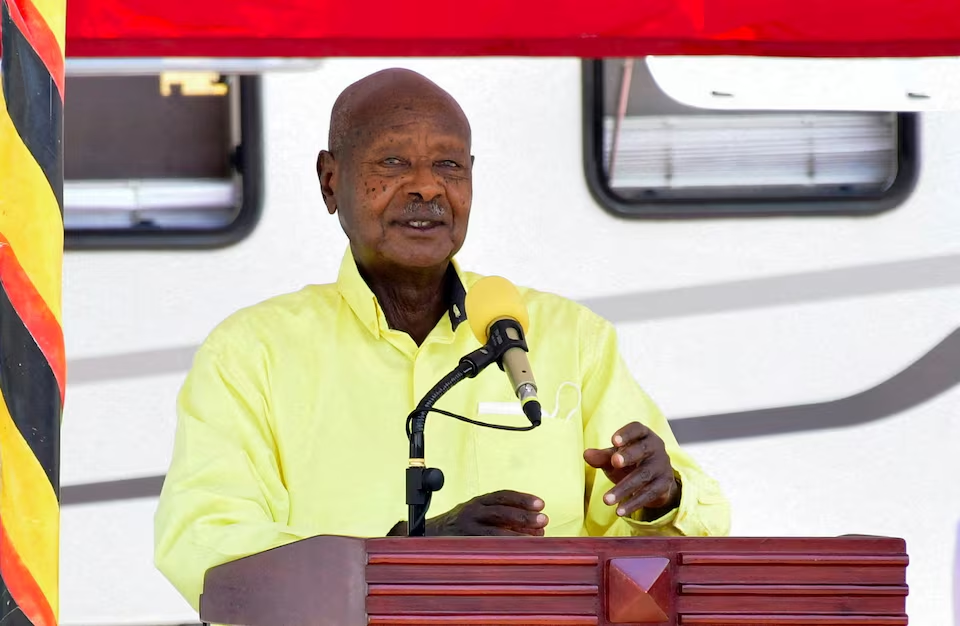
Uganda’s long serving President Yoweri Museveni is poised to secure another term in office as voters head to the polls this week, extending a rule that began nearly four decades ago and deepening debate over who will eventually succeed him.
Museveni, 81, was formally nominated by the ruling National Resistance Movement at the Electoral Commission in Kampala and is widely expected to win Thursday’s election. If confirmed, the result would mark his seventh term since taking power in 1986 after a guerrilla war that ended years of instability.
The vote comes at a sensitive moment for the East African nation, where political tensions, economic change, and succession questions are converging as Museveni’s grip on power shows little sign of loosening.
Museveni faces seven challengers, though analysts say the race is largely a repeat of previous elections. His strongest rival is opposition figure Bobi Wine, a 43 year old musician turned politician who placed second in the 2021 vote and remains popular among young Ugandans frustrated by unemployment and corruption.
Wine won about 35 percent of the vote last time, according to official results, but international observers and rights groups raised concerns over intimidation and irregularities. The United States later described that election as neither free nor fair, a criticism the Ugandan government rejected.
Museveni has defended his continued leadership, saying another term would allow him to “protect the gains” of stability and security achieved during his time in office. He has previously overseen constitutional changes that removed both age and term limits, clearing the way for him to remain president indefinitely.
Political analysts say those changes, combined with firm control over state institutions and security forces, make an opposition victory highly unlikely.
As in past elections, this year’s campaign has been marked by clashes between security forces and opposition supporters. Police have repeatedly dispersed Bobi Wine’s rallies using teargas, and in some cases live ammunition, according to rights groups and opposition officials.
At least one person has been killed and hundreds arrested during the campaign period, according to local monitors. Authorities say the measures are necessary to maintain public order, while opposition leaders accuse the government of suppressing dissent.
Despite the tensions, voting is expected to proceed nationwide, with results anticipated within days.
Behind the election lies an unresolved question that continues to shape Ugandan politics: who comes next.
Read Also: Uganda Restricts Starlink Imports Ahead Of January Election
Museveni has denied grooming a successor, but his son, Muhoozi Kainerugaba, is widely seen as a leading contender. Kainerugaba serves as the country’s military chief and has publicly expressed interest in the presidency, often using social media to signal his ambitions.
His frequent online statements, including threats directed at opposition figures, have stirred controversy at home and abroad. Analysts say his rise has unsettled some senior figures within the ruling party, where other heavyweights are quietly positioning themselves for a post Museveni era.
According to political observers, the lack of a clear succession plan raises the risk of internal competition once Museveni eventually steps aside.
Uganda’s economic outlook is a key backdrop to the vote. While growth has traditionally depended on coffee exports, tourism, and agriculture, the government expects a major boost later this year when commercial oil production begins.
Crude output from fields operated by France’s TotalEnergies and China’s CNOOC is forecast to push economic growth into double digits, according to government and industry projections.
Regionally, Uganda remains a significant security player, with troops deployed in Somalia, South Sudan, the Democratic Republic of Congo, and Equatorial Guinea as part of peacekeeping and military cooperation efforts.